
Camping & Stargazing at Pennsylvania's Legendary Dark Sky Sanctury
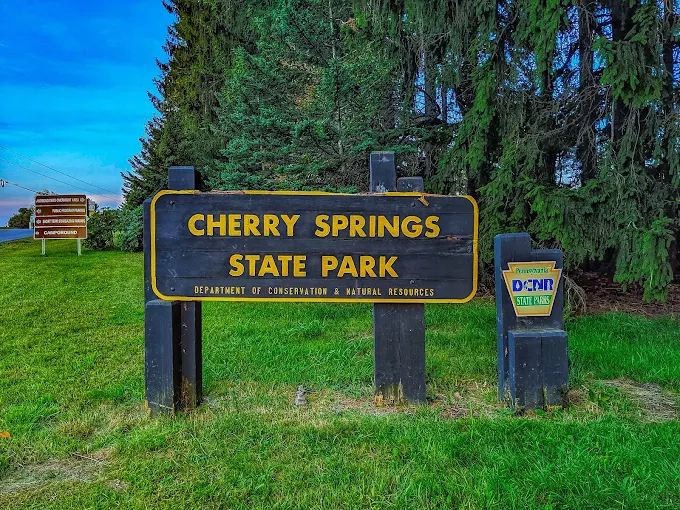
CHERRY SPRINGS STATE PARK * POTTER COUNTY* PENNSYLVANIA WILDS
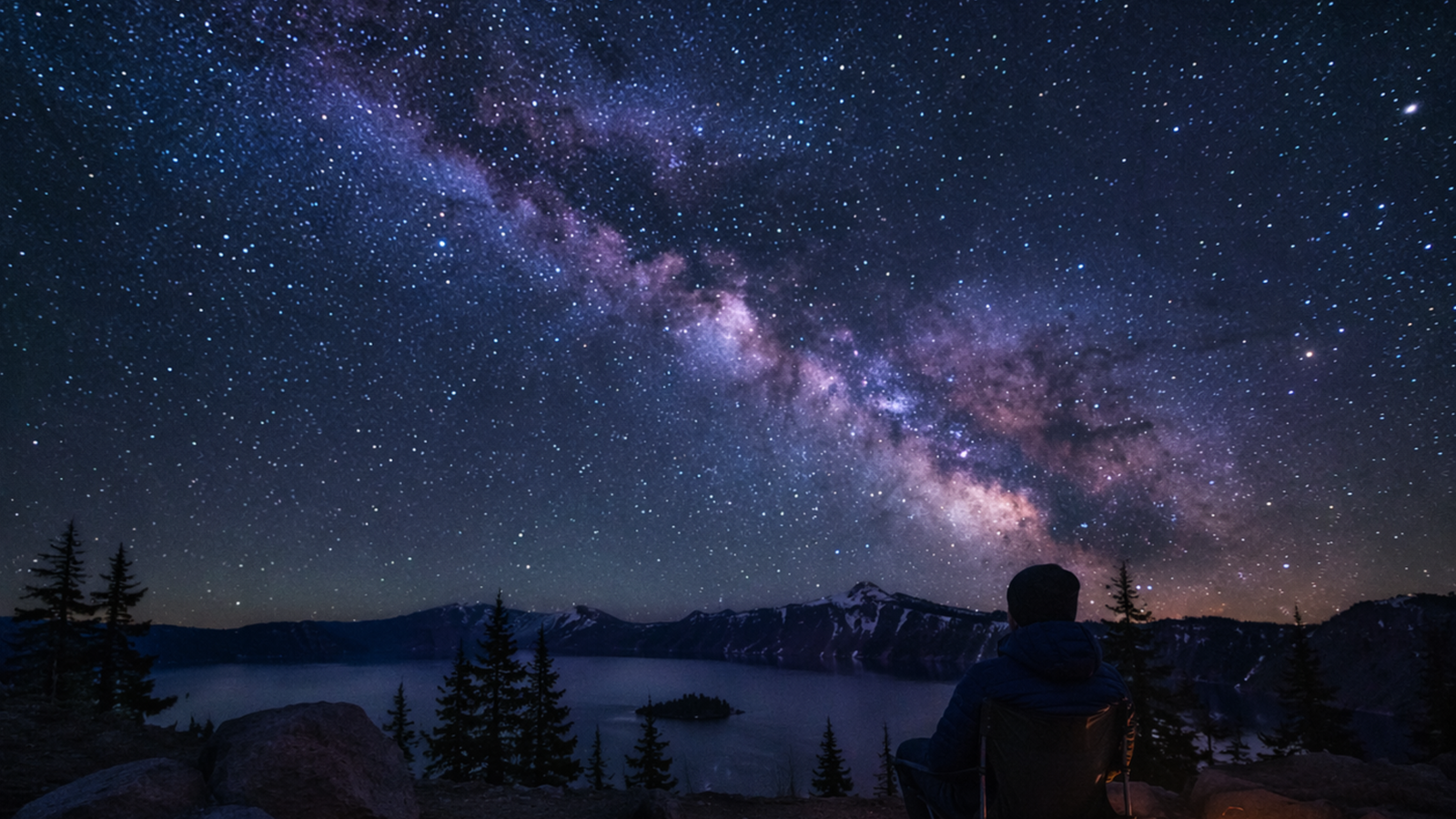
There is a mountain in north-central Pennsylvania where the night sky tells the truth. No orange halos from distant cities, no porch lights blurring the edge of the horizon—just an unfiltered vault of stars so dense that the Milky Way casts a faint, perceptible shadow on the ground. That mountain is Cherry Springs, and for those who have stood beneath its heavens, the experience is quietly, permanently life-changing.
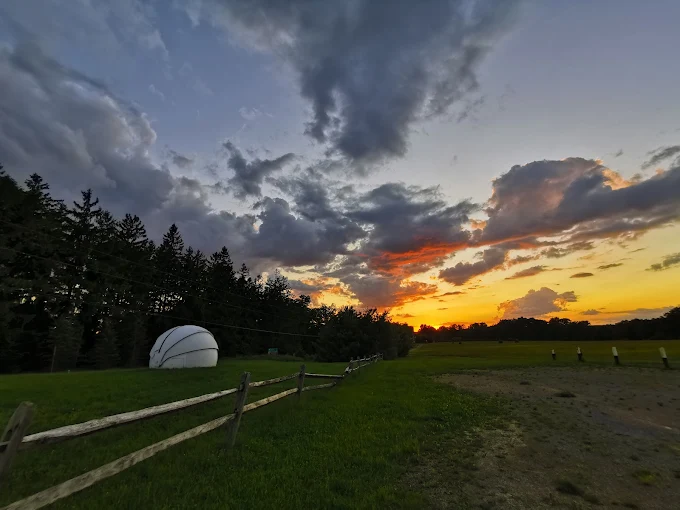
Tucked inside the half-million-acre Pennsylvania Wilds, Cherry Springs State Park occupies a modest 82 acres atop the Allegheny Plateau in Potter County. It is, by design, a place of spectacular emptiness. There are no roller coasters or concession stands, no swim beaches or boat launches. What Cherry Springs offers instead is the rarest of modern luxuries: genuine darkness, and everything that darkness reveals.
Perhaps the last best refuge of the natural night sky in the eastern half of the United States
-INTERNATIONAL DARK-SKY ASSOCIATION
The park sits at an elevation of 2,300 feet and earns a Bortle Class 2 rating on the international dark-sky scale—meaning only the very faintest traces of light pollution are visible near the horizon. On a clear, moonless night, an estimated 30,000 stars fill the bowl of the sky overhead. Planets glow with startling clarity. The Andromeda Galaxy appears to the naked eye. This is the old-time sky—the sky your great-grandparents knew—and it still exists here, preserved in a remote corner of Penn’s Woods.
A Certified Dark Sky Treasure
Cherry Springs did not become famous by accident. Its exceptional darkness is the result of geography, altitude, and decades of deliberate protection. In 2000, the Pennsylvania Department of Conservation and Natural Resources formally declared it the state’s first Dark Sky Park—acknowledging that the night sky itself is a natural resource deserving the same care as clean water or old-growth forest. Seven years later, the International Dark-Sky Association bestowed its coveted certification, making Cherry Springs only the second International Dark Sky Park in the world at the time, and the only one on the Eastern Seaboard.
Surrounding the park’s 82 acres is the sprawling Susquehannock State Forest—262,000 acres of uninhabited woodland that form a natural buffer against encroaching light pollution. The Pennsylvania General Assembly reinforced this protection in 2001 with the Outdoor Lighting Control Act, requiring shielded lighting at all new state facilities and mandating that a local electric cooperative offer free light-shielding caps to nearby homeowners. The darkness here is hard-won and carefully kept.
------------------------------------ THE PARK ----------------------------------------
What You'll Find on the Ground
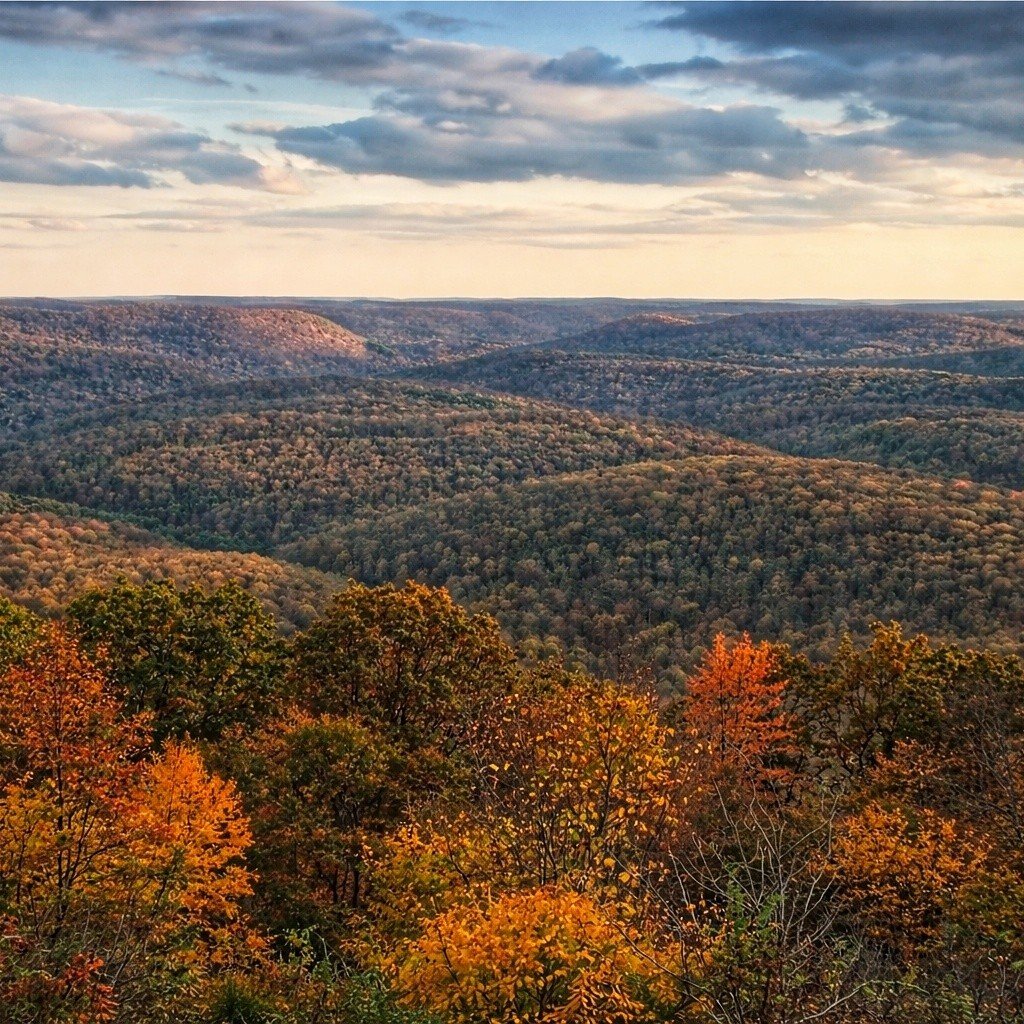
The park itself is refreshingly uncomplicated. At its heart are two observation areas, a rustic campground, a picnic pavilion built by the Civilian Conservation Corps, and a single one-mile interpretive hiking trail. By day, the landscape is quietly lovely—black cherry trees, meadow grasses, and sweeping forested ridgelines. By night, it becomes one of the most extraordinary places in the eastern United States.
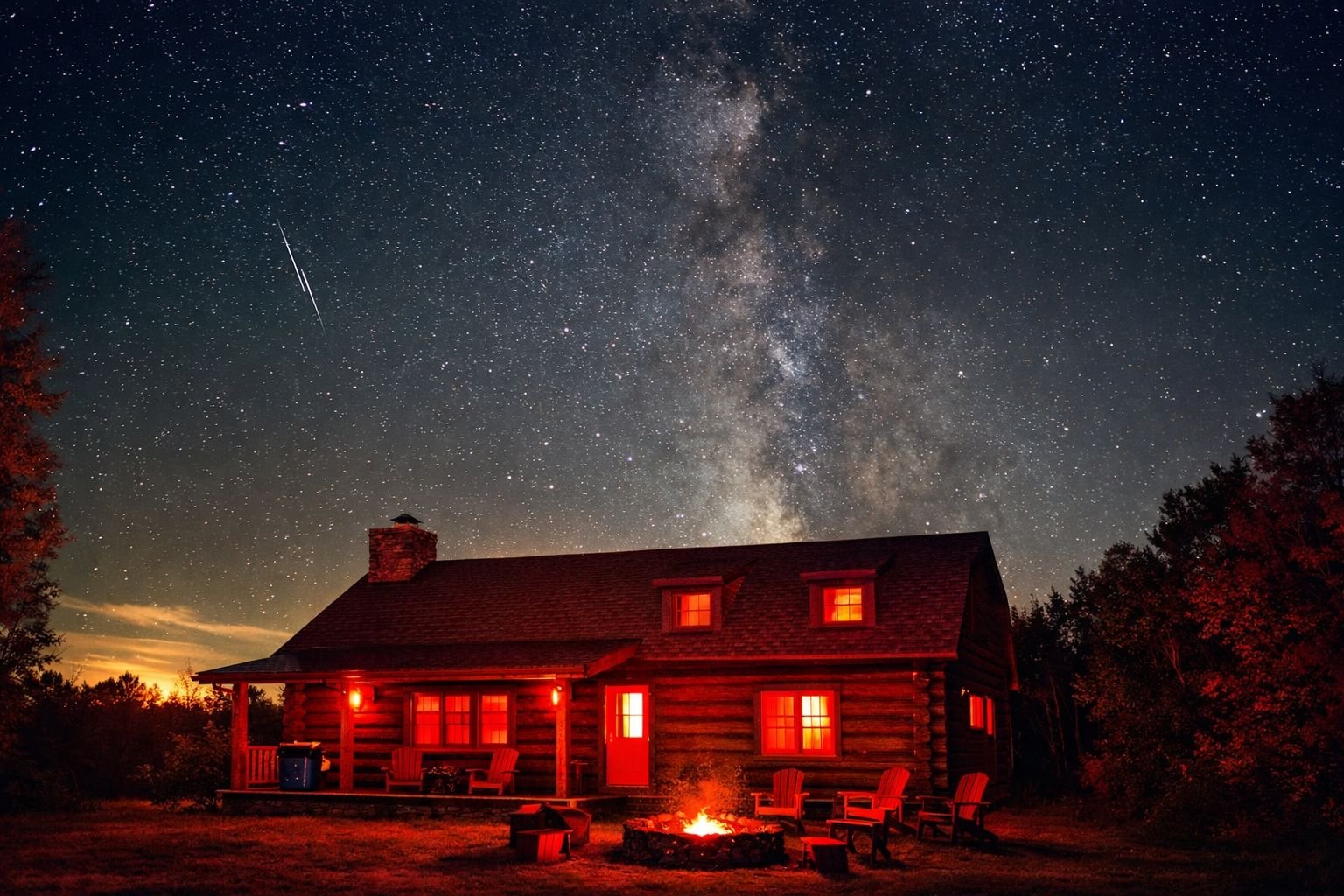
Night Sky Public Viewing Area — Located north of Route 44 on the former Cherry Springs Airport airstrip, this large open field is ideal for casual visitors who want to spend a few hours beneath the stars. White light is permitted here, though flashlights with red filters are strongly encouraged to protect night vision.
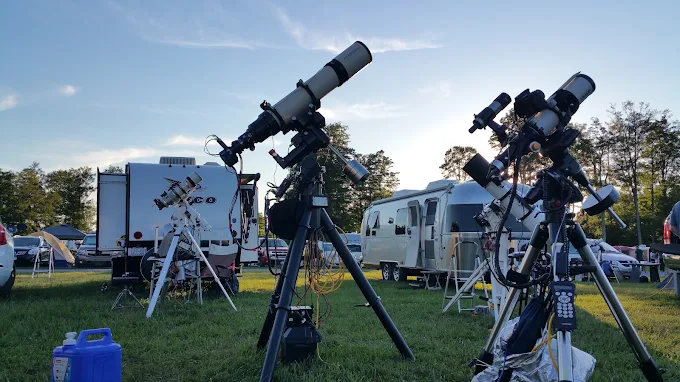
Overnight Astronomy Observation Field — For serious stargazers and telescope operators, this southwest field is the prize. White light is strictly prohibited. The field offers concrete telescope pads, electricity, and Wi-Fi access. Overnight users must register and pay a modest fee before setting up. Reservations for public stargazing programs became required after their popularity soared.
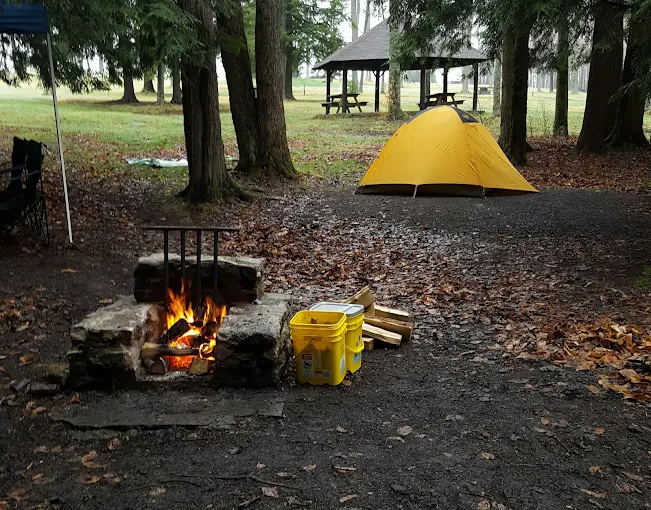
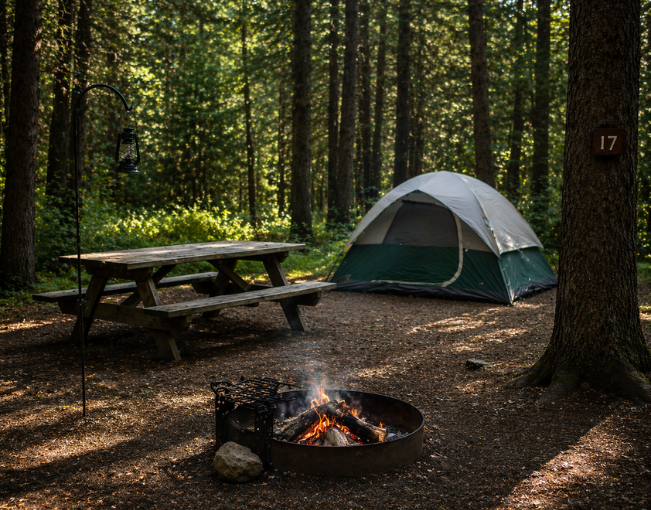
Rustic Campground — The park’s 30-site campground offers a genuine back-to-nature experience: picnic tables, lantern hangers, fire rings, and basic facilities. It is open mid-April through late October. Sites can be reserved online through the Pennsylvania State Parks reservation system. Note that pets are not permitted in the campground or at public stargazing programs.
THE STAR PARTIES
Twice a year, Cherry Springs transforms into a gathering point for hundreds of amateur and professional astronomers. The Cherry Springs Star Party, organized by the Astronomical Society of Harrisburg, takes place each June. The Black Forest Star Party, hosted by the Central Pennsylvania Observers, arrives each September. Both events culminate in public viewing nights featuring high-powered telescopes and expert astronomy talks. Demand for lodging is intense during these weekends—experienced visitors book campsites and nearby rentals four to five months in advance.
The Best Times to Visit for Stargazing
Cherry Springs is open every day of the year, and remarkable skies can appear in any season. But certain windows offer a distinct advantage—here is what to expect across the calendar.
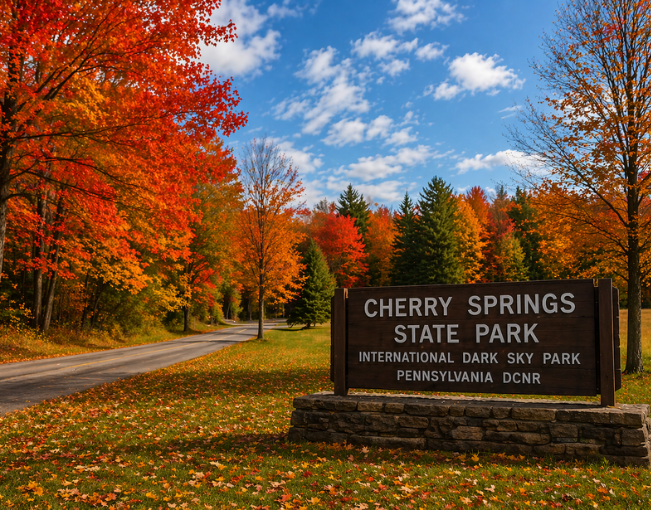
Autumn - Sept - Nov
The undisputed prime season. Humidity drops sharply after summer, skies grow deeply transparent, and night lengthen beautifully. The September Black Forest Star party falls squarely in this window.
Temperatures can plunge-pack serious layers-but the rewards are extraordinary.
The Milk Way Core begins its seasonal farewell, while the Andromeda Galaxy rides high.
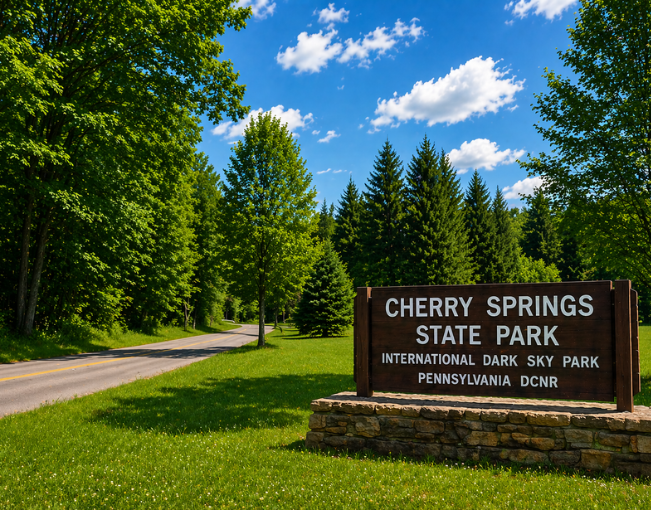
Summer - June- Aug
The Milky Way blazes overhead at its fullest and brightest-a river of light visible to the naked eye all summer long. The June Star Party draws crowds of enthusiasts. Temperatures are pleasant and the campground is in full swing. Humidity can occasionally soften sky transparency, and shorter nights means less viewing time, but summer evenings here are magical.
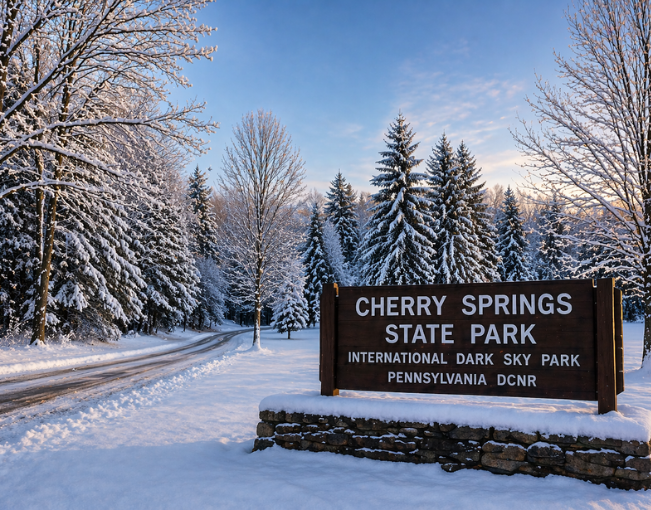
Winter - Dec - Feb
The undisputed prime season. Humidity drops sharply after summer, skies grow deeply transparent, and night lengthen beautifully. The september Black Forest Star party falls squarely in this window.
Temperatures can plunge-pack serious layers-but the rewards are extraordinary.
The Milk Way Core begins its seasonal farwell, while the Andromeda Galaxy rides high.
Spring - March- May
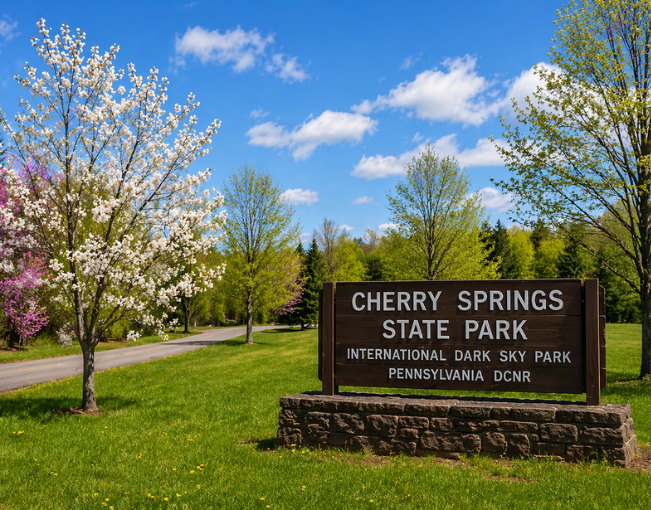
Spring brings variable skies-some nights are spectacular, others are compromised by higher moisture levels Galaxy season begins in earnest by last April, with Leo and Virgo galaxy clusters reaching their best positions. the campground reopens mid April. Nights remain cold well into May, so bring warm sleeping gear. A surprise clear night in spring can be among the year’s most memorable.
“The best seasons to visit are fall and winter—the lessened humidity and extended night-time hours create excellent stargazing opportunities.”
-CHERRY SPRINGS STATE PARK
Regardless of season, the single most critical factor is the moon. New moon periods—when the moon sets early or doesn’t rise at all—offer the darkest possible skies. Check the Cherry Springs Clear Sky Chart (available online) for up-to-date transparency and cloud-cover forecasts before finalizing your travel dates.
Planning Your Trip
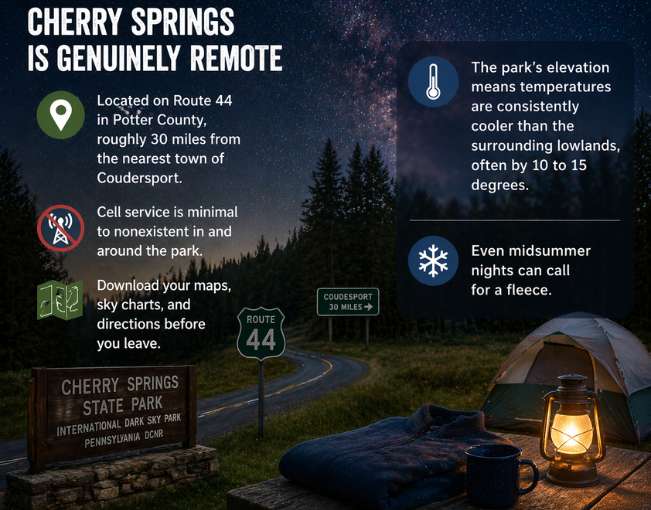
Cherry Springs is genuinely remote—located on Route 44 in Potter County, roughly 30 miles from the nearest town of Coudersport. Cell service is minimal to nonexistent in and around the park; download your maps, sky charts, and directions before you leave. The park’s elevation means temperatures are consistently cooler than the surrounding lowlands, often by 10 to 15 degrees. Even midsummer nights can call for a fleece.
For those who cannot secure a campsite—the 30-site campground fills quickly, especially on star party weekends—neighboring Lyman Run State Park and Ole Bull State Park offer more amenities including RV hookups, shower facilities, swimming, and hiking trails, all within easy driving distance. Several bed-and-breakfasts and vacation rentals in the area have positioned themselves specifically as Cherry Springs gateways, some with private stargazing fields on the property.
What to Bring
Flashlight with red filter or red-cellophane cover Warm layers (even in July—mountain air is brisk)
Binoculars (7×50 or 7×35 power recommended) Reclining camp chair or blanket for sky-watching
Telescope if you have one (concrete pads provided) Red cellophane to cover phone and camera screens
Printed or offline star map / planisphere Thermos of coffee or hot chocolate
Downloaded park map (no cell service on-site) Cash for astronomy field fees and pay envelopes
VISTOR INFORMATION
A Sky Worth Protecting
It is estimated that only about ten percent of Americans have ever seen a genuinely dark sky. The rest of us have grown up beneath the warm orange blanket of light pollution, never knowing what we were missing. Cherry Springs State Park exists to remind us. To stand on that mountaintop plateau, wrap yourself in a blanket, and watch the Milky Way materialize above the tree line is to encounter something that feels ancient and urgent at the same time.
Pennsylvania has gifted its citizens a remarkable thing in Cherry Springs—not a spectacle engineered by human hands, but a careful preservation of what was always there. The stars did not move. We simply learned to keep the lights low enough to see them again.
Whether you come for a single evening at the public viewing area, or spend a week camped beneath the constellations with a telescope and a thermos, Cherry Springs will change the way you think about night. Plan well, dress warmly, and keep your flashlight red. The show starts at dusk—and it runs until dawn.
Until Next Time !
Susan