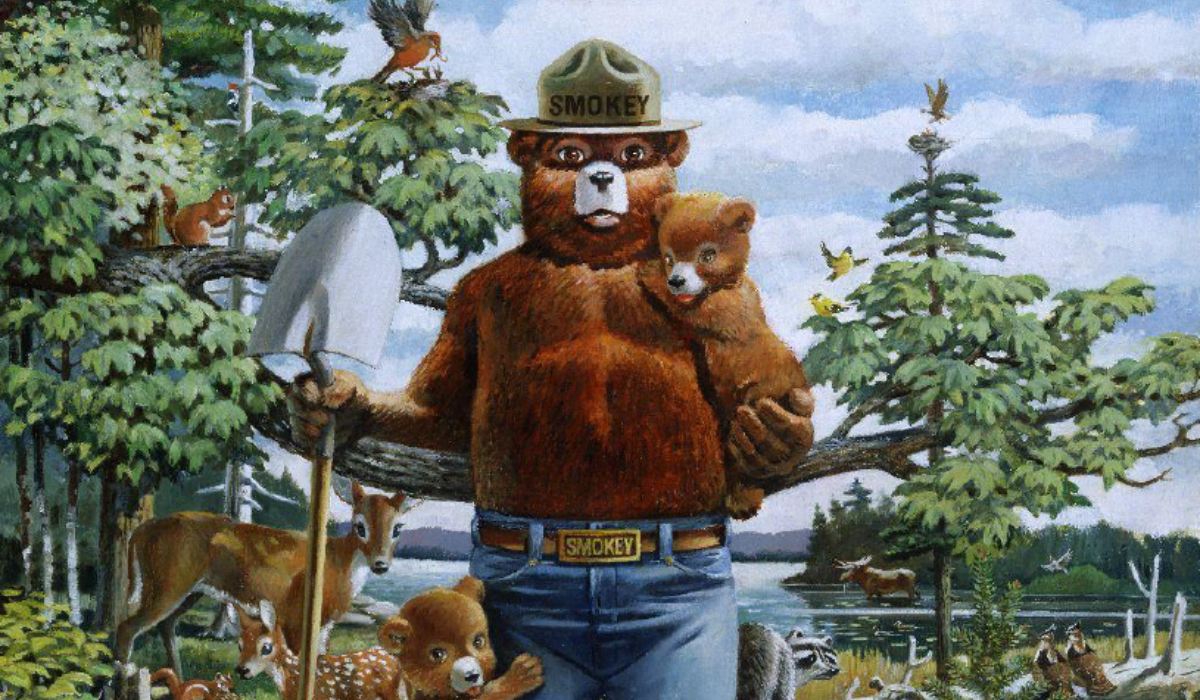
A ranger hat, blue jeans, a shovel, and a message generations can remember: few American characters are as familiar as Smokey Bear. For many of us, he brings to mind childhood lessons about taking care of the woods.
Behind that familiar face is a story connecting World War II, an injured bear cub, and a national effort to prevent wildfires. There is even a place in New Mexico where travelers can visit the real Smokey’s final resting place.
A Wartime Beginning
Smokey’s story began during World War II, when protecting American forests had added urgency. Timber was an important resource, and experienced firefighters were serving overseas. Preventing avoidable fires became part of protecting the home front.
Before Smokey, Disney allowed characters from Bambi to appear on a 1944 fire prevention poster. The success of that approach helped demonstrate how an animal character could reach the public.
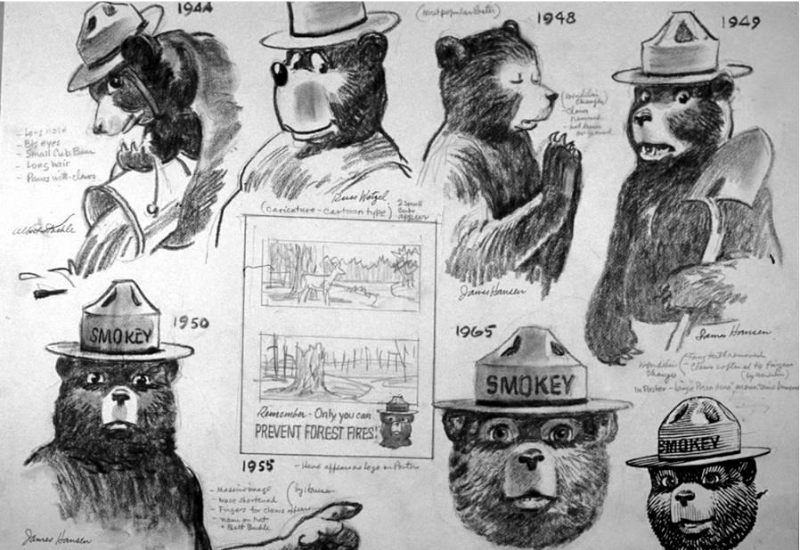
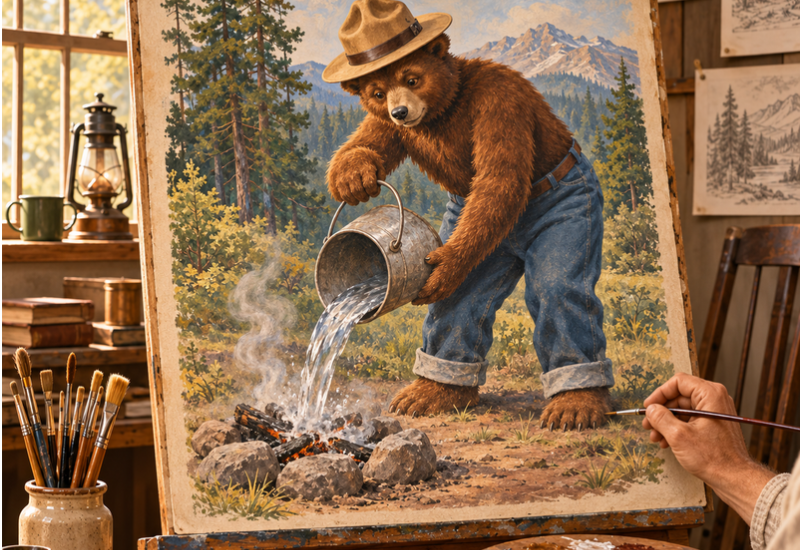
The Forest Service, state foresters, and the organization now known as the Ad Council developed their own bear character in 1944. Artist Albert Staehle created the first Smokey poster, showing him pouring water over a campfire. In 1947, the campaign introduced the familiar words “Only YOU Can Prevent Forest Fires.”
In 2001, “forest fires” became “wildfires,” extending the message to places such as grasslands and brush country. That wording also helps distinguish unwanted fires from beneficial natural fire and carefully managed prescribed burns.
The Real Bear Who Became Smokey
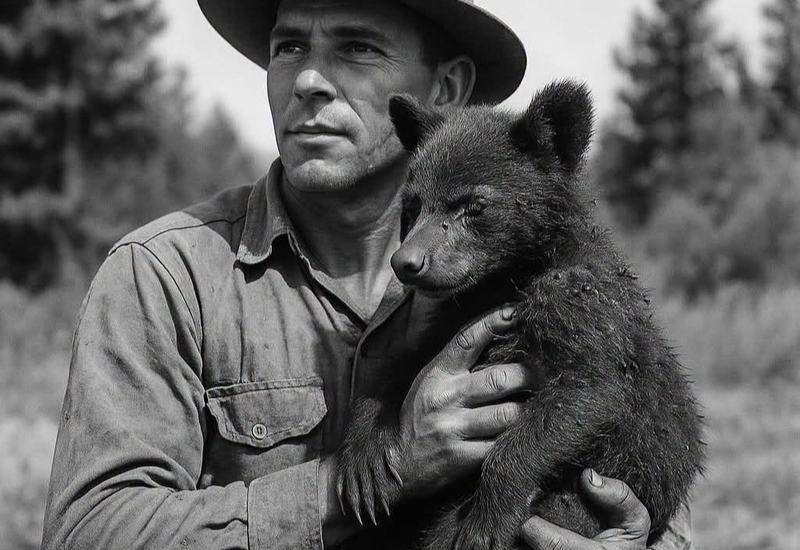
The character already existed when a real bear cub gave the campaign a living symbol.
In 1950, a wildfire in New Mexico’s Capitan Mountains left a young black bear badly injured. Found in a tree, the cub had burns on his paws and hind legs. Rescuers brought him to safety, and he received treatment.
As the cub recovered, he became part of the fire prevention effort. He was named Smokey after the established character and moved to the National Zoo in Washington, D.C. There, visitors could meet the living bear associated with the message they knew from posters.
That sequence is easy to mix up: the rescued cub did not inspire the original character. Instead, his experience made an existing campaign feel much more personal.
Why We Call Him Smokey the Bear
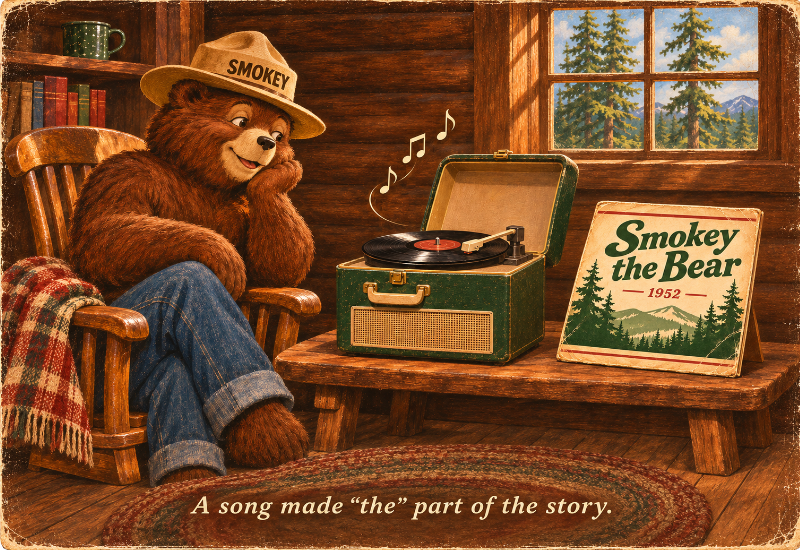
If you grew up saying “Smokey the Bear,” there is a reason.
In 1952, songwriters Steve Nelson and Jack Rollins wrote a song about him. They inserted “the” so his name would fit the music. The song helped spread that version, although his official name remained Smokey Bear. These were also the songwriters behind “Frosty the Snowman” and “Peter Cottontail.”
It is a small detail, but one that explains why so many people remember his name a little differently.
From Posters to an American Icon
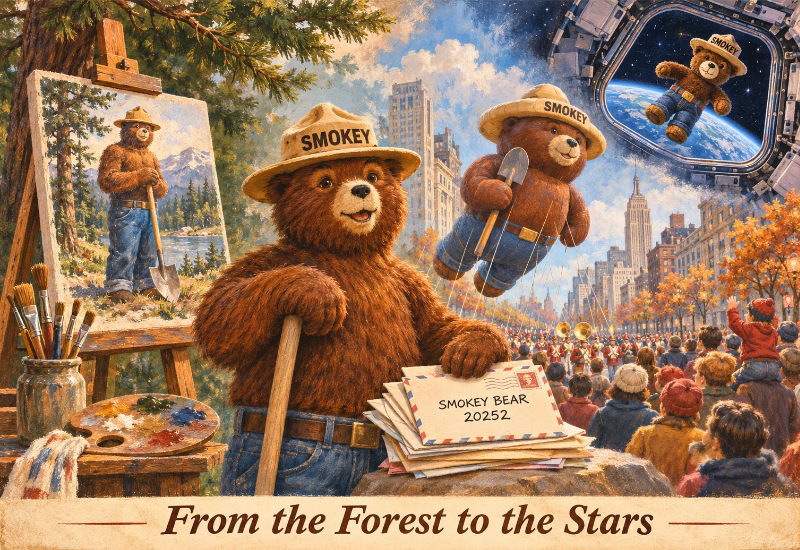
Artist Rudy Wendelin helped shape the Smokey many people recognize today. As the Forest Service’s longtime illustrator and Smokey’s artistic caretaker, he developed some of the character’s best-known depictions.
Smokey’s reach grew far beyond the woods. He received his own ZIP code, 20252, in 1964, and a Smokey Bear balloon first appeared in the Macy’s Thanksgiving Day Parade in 1966. His story even reached space: a Smokey plush toy traveled to the International Space Station with astronaut Joe Acaba in 2012.
For a bear whose work began on a poster, that is quite a journey.
The Campaign Reaches Beyond Posters
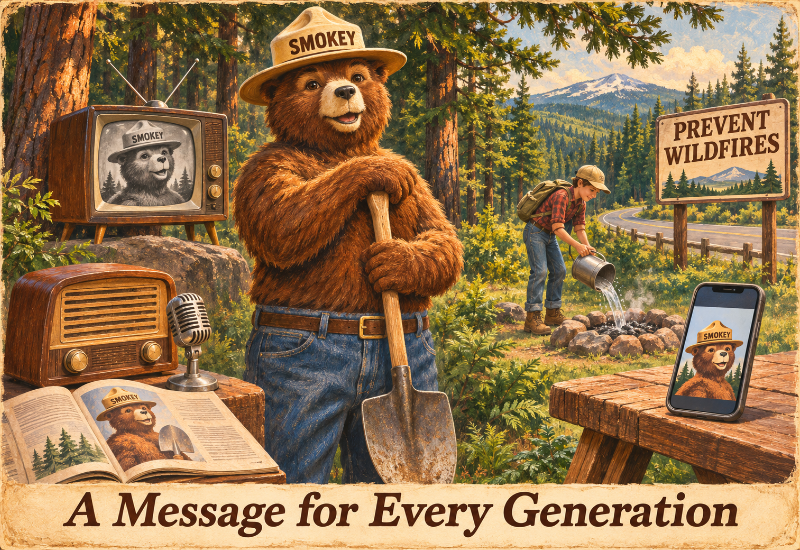
Smokey’s campaign grew from a wartime effort into a lasting partnership among the Forest Service, state foresters, and the Ad Council. Its success depended on reaching people where they were: on the radio, in magazines, watching television, and traveling past roadside signs.
The campaign also benefited from familiar voices. Performers including Bing Crosby, Ray Charles, Betty White, and Sam Elliott helped deliver its message. In 2024, Smokey celebrated 80 years of public service advertising.
The strength of the message was its directness. It asked each person to consider the consequences of an ordinary action. Someone leaving a campsite could make a decision that mattered to an entire landscape.
Today, the campaign continues through digital advertising and social media as well as traditional media. Its focus includes preventing fires caused by campfires, vehicles, and outdoor equipment.
Protecting a National Symbol
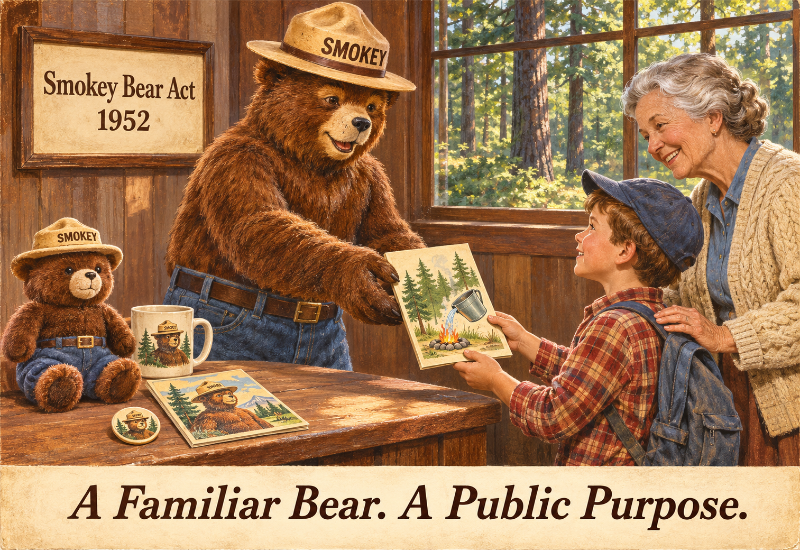
Smokey became popular enough to attract commercial interest. In 1952, Congress passed the Smokey Bear Act, placing his character under the Secretary of Agriculture’s control. Licensing royalties and fees support wildfire prevention education.
That relationship between merchandise and public education is another chapter in his history. The bear became something people could recognize beyond a poster while continuing to serve a public purpose.
The People Who Cared for the Cub
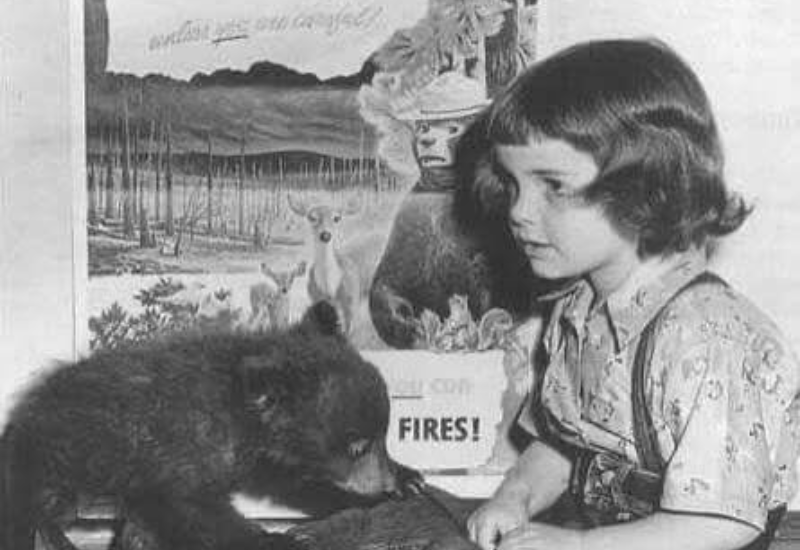
The real bear’s rescue involved more than removing him from danger.
During the Capitan Gap Fire in 1950, the cub took refuge in a tree that burned around him. His paws and hind legs were badly injured. Firefighters brought him to camp, and Ray Bell, a ranger and pilot with the New Mexico Department of Game and Fish, flew him to Santa Fe for veterinary treatment.
Afterward, Bell took him home. His wife, Ruth, and young daughter, Judy, helped care for the cub as he recovered. News of his progress spread, and people across the country wanted to know how he was doing.
The photographs of Judy with the little bear give this national story a personal connection: before Smokey became a zoo attraction, he was a vulnerable animal recovering with a family’s help.
Life at the National Zoo
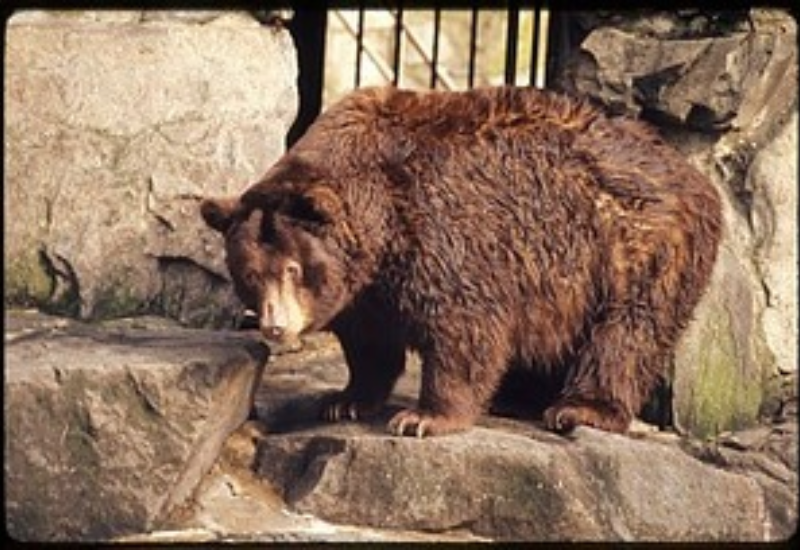
Smokey arrived in Washington, D.C., on June 27, 1950. Visitors came to the National Zoo to see the bear whose rescue had captured public attention.
One memorable detail recorded by the Smithsonian is his fondness for peanut butter sandwiches. Alongside the big public story were the routines and preferences of an individual animal.
The real Smokey did not behave like his illustrated counterpart. He was a wild animal, and the Smithsonian describes him as preferring solitude over attention. The friendly bear who pointed at readers from posters was a character; the zoo’s Smokey had his own temperament.
Goldie and Little Smokey
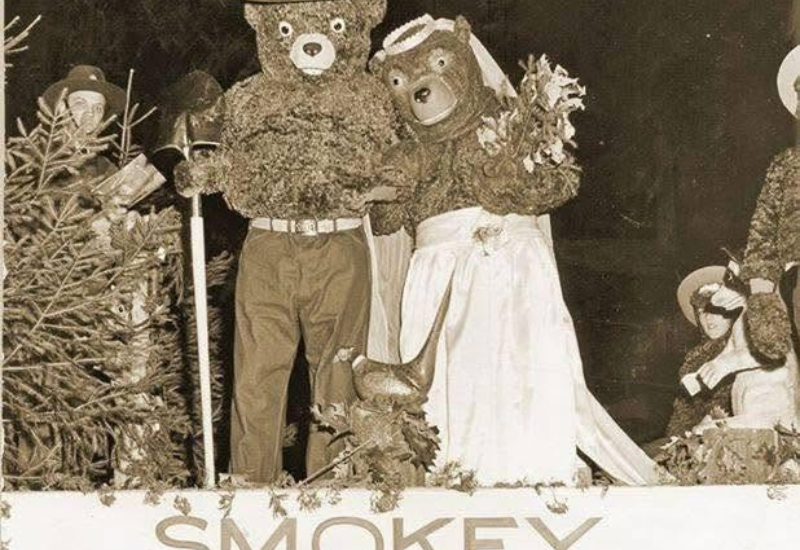
In 1962, a female black bear named Goldie joined Smokey at the National Zoo. Publicity sometimes described her as his “wife,” although the pair never produced cubs.
In 1971, another orphaned bear arrived. Little Smokey also came from New Mexico’s Lincoln National Forest. According to the Smithsonian, he had been rescued from starvation rather than from fire.
Publicity presented the younger bear as an adopted son. He would eventually become the original Smokey’s successor.
Smokey Retires on May 2 1975
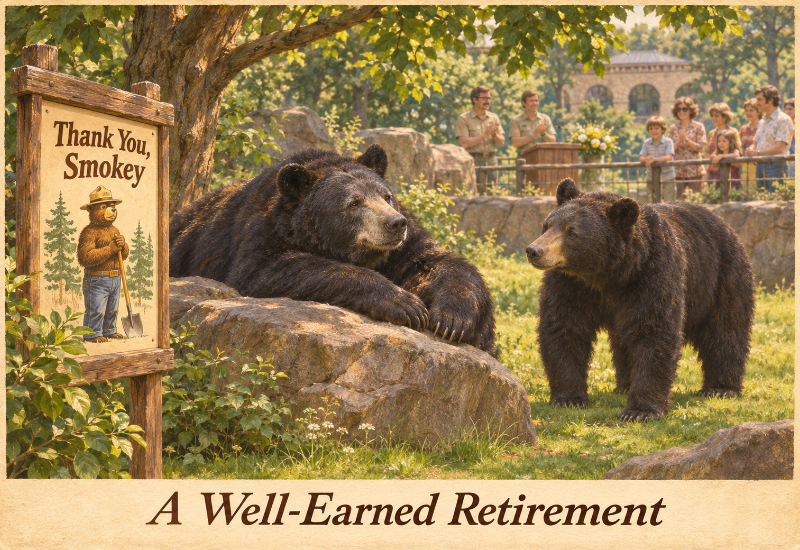
The original Smokey Bear officially retired on May 2, 1975.
A ceremony at the National Zoo recognized his years as the campaign’s living symbol. Little Smokey took over the role and became Smokey Bear II.
The Smithsonian preserves a memo from zoo director Theodore Reed announcing the ceremony, documenting this unusual retirement in American cultural history. The original Smokey remained at the National Zoo afterward.
His retirement ended his official role, while the illustrated character continued appearing in the campaign.
Remembering November 9 1976
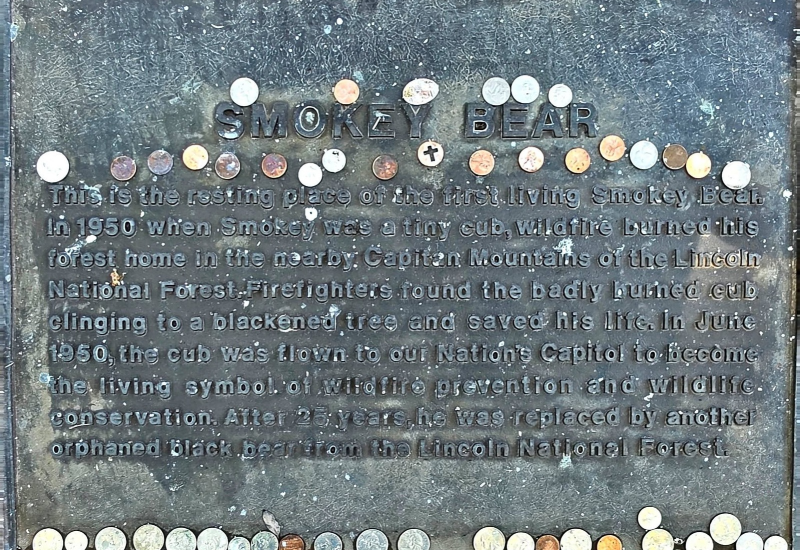
Smokey Bear passed away on November 9, 1976, at age 26. New Mexico Forestry identifies his cause of death as old age.
His remains were returned to New Mexico and buried at Smokey Bear Historical Park in Capitan, near the mountains where his rescue story began.
Little Smokey continued as the second living representative until his death on August 11, 1990. No further living bears took over the role at the zoo.
The distinction matters when remembering Smokey: the original bear retired in 1975 and died in 1976, but the campaign continued through his successor and the enduring illustrated character.
Smokey Goes to Space
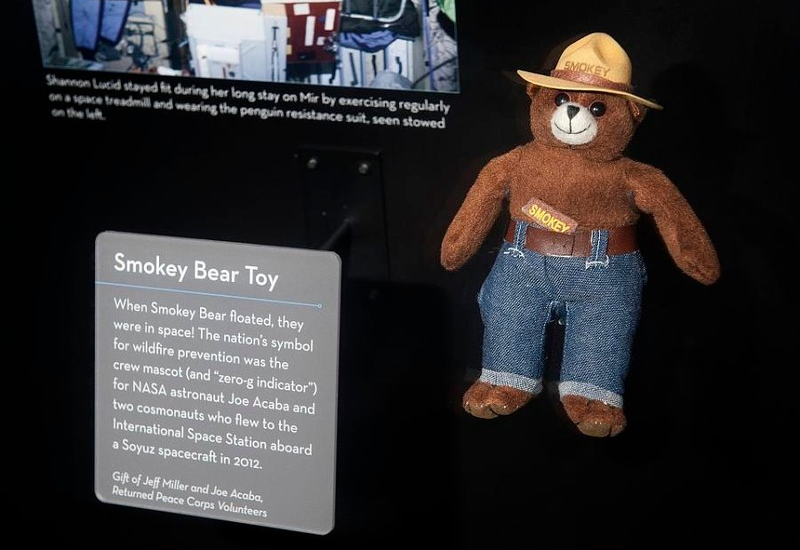
One of the more unexpected chapters in Smokey’s story happened in 2012, when astronaut Joe Acaba brought a Smokey Bear plush toy to the International Space Station.
The toy spent 123 days aboard before returning to Earth.
It is a remarkable distance from the character’s beginnings on a fire prevention poster—and another example of how thoroughly Smokey entered American culture.
Understanding the Message Today
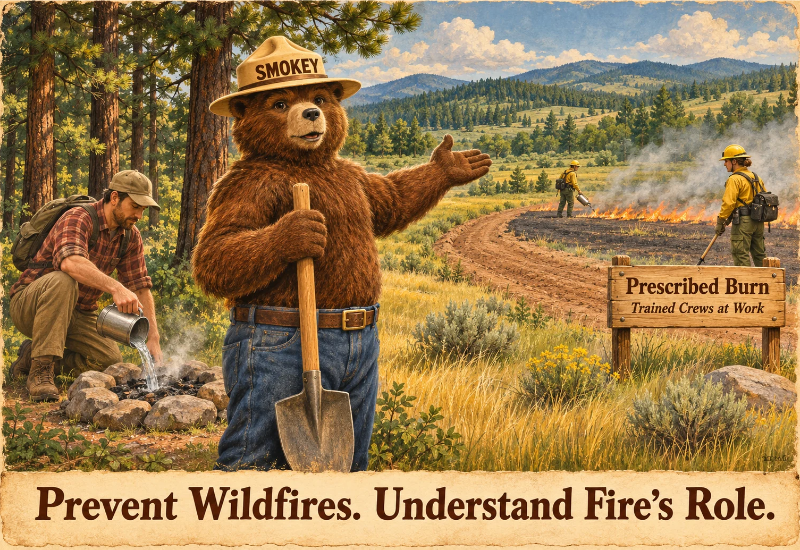
The change from “forest fires” to “wildfires” in 2001 broadened Smokey’s message to include grasslands and other natural areas.
It also helps explain an important distinction: the campaign focuses on unwanted, human-caused fires. Fire can have ecological benefits, and carefully managed prescribed burns have a role in land management.
Understanding that distinction makes Smokey’s lesson more useful. Caring for public lands includes both preventing accidental ignitions and learning why land managers sometimes use fire.
A Stop in Capitan New Mexico
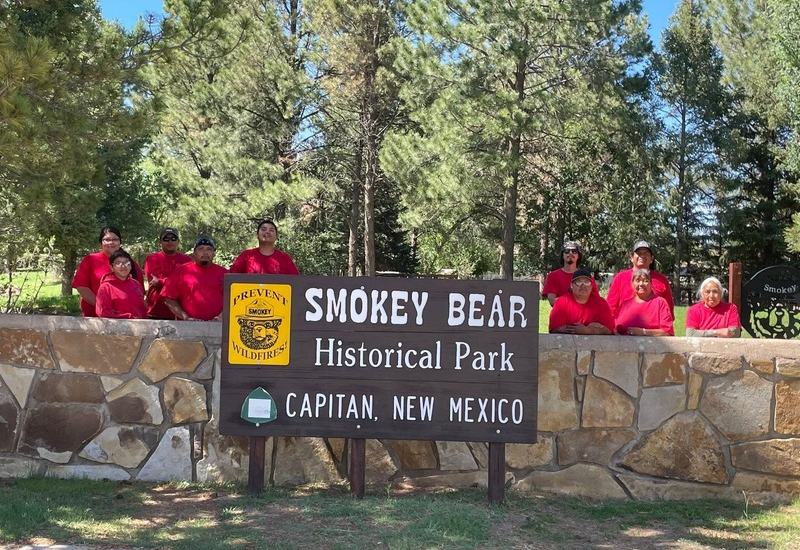
Travelers interested in Smokey’s history can visit Smokey Bear Historical Park in Capitan, New Mexico, at 118 Smokey Bear Boulevard.
Established in 1976, the park preserves his story and includes the real bear’s burial site. Its visitor center explores wildfire prevention, forest health, and fire ecology. Outdoor exhibits and a memorial honoring fallen wildland firefighters add another reason to spend time here.
This is the kind of stop that connects a familiar piece of American culture with a real place and a deeper story. Check the park’s official website for current hours and admission before planning a visit.
My Final Thoughts
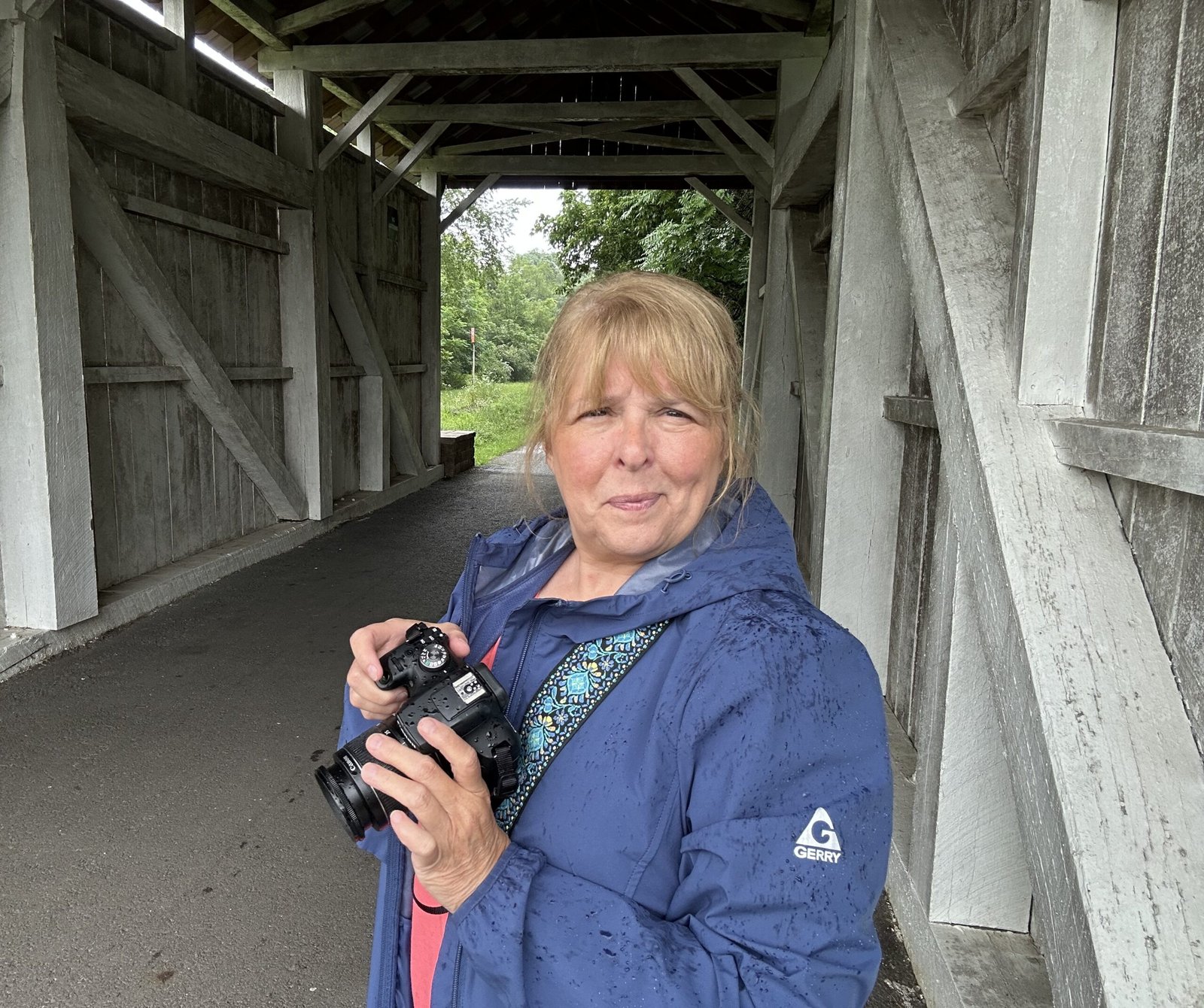
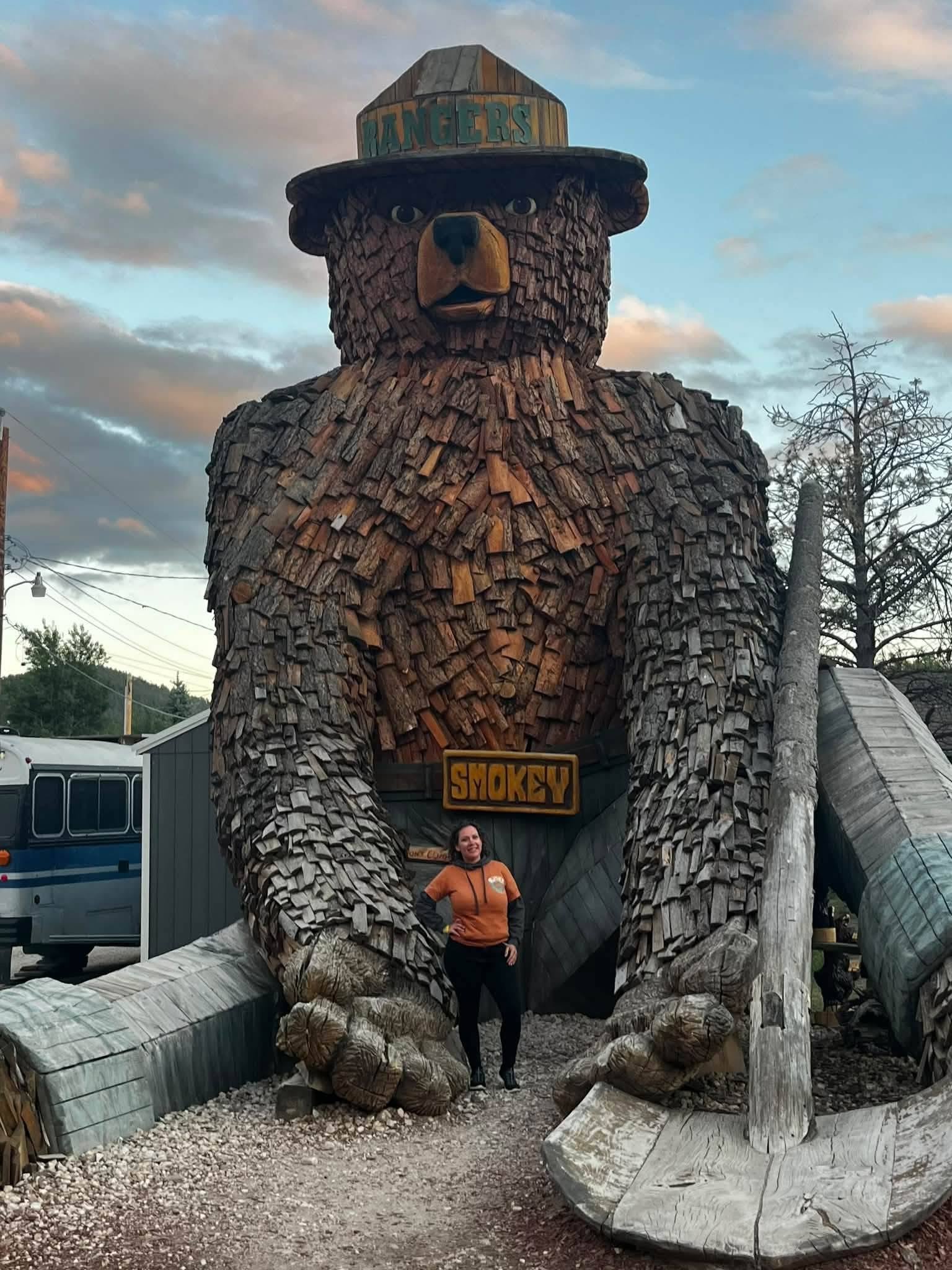
This is not me…. In the Black Hills of ND
What draws me to Smokey’s history is the connection between a simple childhood lesson and the places we enjoy as adults. A forest drive, a quiet campsite, or an afternoon on a trail all give that lesson meaning.
Learning about the rescued cub adds a tender chapter to the story. Learning about the campaign’s wartime beginnings shows how long Americans have been asked to help protect these landscapes.
As I explore more of the country, I want to keep sharing the stories behind familiar roadside sights. Smokey is a reminder that caring for the places we visit belongs alongside enjoying them.
On the Road with Susan — One Adventure at a Time.
Find more adventures at ontheroadwithsusan.com.