
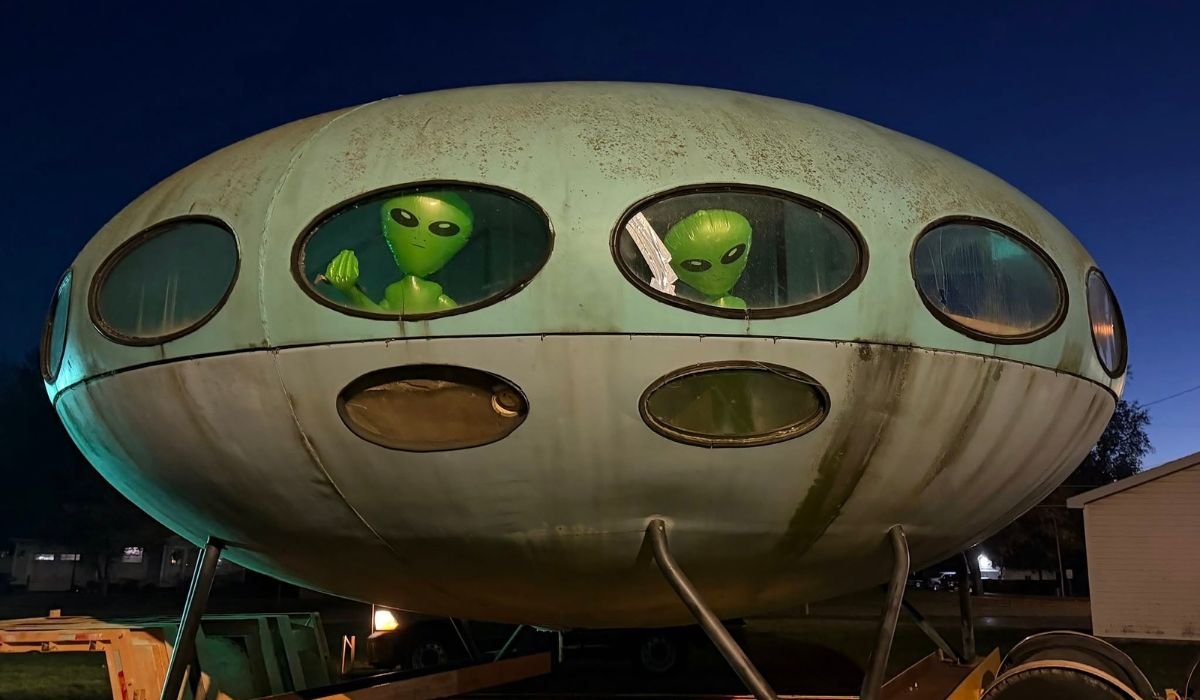
The Futuro House in Atlanta, Illinois
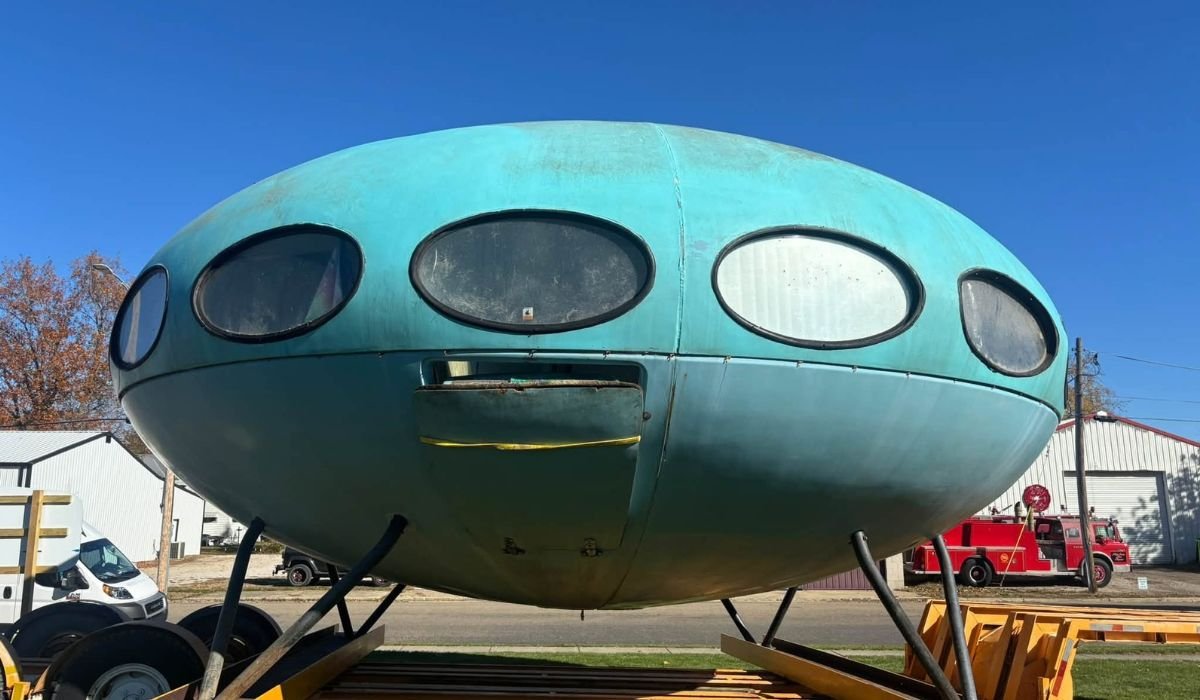
A giant holding a hot dog already gives you a reason to pull over in Atlanta, Illinois. Now there’s a flying saucer in town, too. In November 2026, a rare Futuro House was moved into downtown Atlanta, across from the American Giants Museum. The round windows, raised metal legs, and curved fiberglass shell look right at home among the Mother Road’s roadside oddities. But this little house started out with a very practical purpose in Finland.
The Flying Saucer That Started as a Ski Cabin
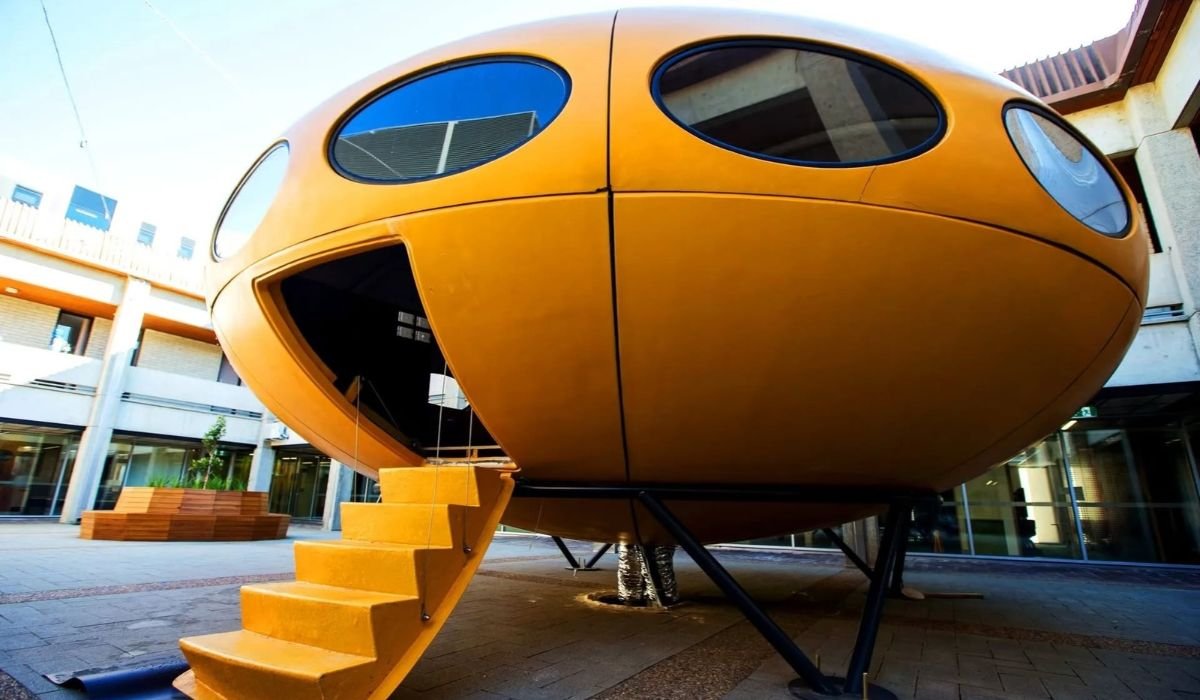
In 1965, Finnish architect Matti Suuronen began designing a ski cabin for a friend. The cabin needed to be easy to set up on sloping ground and quick to heat after a day in the snow. Suuronen’s solution was a rounded, prefabricated shell raised on steel supports. Finnish manufacturer Polykem showed the prototype to the press in March 1968.
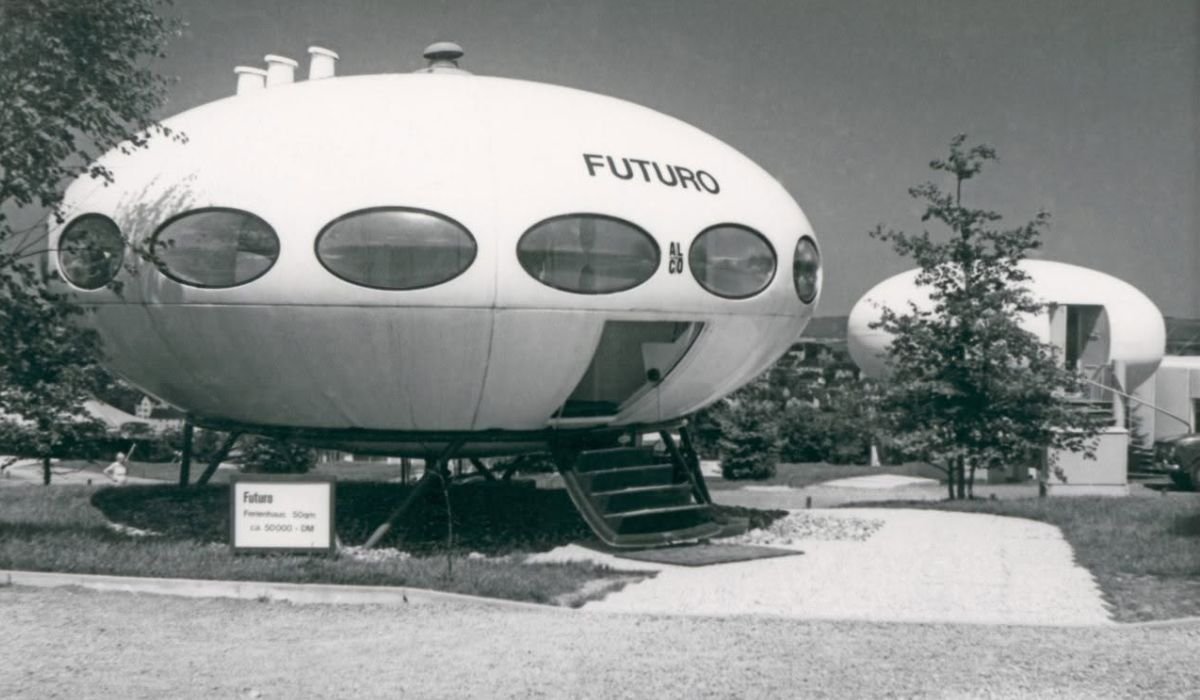
The shell was made from 16 molded fiberglass-reinforced sections that could be bolted together. Foam insulation helped keep the little cabin warm, and the lightweight design made it possible to transport the house in one piece by air. Even the entrance looked as if it belonged on an aircraft. The hatch opened to reveal a short flight of built-in steps.
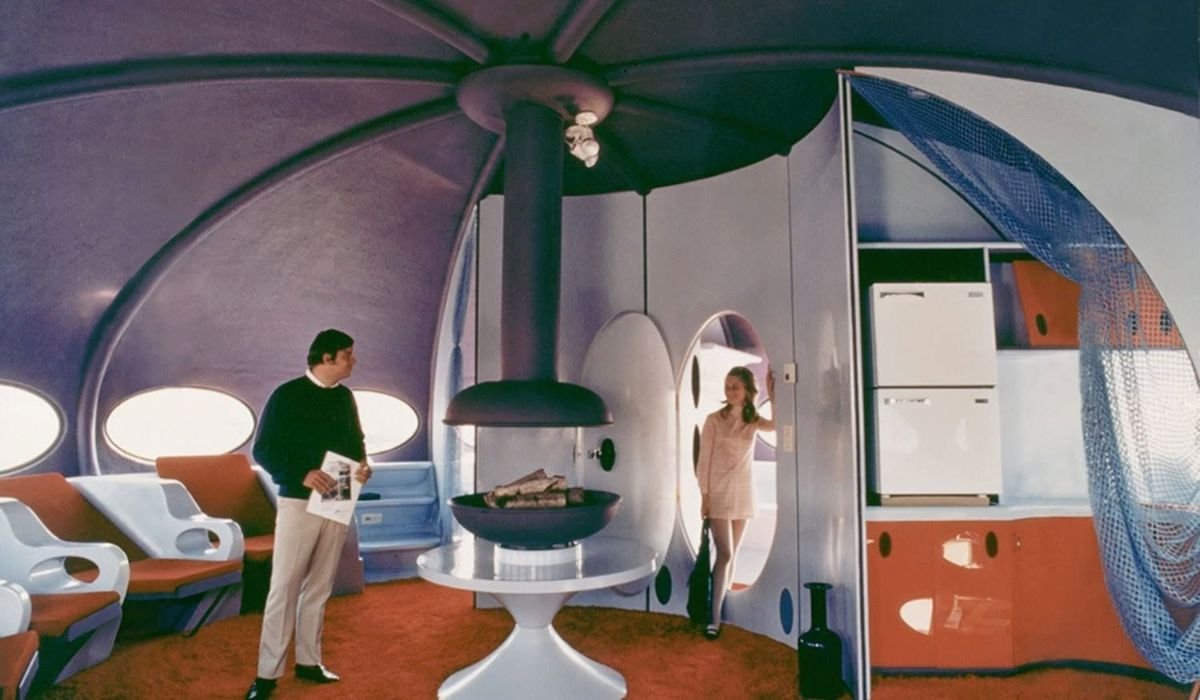
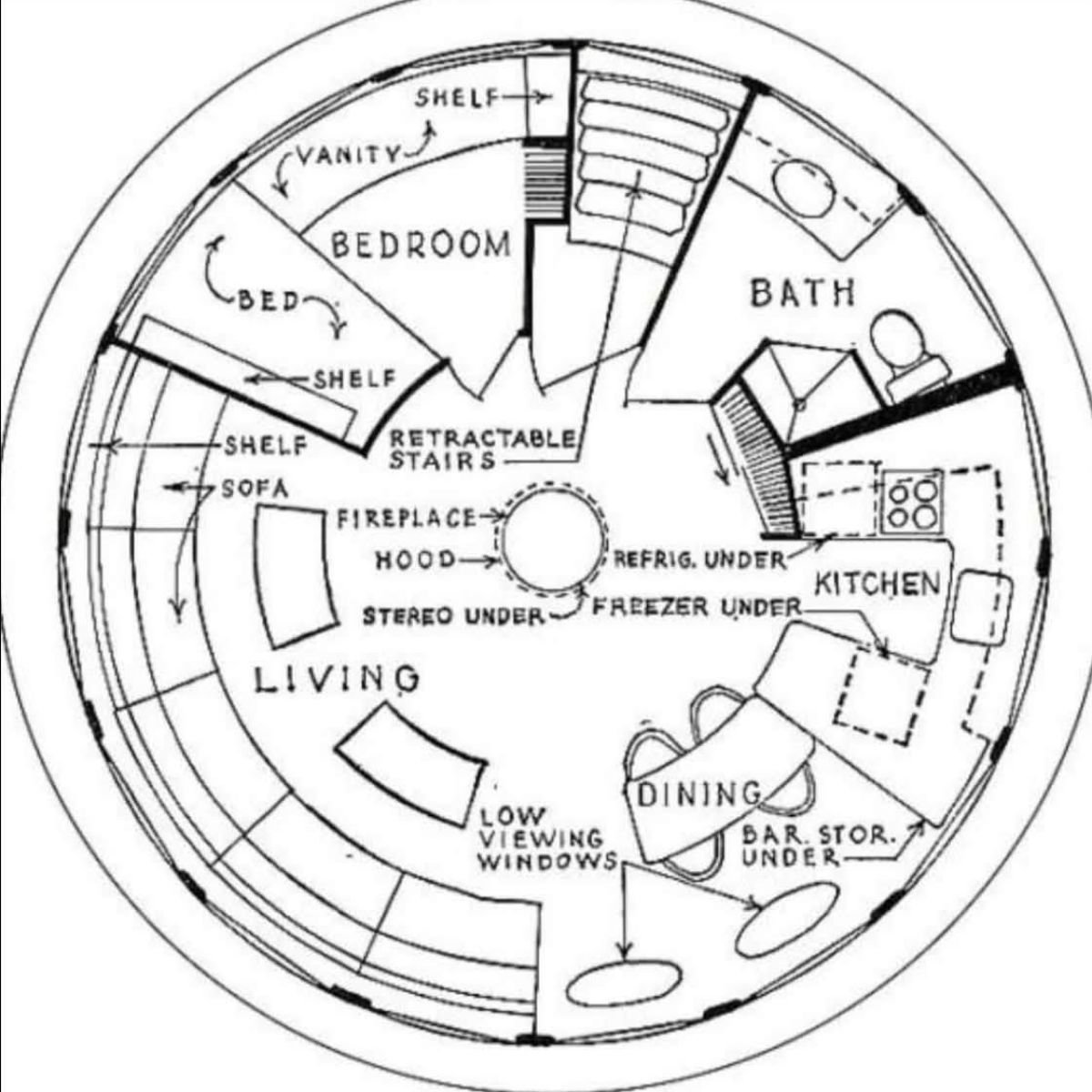
Inside, the standard layout squeezed in a kitchenette, a toilet and shower, a sleeping area, and a lounge arranged around a central fireplace. The lounge chairs could unfold into beds. Imagine coming in from the snow, climbing through that hatch, and settling into a chair by the fire with a view through one of those oval windows.
Built to Go Anywhere
The engineering was genuinely clever. The shell came in 16 segments that bolted together to form the floor and roof. It needed only four concrete piers to stand on, so it could sit on almost any terrain. A crew could assemble it on site, take it apart, and put it back together in about two days, or simply fly it in whole by helicopter. With its insulation and electric heating, the Futuro could reportedly go from about −20°F to a comfortable 60°F in roughly half an hour.
The Space Age Comes to America
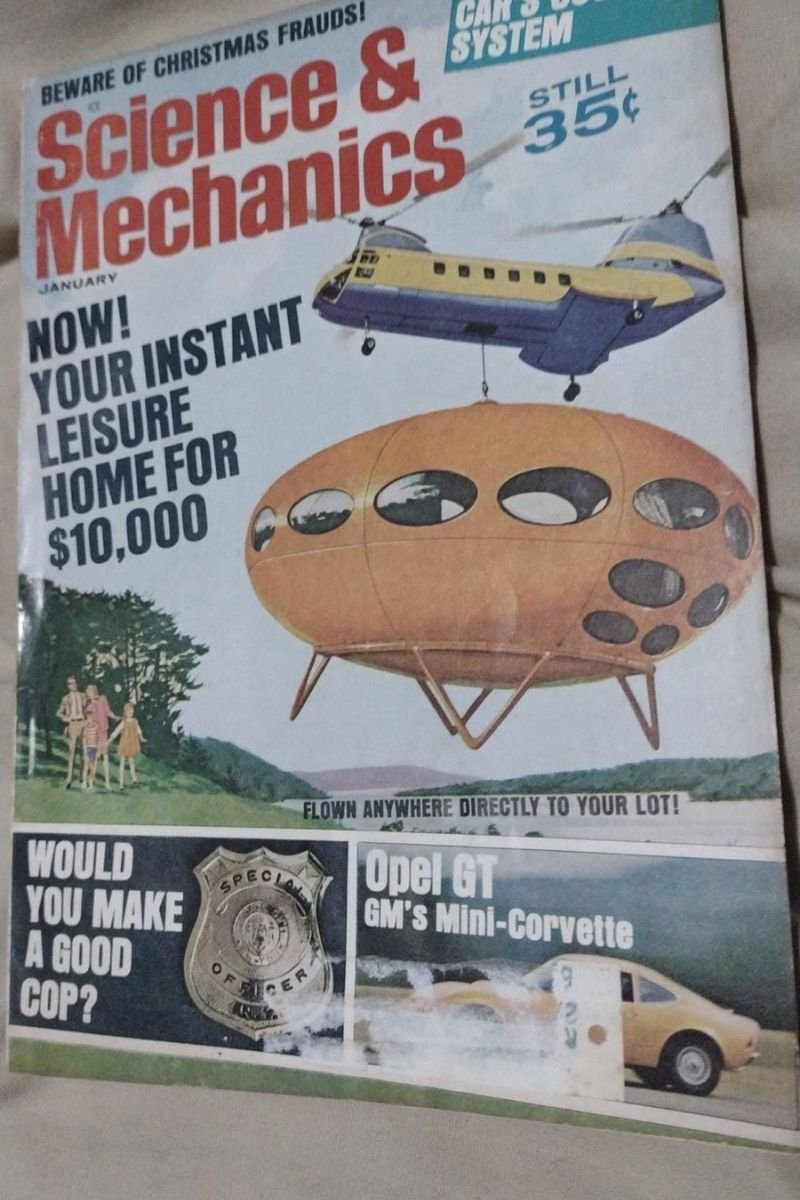
The timing couldn’t have been better. The late 1960s were the height of the Space Race, and a house that looked like a UFO hit a nerve. Futuros were marketed mainly to young adults as a stylish, avant-garde getaway. A 1970 publication claimed the design was licensed in 50 countries and already being produced in the United States, Australia, and Belgium. American units are generally associated with a licensee in Philadelphia.
Futuros popped up as vacation cabins, roadside offices, gas station kiosks, and even banks. In 1974, two of them served as “Space Banks” for the Bank of New Zealand during the Commonwealth Games in Christchurch.
Why the Future Didn't Last
For all the excitement, the Futuro never really caught on. Even in Finland, the very first one, placed on the wooded shore of Lake Puulavesi, drew local protest for looking too unnatural in the landscape.
In the U.S., the problems piled up quickly:
What Grounded the Futuro
Zoning: Many towns simply banned them.
Financing: Banks were reluctant to lend money on a plastic flying saucer.
Vandalism: Some were damaged by people who didn’t appreciate the neighborhood’s new “spaceship.”
The 1973 oil crisis: Plastics are made from petroleum. When oil prices spiked, plastic production stalled and synthetics became expensive.
Changing attitudes: By the 1970s, plastic was starting to be seen as an environmental problem, not a miracle material.
By the mid-1970s, the Futuro had been pulled from the market. Somewhere around 100 had been built in total.
The Survivors
Today, about 60 Futuros are believed to still exist, scattered across the globe and mostly in private hands. Some are lovingly restored; others sit abandoned in fields. A few have earned real respect from the architecture world:
Not all have been so lucky. One in Darwin, Australia was destroyed by Cyclone Tracy in 1974, and a unit in Frisco, North Carolina was lost to fire in 2022. Every survivor matter.
Atlanta, Illinois: The Town of Giants Gets a Spaceship
Atlanta is a Logan County town of about 1,600 people on Historic Route 66, sitting between Lincoln and Bloomington. It has made a name for itself as a place that takes roadside Americana seriously, and its anchor is the American Giants Museum, which bills itself as home to the country’s largest collection of restored oversized fiberglass advertising statues.
Museum owner Lee Woods had been hunting for a Futuro for nearly a decade. He once tried to buy the one at Pink Elephant Antiques in Livingston, but that deal fell through. Then he and his wife, Diane, tracked one down in a rural area near Danvers, Illinois, just west of Bloomington, and bought it.
"Our goal is to continue making Atlanta, Illinois, one of the most unique and exciting destinations along historic Route 66."
Lee Woods, American Giants Museum
Touchdown: November 7, 2026
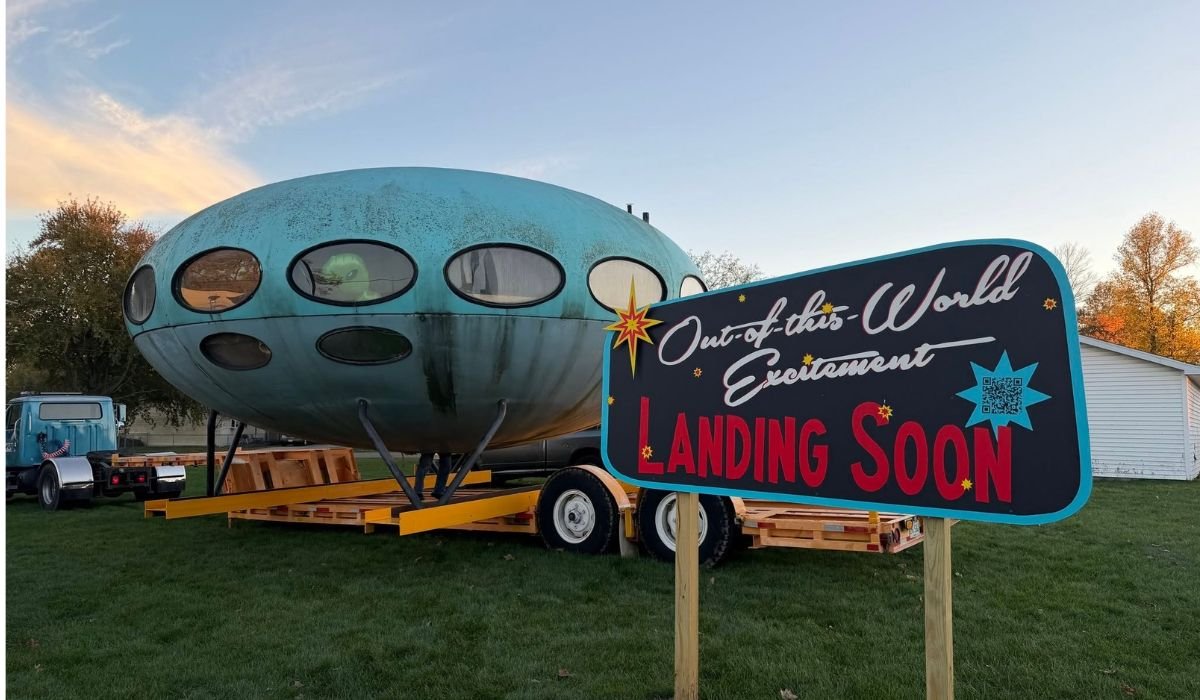
On Saturday, November 7, 2026, the Futuro made the trip from Danvers to its new home on SW Arch Street in Atlanta, just down the street from the museum. A crowd gathered to watch it arrive. In true Route 66 fashion, the town leaned all the way into the fun: crane-crew members wore “Men in Black” suits for the installation, a local bakery made alien cookies, and an alien was spotted peeking out of one of the windows.
Watch the Move
You don’t have to take my word for how big an event this was. The American Giants Museum filmed the whole adventure in their video “Long-Lost Futuro House: Moving a 1960s Flying Saucer to Route 66!” It’s a rare chance to watch one of these fragile fiberglass saucers take to the road and settle into its new home in Atlanta. Grab a cup of coffee, hit play, and enjoy a little piece of Route 66 history being made.
What's Next for the Futuro in Atlanta?
Woods plans to keep the interior largely as it is, including its original 1960s space-age furniture. The house will be professionally cleaned and touched up with paint, and one window and the door will be repaired by the ReGiant crew, the same team that restored the museum’s giants. Once it’s set on its concrete pad, he plans to add indoor and outdoor lighting. The Illinois Route 66 Scenic Byway reports that Astro Man, one of the museum’s giants, will be relocated to stand beside the Futuro, and Woods has said he hopes to open it for tours by spring.
Plan Your Visit
- Where: SW Arch Street, Atlanta, Illinois, near the American Giants Museum on Historic Route 66
- When: The exterior is viewable now; interior tours are expected to begin around spring 2027. Check with the American Giants Museum before you go.
- Also in Atlanta: The American Giants Museum, Giant’s Route 66 Stop, a working grain elevator, the historic library, and a coal mine shaft
- Make it a Futuro double: Continue south on Route 66 to see the Futuro at the Pink Elephant Antique Mall in Livingston

See ya on the road
Susan
My Final Thoughts
I’ve spent a lot of time writing about places that were built to last: stone canal locks, steel bridges, brick main streets. The Futuro is the opposite. It was built for a future that never quite arrived, out of a material that fell out of favor almost as fast as it rose. And yet here it is, more than fifty years later, still turning heads.
That’s what I love about Route 66 towns like Atlanta. They understand that roadside history isn’t just about grand monuments. It’s also about the wonderfully odd things that made people pull over, point, and laugh out loud. A flying saucer parked down the street from a crowd of fiberglass giants? That’s the kind of stop that makes a road trip. I can’t wait to see it with the lights on.