
Ohio's Bridge Country A Guide to Ashtabula County's 19 Covered Bridges
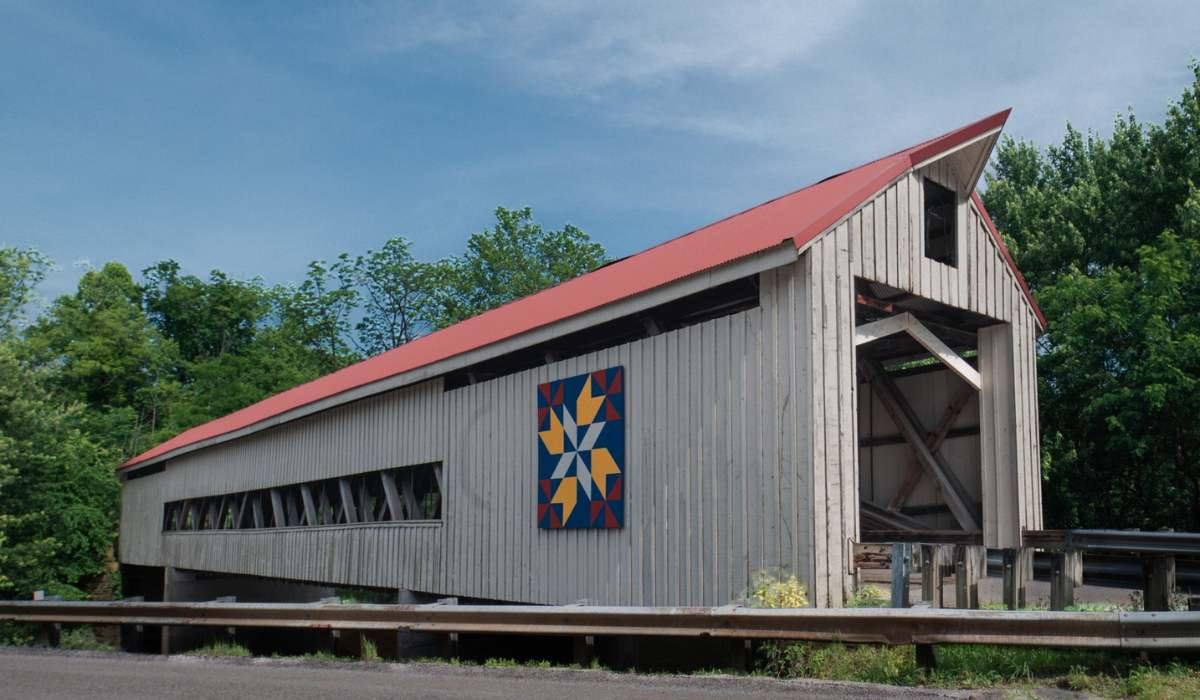
There is a particular kind of stillness that comes over you when you pass through a covered bridge. The clatter of tires on wooden planks, the sudden cool shadow, the smell of aged timber — and then, just as suddenly, you’re back in open daylight. In Ashtabula County, Ohio, you can have that experience nineteen times over.
Tucked into the far northeastern corner of Ohio along 26 miles of Lake Erie shoreline, Ashtabula County holds more public covered bridges than any other county in the state. They range from Civil War–era structures built when this was still the Western Reserve frontier, to a record-breaking modern engineering marvel built just two decades ago. Together they form one of the most rewarding self-guided road trips in the Midwest — a journey through rolling farmland, forested river valleys, and the quiet back roads of wine country.
This guide covers all nineteen bridges, the stories behind them, practical tips for planning your visit, and everything you need to make the most of Ohio’s most beloved covered bridge collection.
Why Cover a Bridge?
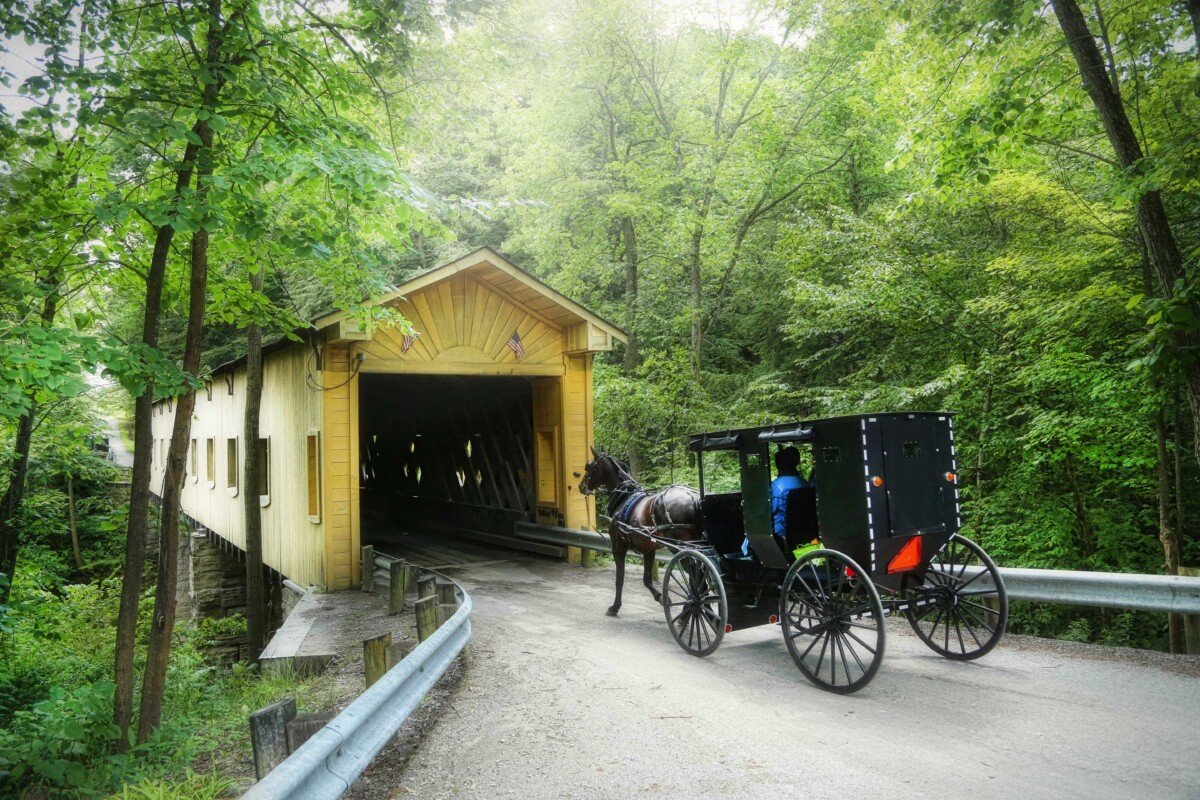
It’s a question almost every visitor asks. The answer is elegantly practical. In the mid-to-late 1800s, timber was the most abundant and affordable building material in Ohio’s Western Reserve. But exposed wood decays quickly under rain, snow, and the freeze-thaw cycles of a Great Lakes winter. A roof — essentially turning the bridge into a barn stretched across a river — could protect the structural timbers for a century or more.
The early settlers of Ashtabula County carried this building tradition with them from New England, where covered bridges had been a standard construction since the 18th century. Connecticut-style lattice work, New England truss patterns, and Yankee practicality all found their way into Ohio’s river crossings.
Other theories have been floated over the years — that the enclosure kept livestock calm while crossing rushing water, or offered shelter for travelers caught in a storm — but the primary reason was always preservation. And preservation worked: the oldest surviving bridges here date to 1867, still carrying traffic more than 155 years after they were built.
A Field Guide to Truss Styles — Five Patterns, One County
- Burr Arch: A multiple kingpost truss combined with a long arch — one of the most durable American designs
- Inverted Haupt: A rare Civil War–era design, used at only one bridge in the county
- Town Lattice: Diagonal planks forming a lattice, popular for its simplicity — no heavy timber required
- Pratt Truss: Diagonal tension members and vertical compression posts — the most efficient for long spans
- Howe Truss: Vertical iron rods with diagonal wooden bracing — common in mid-19th century railroad bridges
Smolen-Gulf Bridge
The Longest Covered Bridge in the United State.
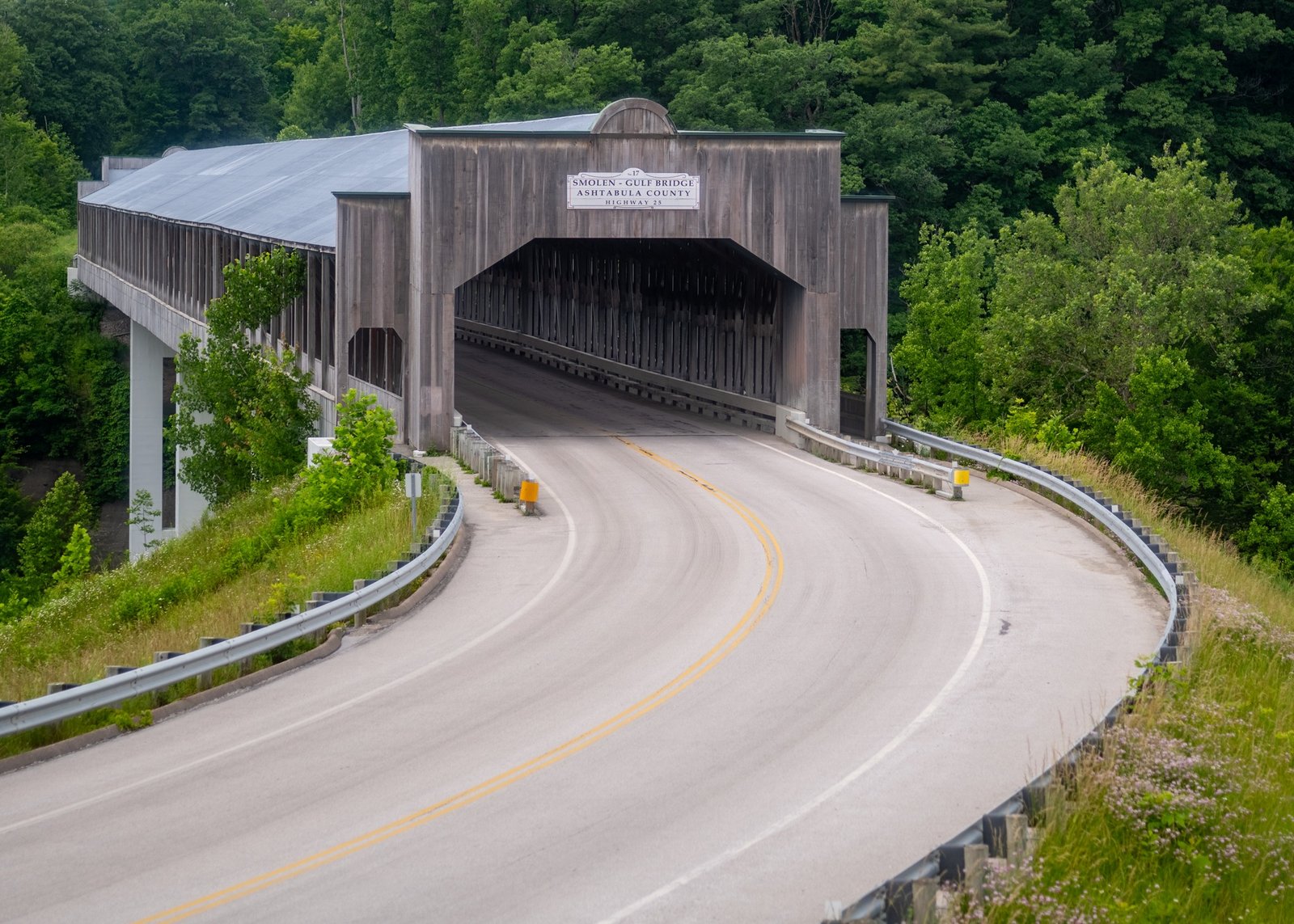
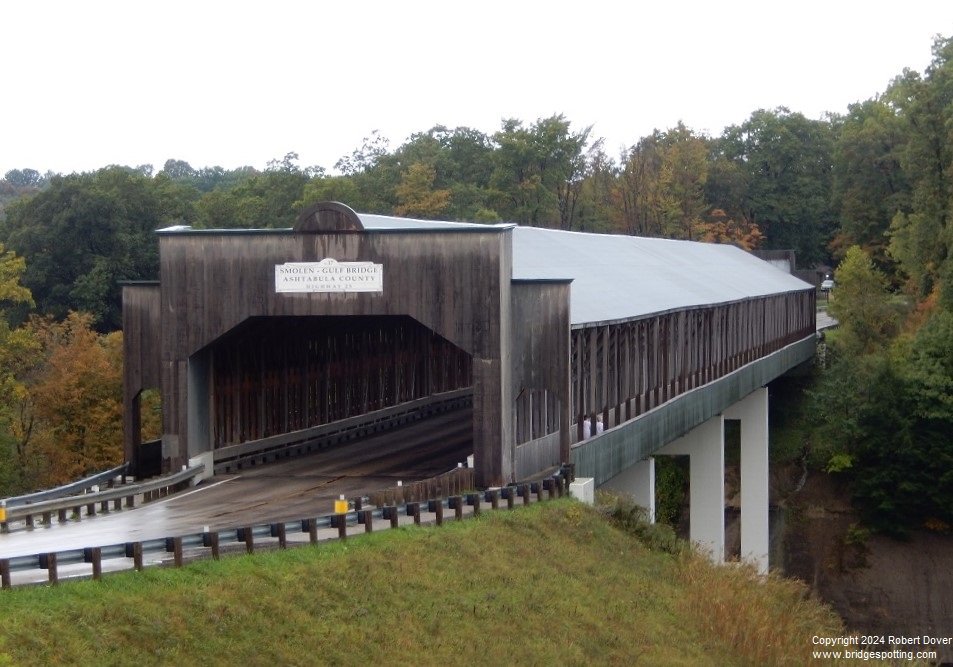
Named for John Smolen, the county engineer whose tireless advocacy preserved and rebuilt Ashtabula’s covered bridge collection over three decades, the Smolen-Gulf Bridge is in a category of its own. Dedicated on August 26, 2008, it stretches 613 feet across the Ashtabula River gorge at a dizzying 93 feet above the water. With a clear width of 30 feet and a height clearance of 14 feet 6 inches, it handles full legal load traffic and is engineered for a 100-year lifespan. Just below it, the Riverview Pedestrian Bridge (built 2016) offers a remarkable vantage point looking up at the main span from the river level.
Neddie Woods Covered Bridge
The oldest covered bridge still standing in Greene County, the Neddie Woods bridge was built in 1882 by a craftsman named Lisbon Scott and named for Edward “Neddie” W. Wood, a Civil War veteran who owned the land on which it was built. The 40-foot Queenpost truss bridge carries a tin-covered gable roof and unpainted vertical plank siding on both sides. The structure was rehabilitated in 2005 and reinforced with six steel I-beams, ensuring it can carry the tractors and farm trucks that still cross it regularly.
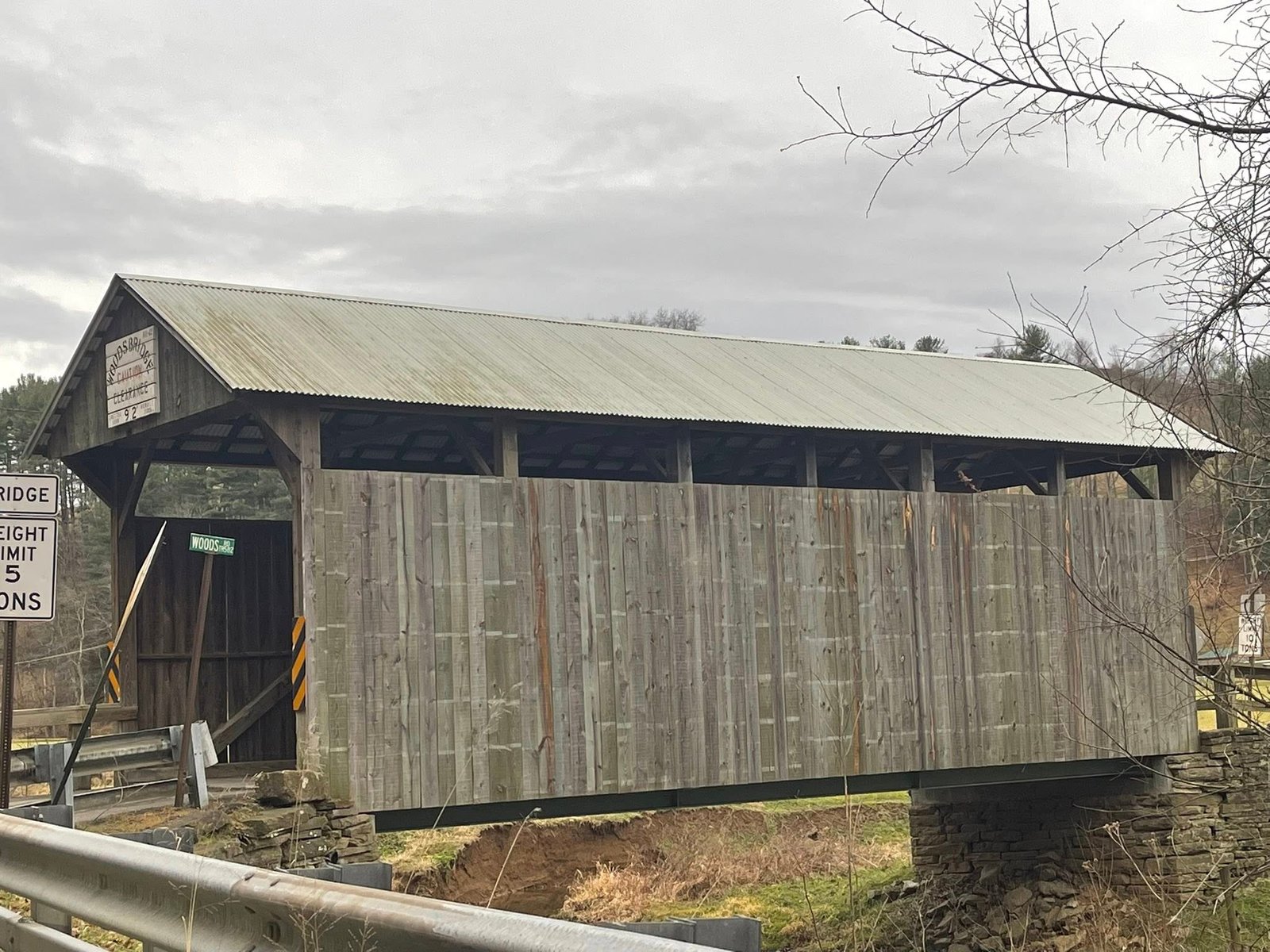
Carmichaels Covered Bridge
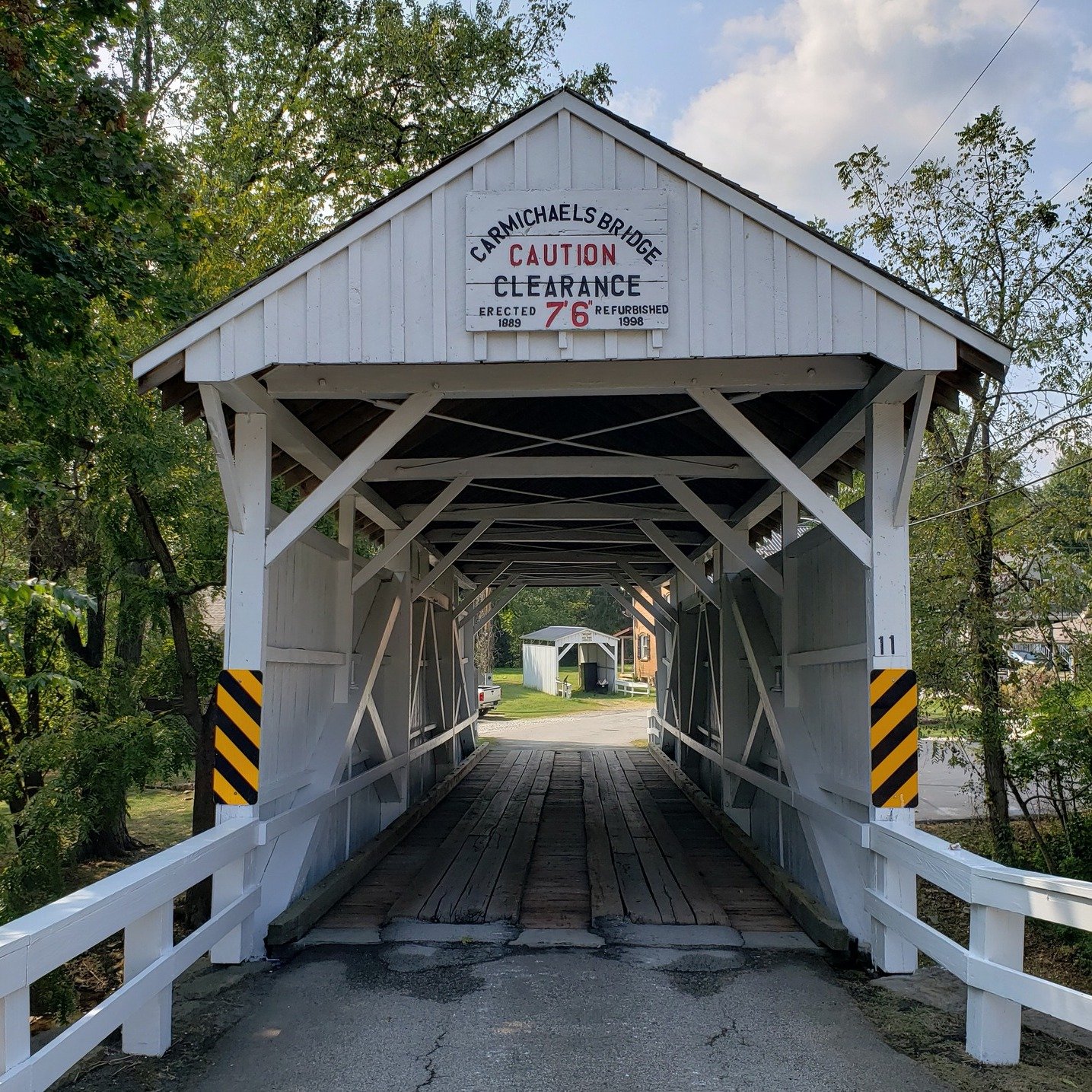
Carmichaels Covered Bridge is located next to the small downtown area of Carmichaels, surrounded by modern homes rather than rural farmland — a setting that gives it a uniquely intimate feel. The bridge spans 64 feet over Muddy Creek and features the Queenpost truss design with white vertical board and batten siding. It was rehabilitated in 1998 and has been a site of the annual Covered Bridge Festival since the festival’s very inception in 1970.
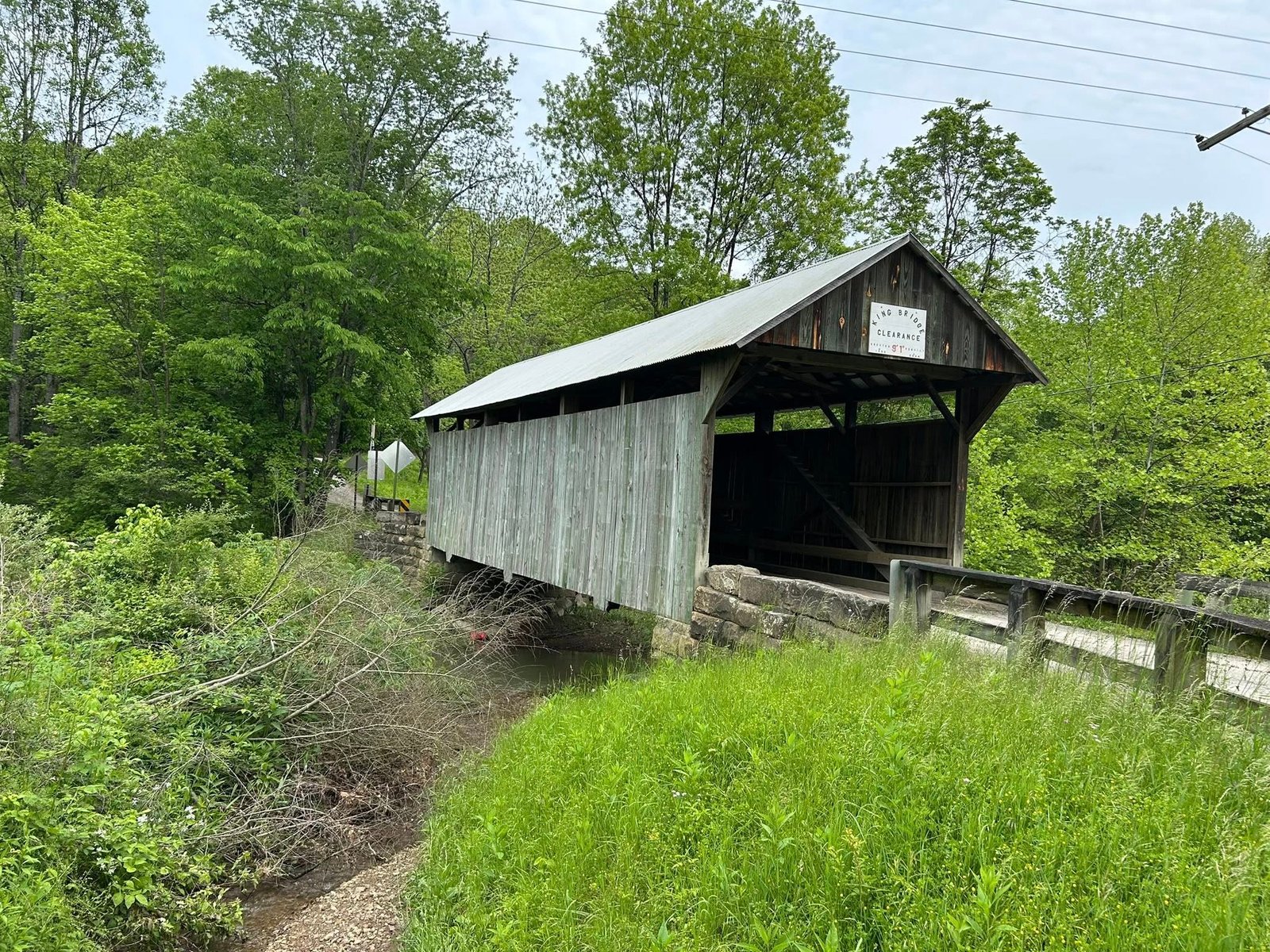
Kings Covered Bridge
The King Covered Bridge is a Queenpost truss built in 1890, covered with unpainted random-width vertical board siding. Its cut stone abutments extend to form short wingwalls slightly higher than the road level. Kings Sister Hill Road, Wayne Township, carries you deep into the returning forests just a few miles from the West Virginia line. The bridge was restored in 2004 and reinforced with five steel I-beams, bringing it to a three-ton load rating that serves the working farms around it.
Shriver Covered Bridge
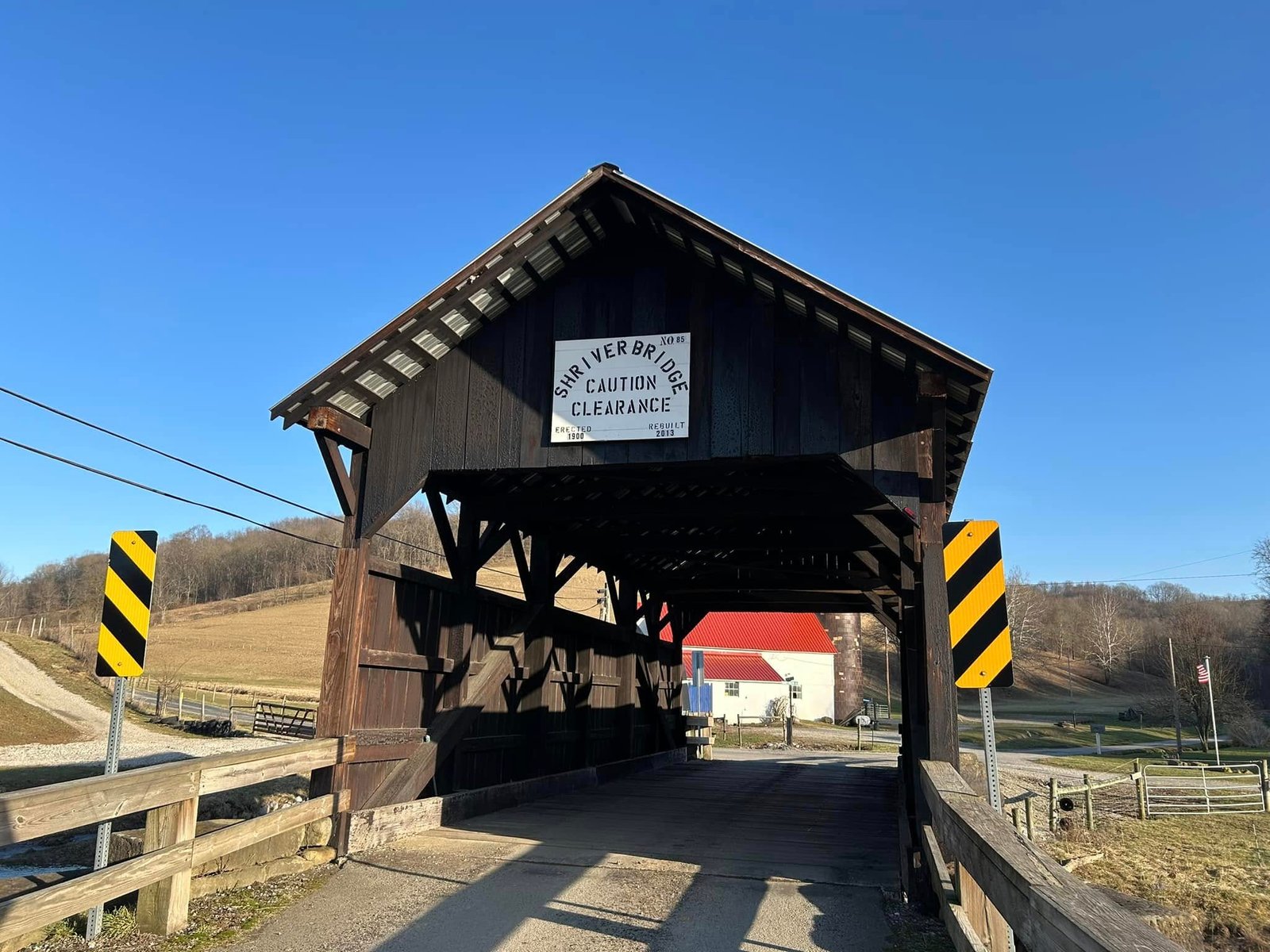
The Shriver Bridge on Hargus Creek near Rogersville was built around 1900, then comprehensively redone in 2013 with unevenly planked siding, a tin-covered gable roof, and six steel I-beams to support modern traffic — mostly tractors, trucks, and hay wagons. A close look at its original stone abutments reveals that the stones are snug and show no signs of mortar. It is a bridge where the old and the carefully restored exist in quiet conversation.
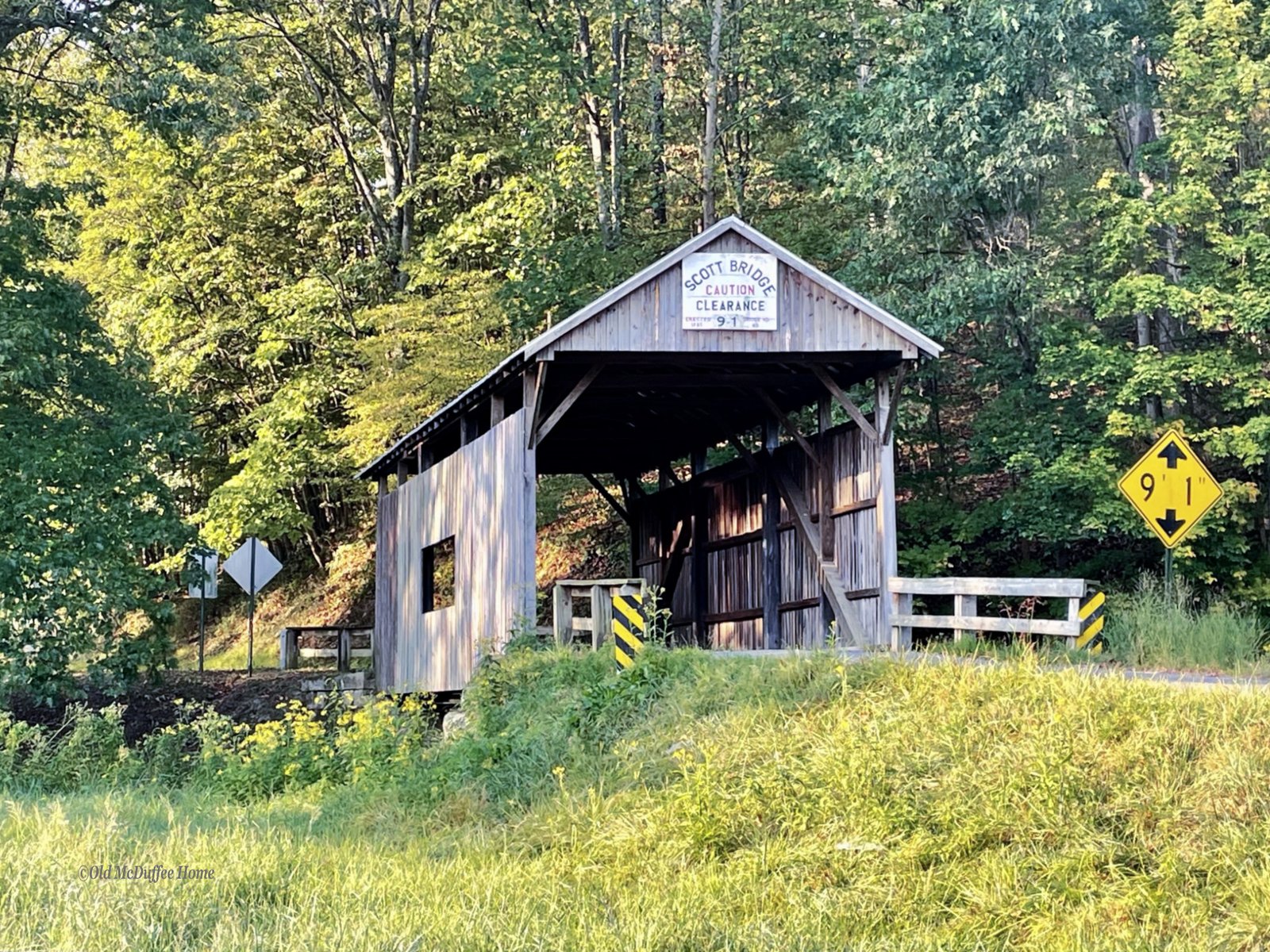
Scott Covered Bridge
Scott Covered Bridge is the westernmost covered bridge in Greene County. Built in 1885, it crosses 41 feet over Ten Mile Creek and is set along the edge of a wood line, surrounded by dense underbrush that makes it feel deeply secluded. It was built by William Lang and rebuilt in 2008 with six steel I-beams. A distinctive feature is a window that runs the full span of the bridge — a wonderful photography vantage point looking out over the creek.
Cox Farm ( Lippincott ) Covered Bridge
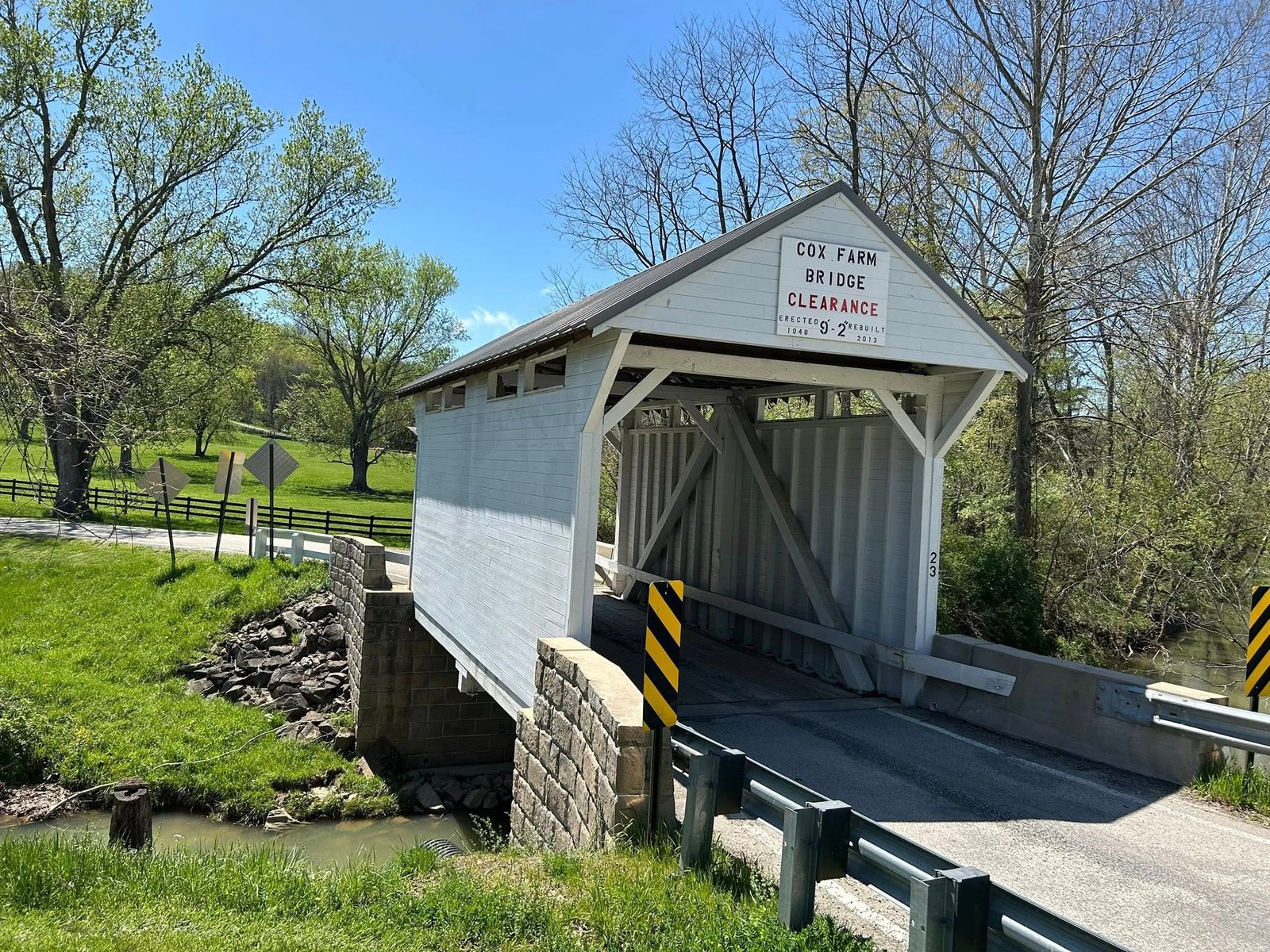
The Shriver Bridge on Hargus Creek near Rogersville was built around 1900, then comprehensively redone in 2013 with unevenly planked siding, a tin-covered gable roof, and six steel I-beams to support modern traffic — mostly tractors, trucks, and hay wagons. A close look at its original stone abutments reveals that the stones are snug and show no signs of mortar. It is a bridge where the old and the carefully restored exist in quiet conversation.
Wren's Nest Covered Bridge
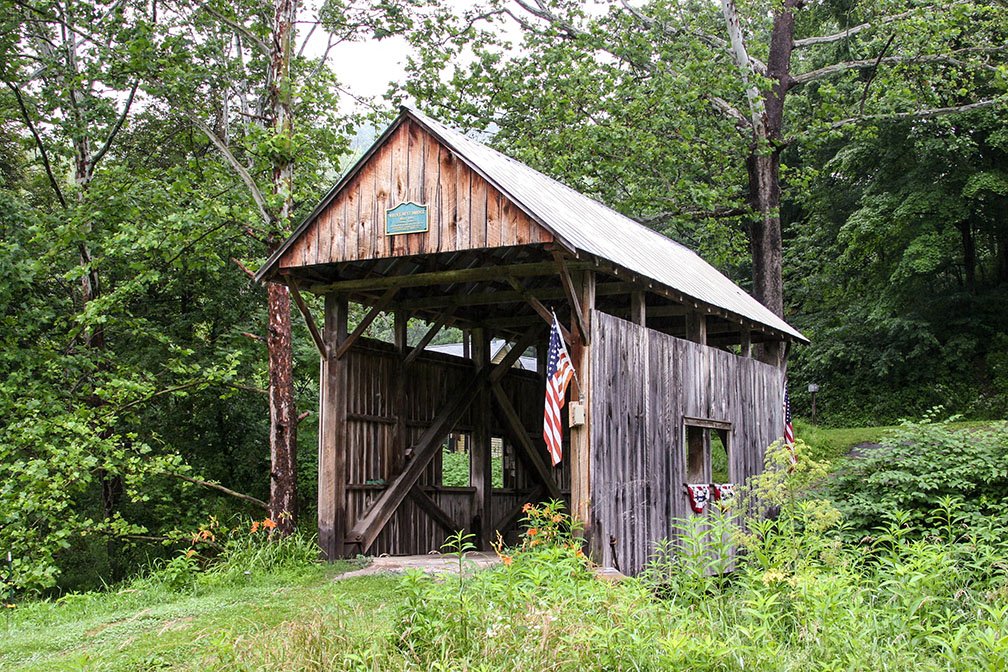
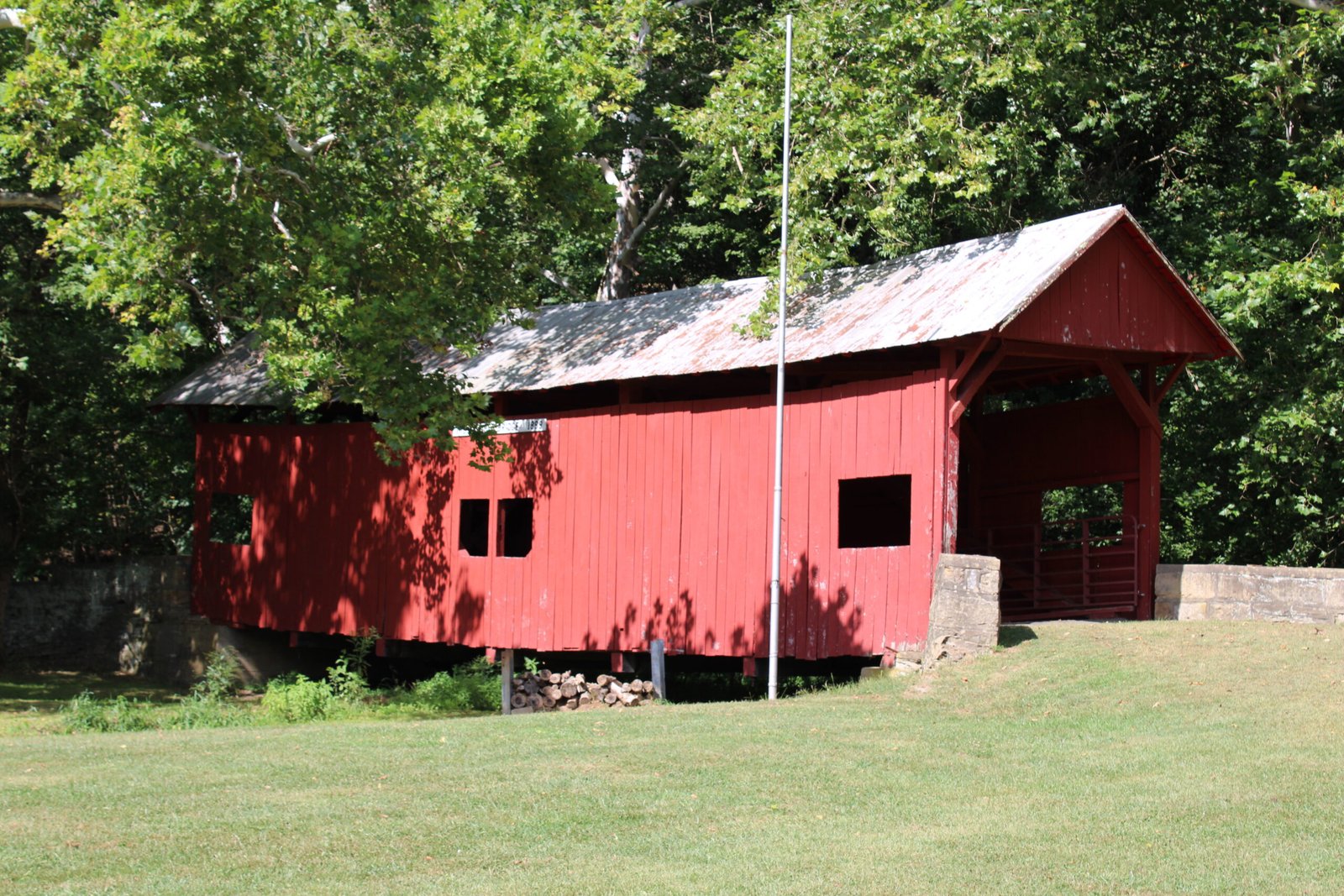
Wren’s Nest is a privately owned bridge built in 1993 by the adjacent landowner , Frederick McCracken , near Aleppo in the far western reaches of Greene County. The 30-foot Kingpost through-truss bridge crosses the South Fork of Wheeling Creek on a private drive, making it one of the county’s lesser-known crossings. Unlike the seven publicly maintained bridges on the official driving tour, Wren’s Nest is a labor of private preservation — a testament to the enduring affection this region holds for its covered bridge heritage.
If Greene County has whetted your appetite for covered bridges, the adventure is just getting started. Just to the north lies Washington County, home to 23 historic covered bridges of its own — one of the richest collections in the state. I’ve already made the journey to see every one of them, spread across three self-guided driving tours through the county’s rolling farmland and quiet backroads. From the oldest, the 1845 Erskine Bridge near the West Virginia border, to the festival favorites clustered around Mingo Creek County Park, Washington County’s bridges tell their own remarkable story. Read all about it in Exploring PA Covered Bridges Starting in Washington County.
My Final Thoughts
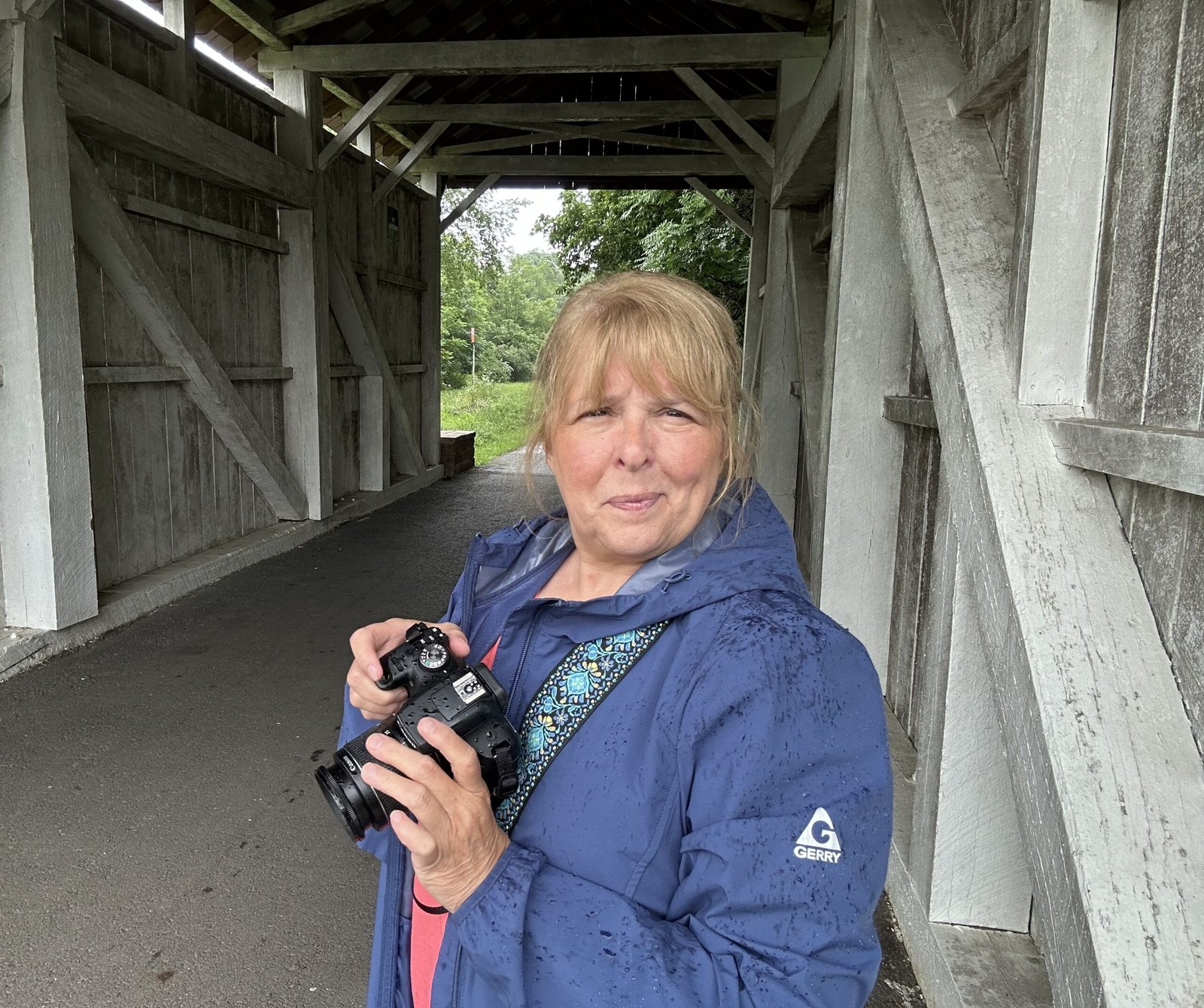
Greene County may be one of Pennsylvania’s least-visited corners, but for anyone who loves history, backroads, and the quiet poetry of old craftsmanship, it deserves a place at the top of the list. These seven bridges — plus the hidden gem at Wren’s Nest — are not museum pieces behind velvet ropes. They are working crossings, still carrying the trucks and tractors of a working countryside, still anchored to the same cut-stone abutments laid by builders whose names are sometimes lost to history.