
The Covered Bridges That Time Left Behind
Lawrence County once had seventeen covered bridges. Today two survivors remain — and both are extraordinary. The McConnell’s Mill Covered Bridge sits deep inside a dramatic state park gorge; the Banks Covered Bridge offers a quieter, more intimate glimpse of western Pennsylvania’s bridge-building heritage.
Three Survivors of a Vanished Era, Standing Watch Over The Creeks of Western PA
Pennsylvania is home to more than 200 covered bridges — more than almost any other state in the nation. In the rolling countryside of Lawrence and Mercer Counties, just north of Pittsburgh, three remarkable survivors remain. Each one is the last of its kind in its county, and together they form one of western Pennsylvania’s finest historic bridge trails.
At the height of the covered bridge era — roughly 1820 to 1900 — historians believe as many as seventeen covered bridges stood in Lawrence County alone, with more spanning the creeks and rivers of neighboring Mercer County. Today, only three endure in this corner of western Pennsylvania: the McConnell’s Mill Covered Bridge and the Banks Covered Bridge in Lawrence County, and the extraordinary Kidd’s Mill Covered Bridge across the county line in Mercer. Together, they offer a window into a time when wooden bridges stitched communities together across rushing creeks and rocky gorges — when the cover above your head wasn’t quaint but essential, protecting the structural timbers from the relentless Pennsylvania weather.
All three bridges are listed on the National Register of Historic Places and are owned and maintained by their respective counties. Whether you’re a history enthusiast, a bridge hunter, or simply someone looking for a beautiful drive through rural Pennsylvania, these three bridges make for a deeply rewarding day trip.
McConnell's Mill Covered Bridge
1874 110 ft Howe
Year build LENGHT TRUSS TYPE
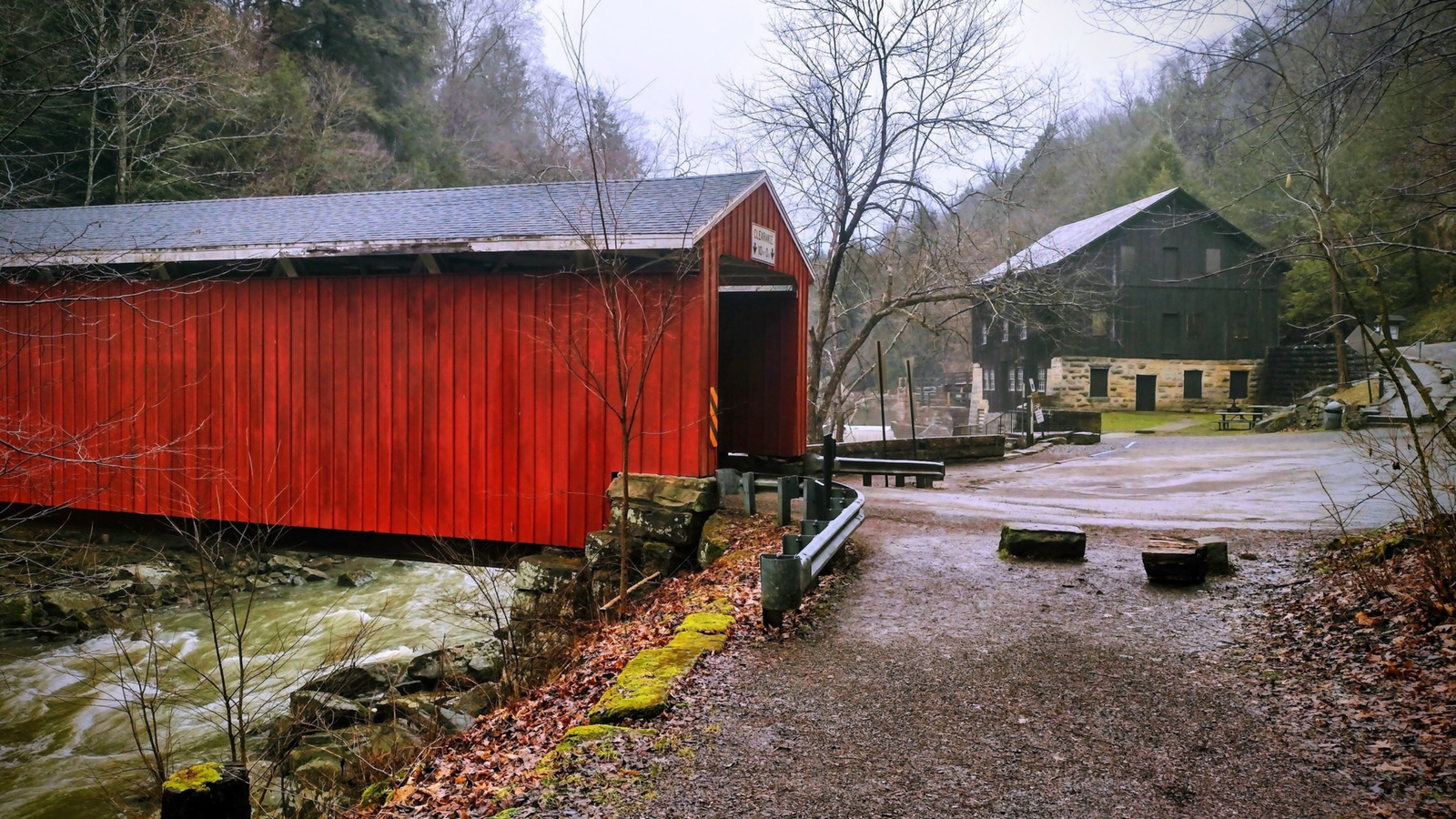
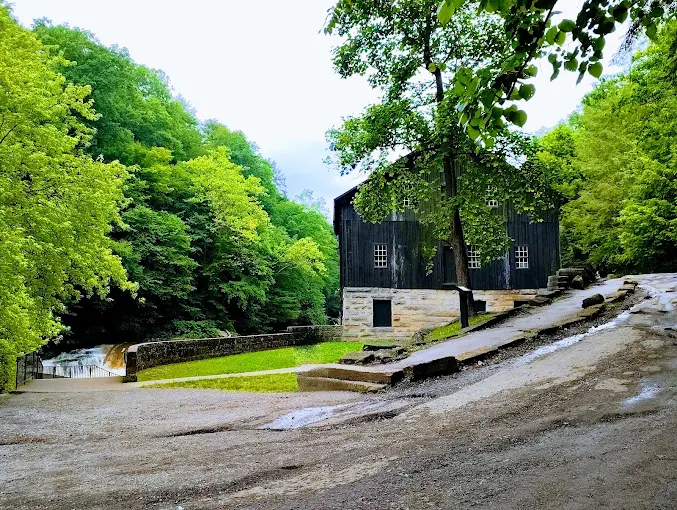
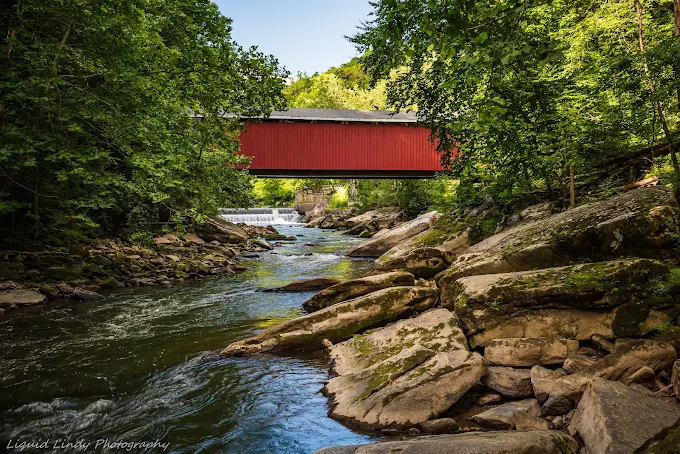
Deep in the gorge of McConnells Mill State Park, where Slippery Rock Creek churns between boulder-strewn banks and ancient hemlocks crowd the ridgeline, you’ll find one of the most dramatically situated covered bridges in all of Pennsylvania. The McConnell’s Mill Covered Bridge has stood here since 1874 — its red-painted, board-and-batten exterior giving it the unmistakable look of a barn suspended over a river.
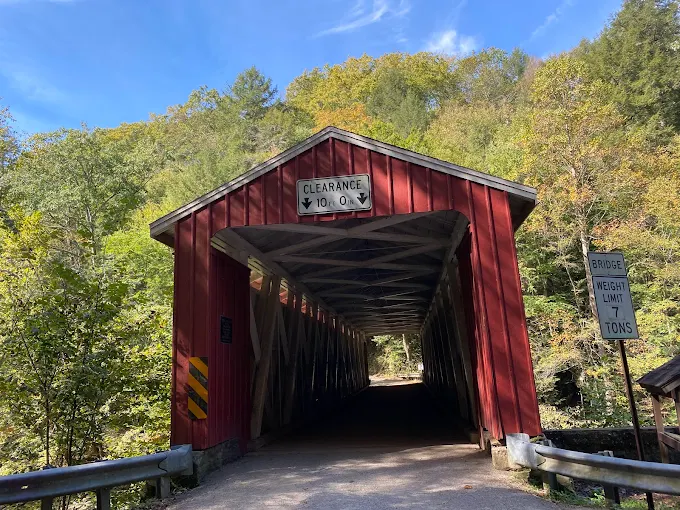
The bridge’s construction was directly tied to the mill beside it. The first gristmill on this site was built in 1852 by Daniel Kennedy, then rebuilt in 1868 after fire destroyed it. When residents of Slippery Rock Township petitioned the Lawrence County Courthouse in September of 1874, they described a bridge at this crossing as “much needed” — essential to the commerce and daily life of the surrounding farms and settlements.
What makes this bridge architecturally extraordinary is its Howe truss design — one of only four surviving examples of this construction type in the entire state. The Howe truss was a pioneering hybrid system, combining diagonal wooden compression members with vertical iron rods under tension. In many ways, it was the forerunner of all-iron truss bridges that would come to define American infrastructure in the late 19th century. The McConnell’s Mill bridge even employs a crossed-diagonal variation that adds an extra layer of elegance and strength.
Thomas McConnell purchased the adjacent mill in 1875, improving it by replacing the old waterwheel with water turbines and the grinding stones with cylindrical roller mills — making it one of the first rolling mills in the country. The mill processed oats, corn, buckwheat, and wheat until it finally closed in 1928. Today the restored mill operates as a museum within the state park, which was formally dedicated in October 1957 after the Western Pennsylvania Conservancy transferred the land to the Commonwealth of Pennsylvania.
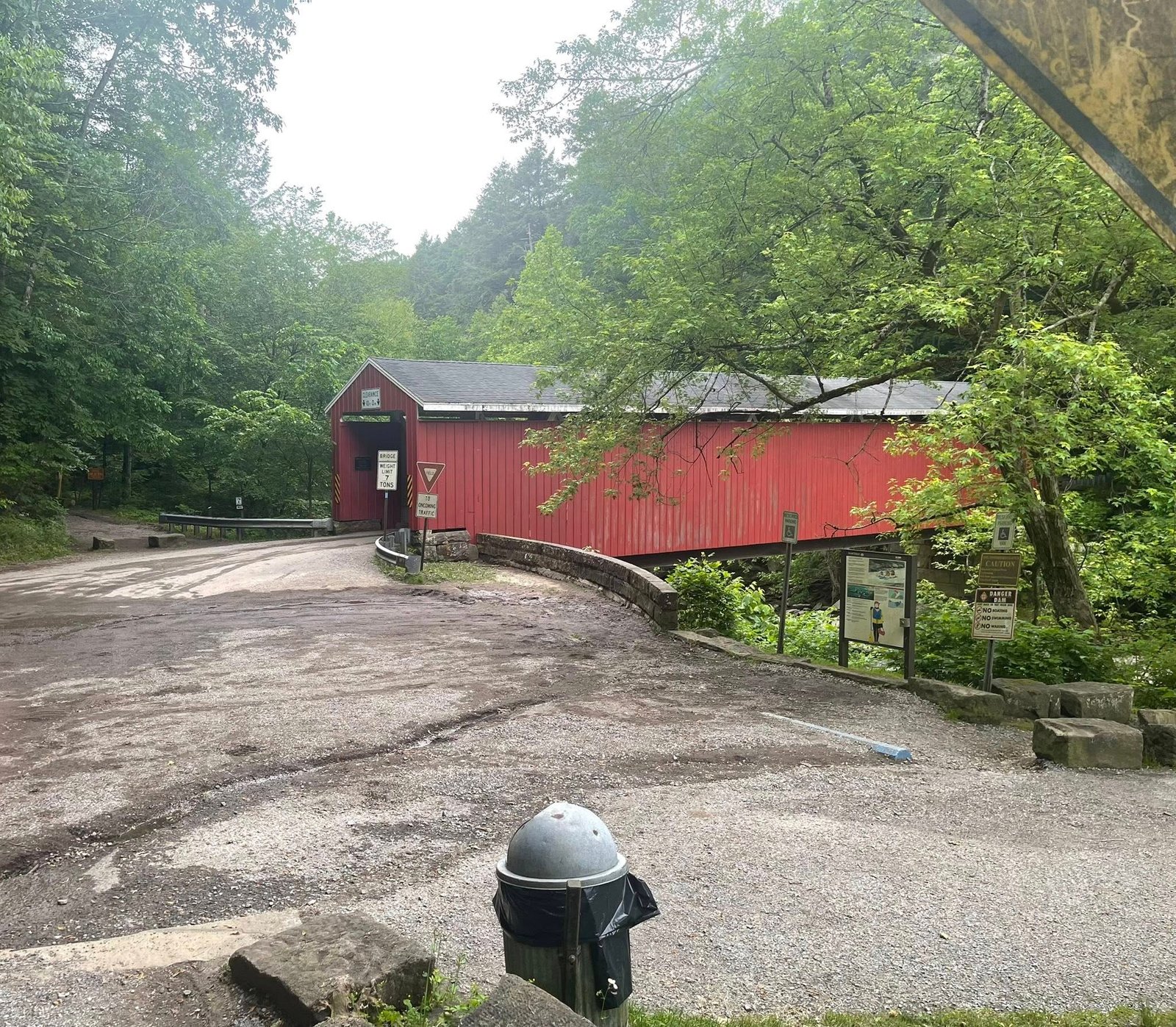
The setting of this bridge — nestled beside the mill and dam, inside one of western Pennsylvania’s most beautiful gorges — makes it an absolute must-visit. The park also connects to the North Country Trail and offers hiking, rock climbing, and world-class whitewater paddling on Slippery Rock Creek. Note, too, that the mill and surrounding gorge served as a filming location for The Pale Blue Eye, the 2022 film starring Christian Bale.
Banks Covered Bridge
1889 134 ft Burr
Year build LENGHT TRUSS TYPE
Drive north through Lawrence County’s rolling farmland toward New Wilmington, and eventually you’ll encounter something unexpected: a covered bridge painted entirely white, inside and out. The Banks Covered Bridge is unlike most of its counterparts across Pennsylvania — and that difference is precisely what makes it so memorable.
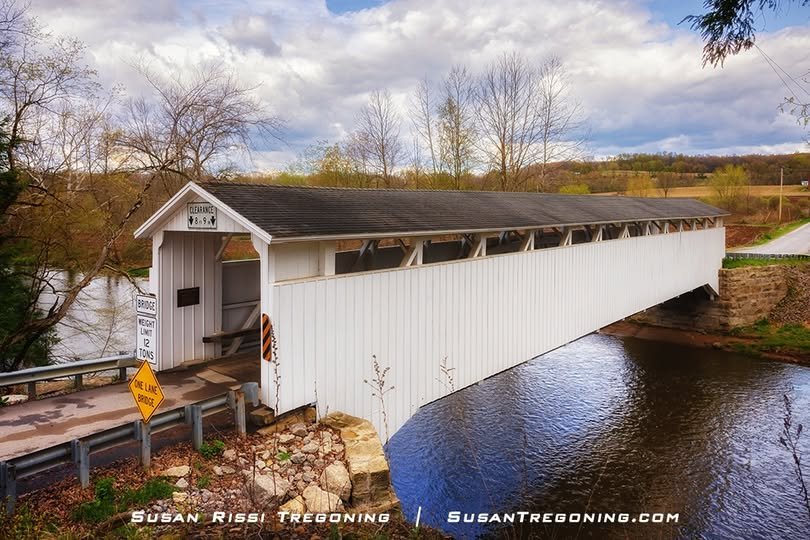
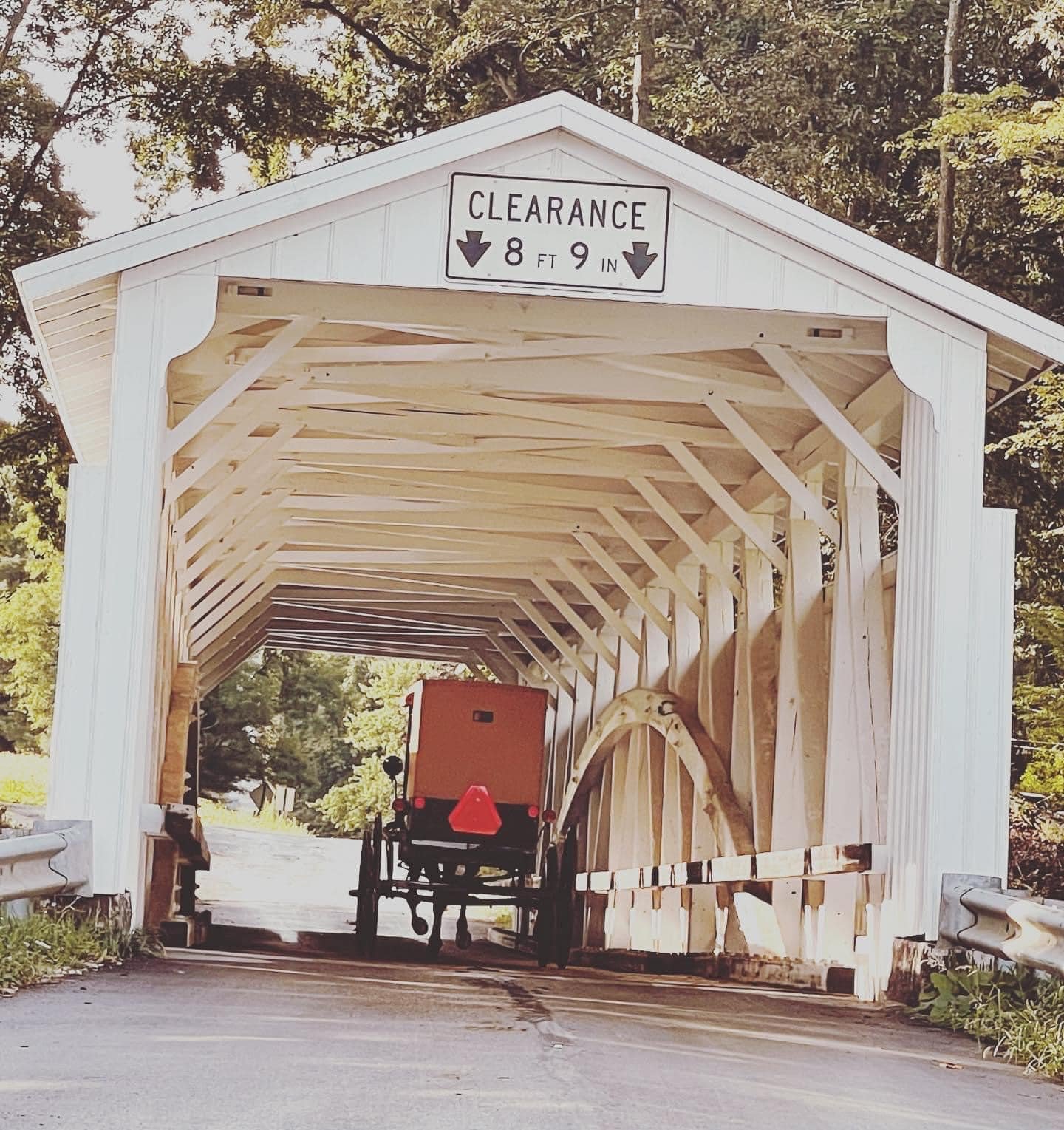
Built in 1889, the Banks Bridge spans 121 feet across Neshannock Creek in Wilmington Township, resting on a stone foundation supported by steel girders. It employs a Burr arch truss — the same design used by the majority of Pennsylvania’s covered bridges — yet its brilliant white paint job, covering both exterior and interior, gives it a character entirely its own. Where other bridges weather to warm grays and reds, Banks stands luminous and pristine against the surrounding countryside
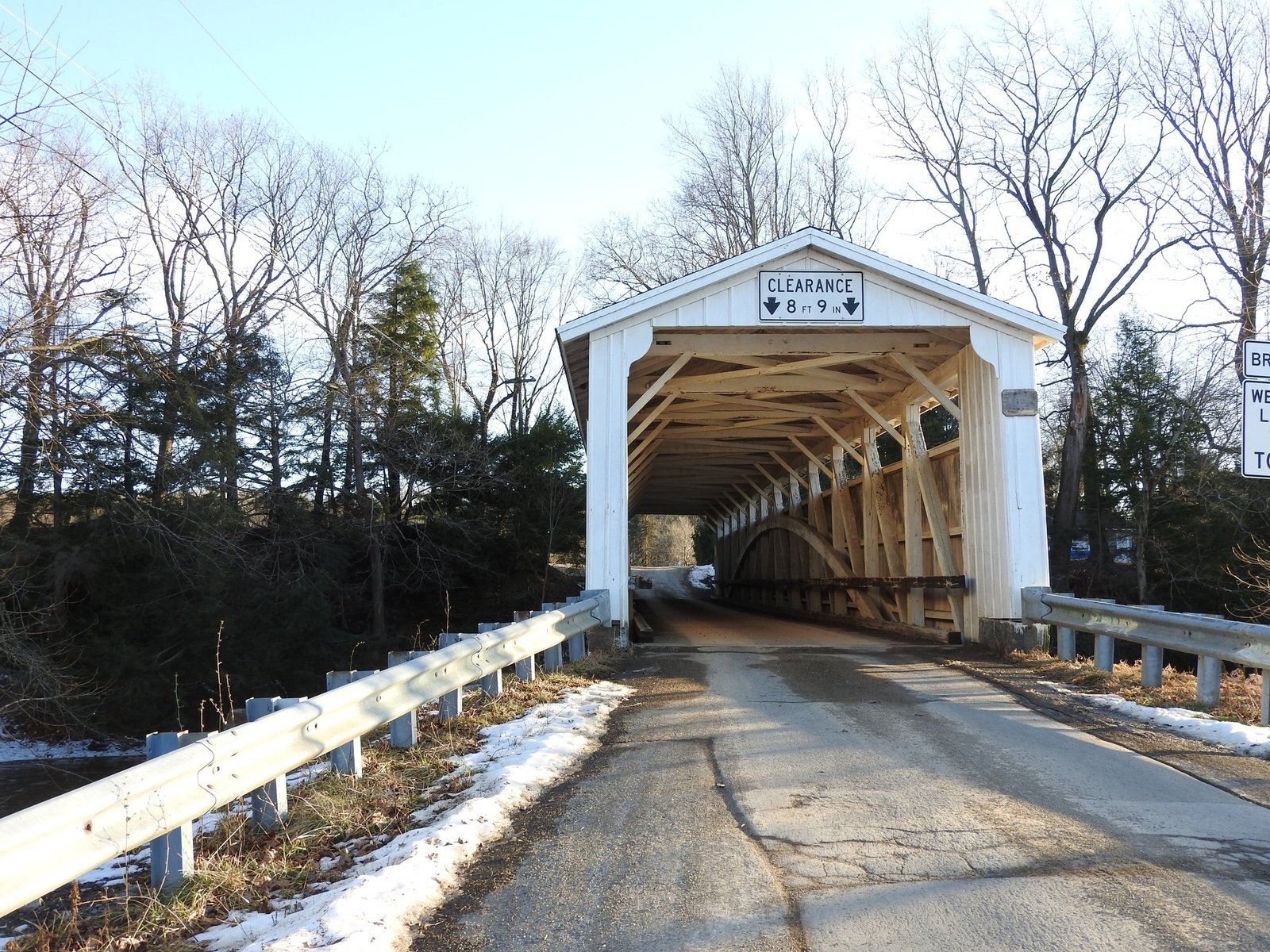
The bridge was rehabilitated in 1999 under the Lawrence County Commissioners and remains open to traffic today, with a height clearance of 8 feet 9 inches and a 12-ton weight limit. It sits at the heart of Amish country, surrounded by working farms and quiet rural roads. Horse-drawn buggies still pass through the area regularly — a fitting complement to a bridge that has itself outlasted the age that built it.
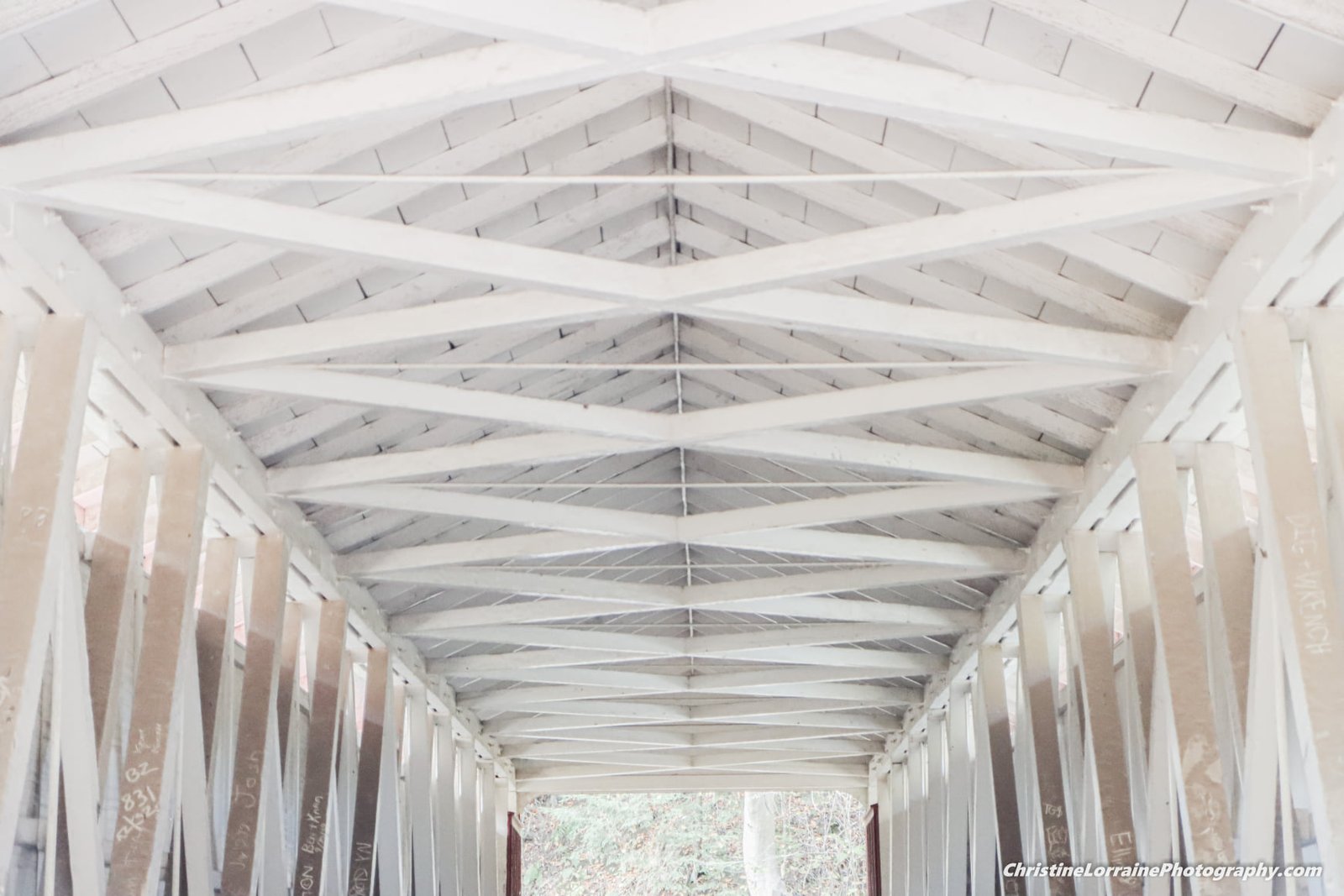
The graffiti found inside the McConnell’s Mill bridge dates back to 1905 — evidence of generations of visitors who felt compelled to leave their mark. The Banks Bridge has its own historical marker mounted inside, recording the names of the commissioners and engineers who saw to its rehabilitation. It’s a small detail, but it reflects something important: these bridges are not just relics. They are living pieces of community infrastructure, still used and still cared for by the county that owns them.
Kidd's Mill Covered Bridge
1868 118 ft Smith
Year build LENGHT TRUSS TYPE
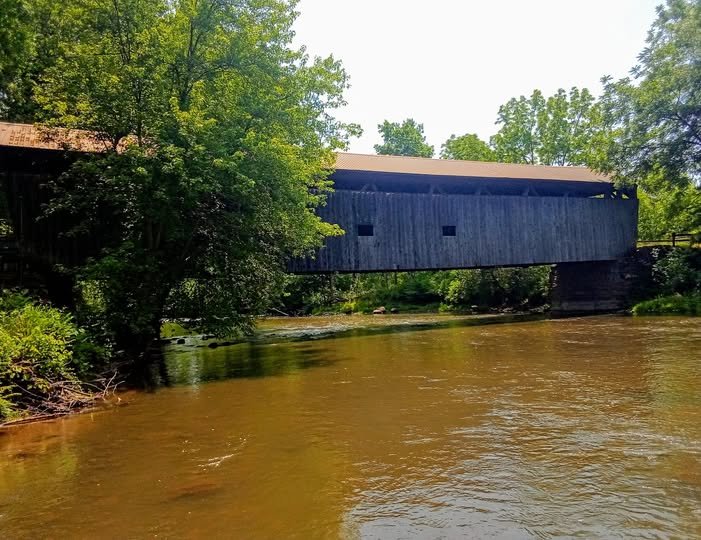
Cross into Mercer County and follow the back roads toward the Shenango River, and you’ll find the oldest of our three bridges — and arguably the most historically significant covered bridge in all of western Pennsylvania. The Kidd’s Mill Covered Bridge, built in 1868 near the community of Transfer in Pymatuning Township, is no ordinary survivor. It is the easternmost and oldest of only twenty remaining Smith truss covered bridges in the entire United States, and the only known surviving example of a Type 2 Smith truss anywhere in the world.
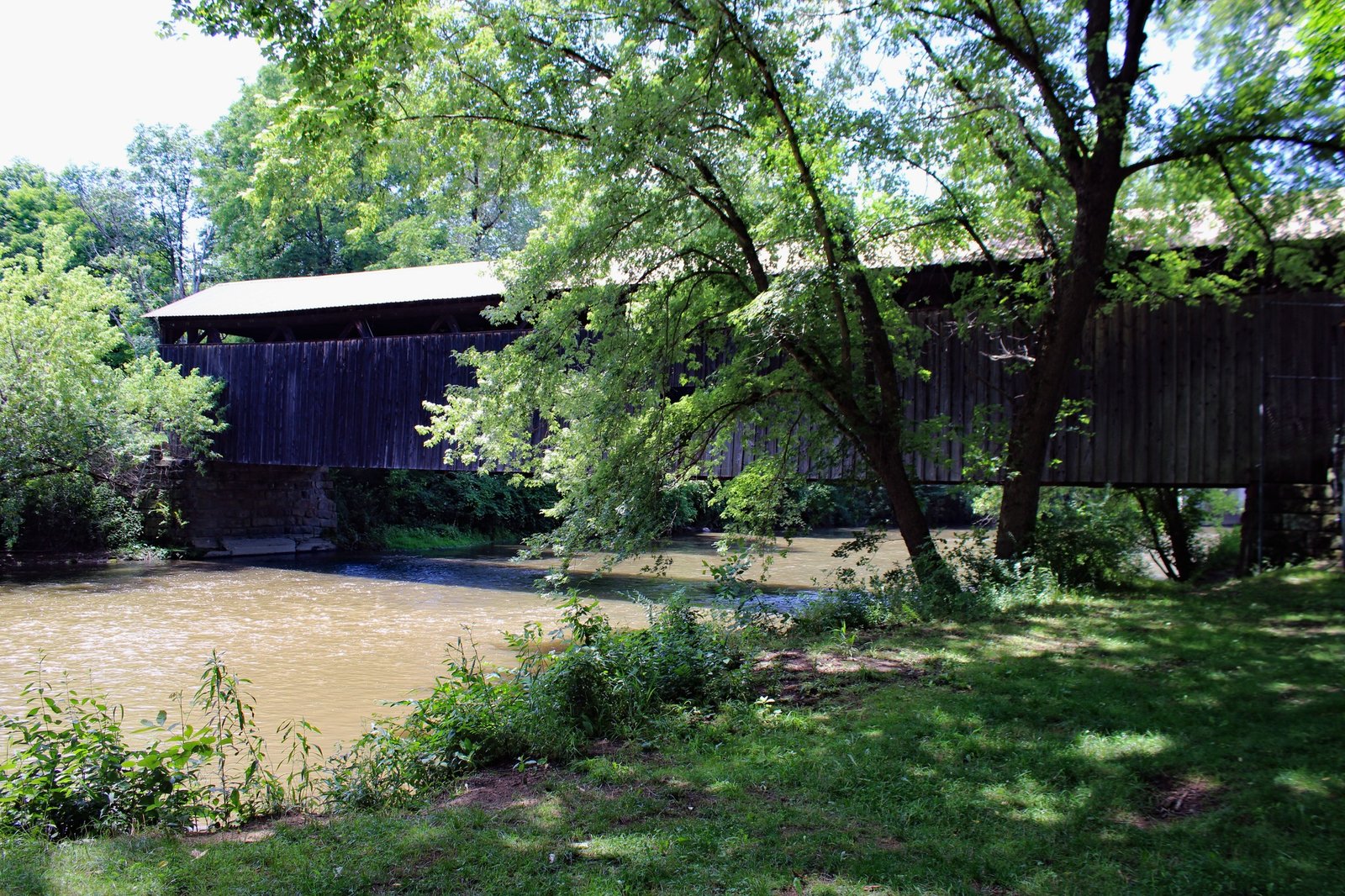
The story of this crossing begins in the 1850s, when Robert D. Kidd established a grist mill along the Shenango River. A bridge and road appeared here sometime between 1848 and 1860. That first bridge was repaired in 1859, then swept away entirely in a flood in February 1867. The present bridge rose in its place the following year — built by the Smith Bridge Company of Tipp City, Ohio, using a truss design patented just the year before by master builder Robert Smith.
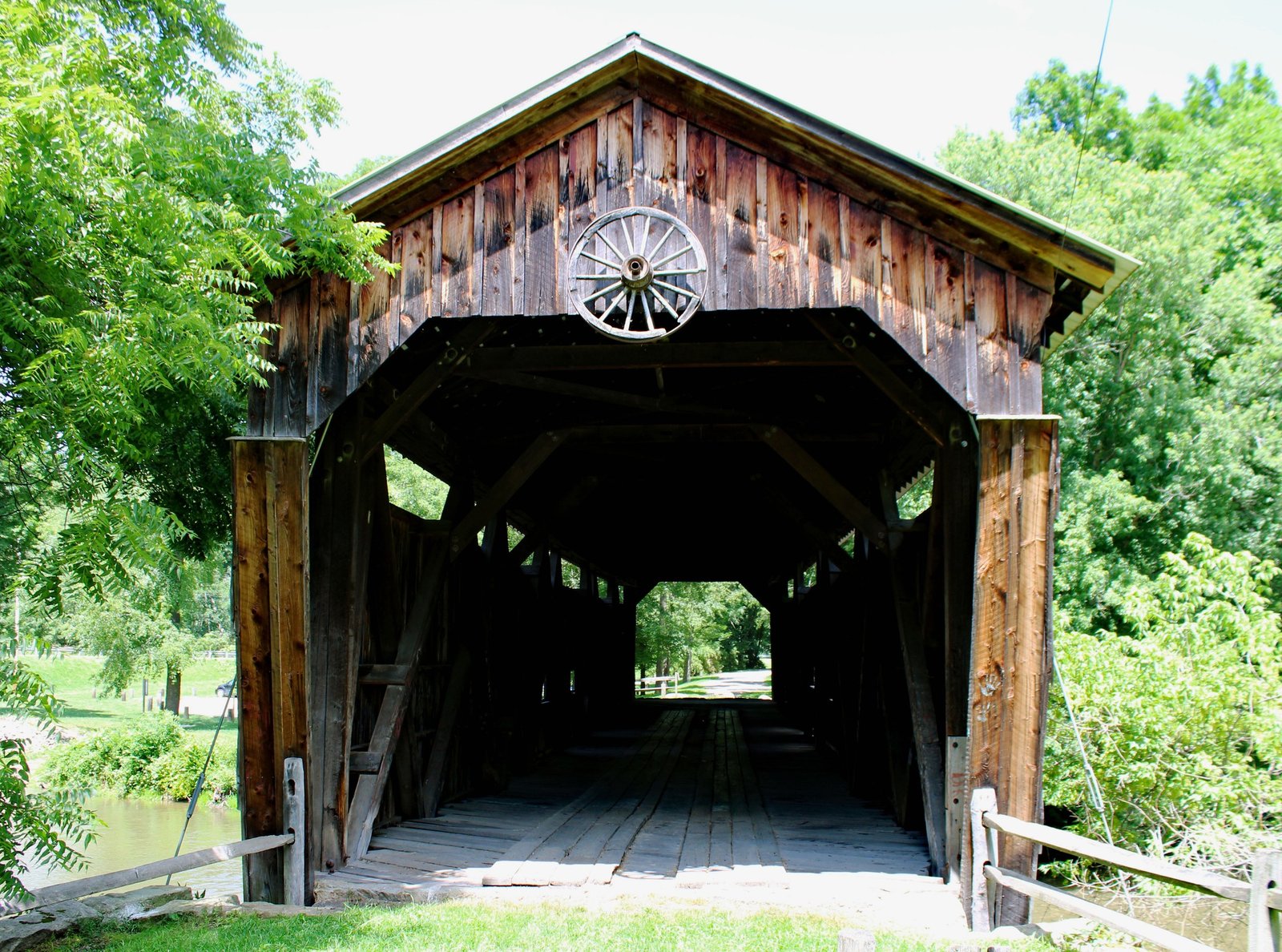
The Kidd’s Mill bridge is the only one of Smith’s patented bridges still standing east of Ohio — the easternmost and oldest of twenty surviving examples in the United States.
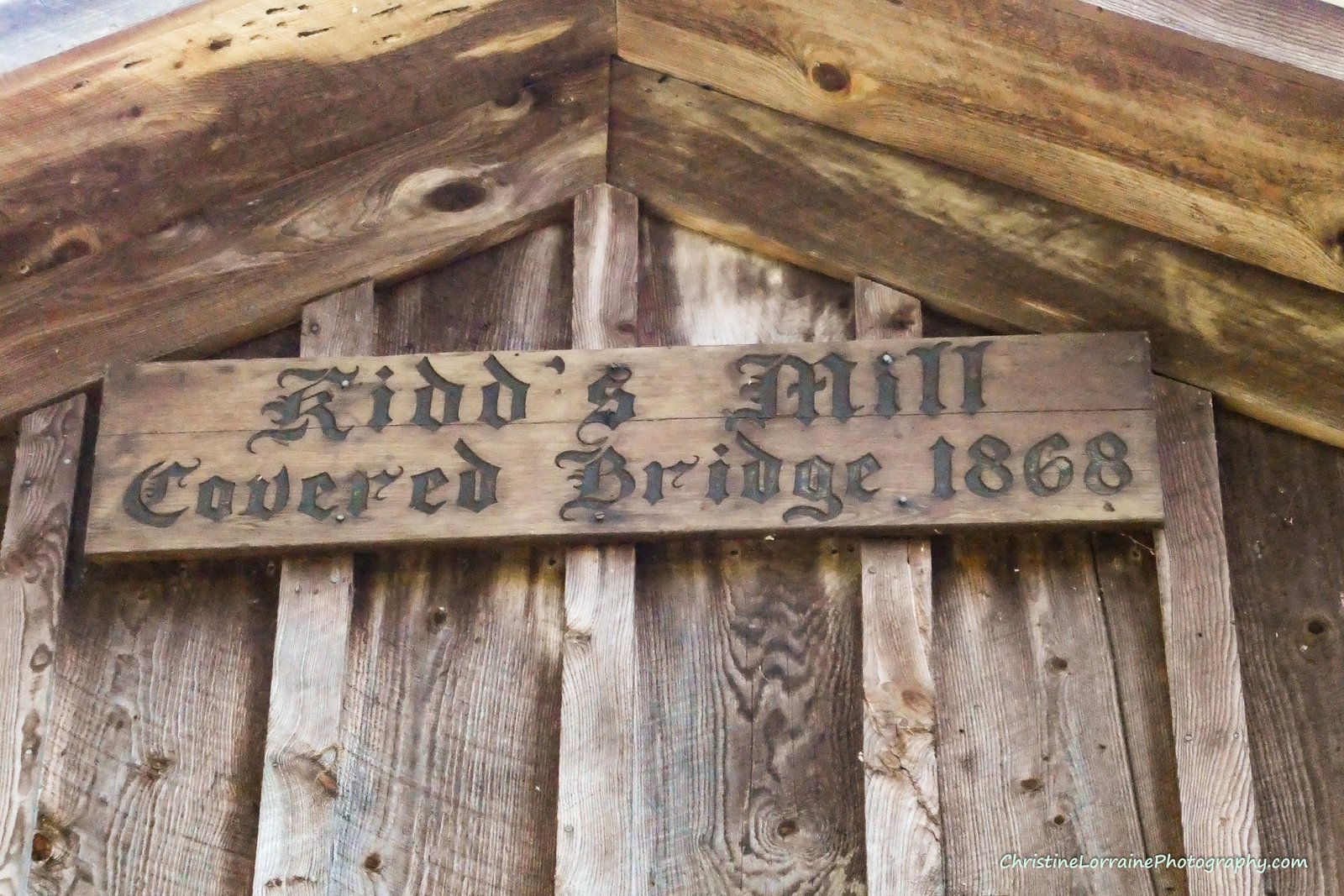
The Smith truss is visually unlike anything you’ll encounter at the Lawrence County bridges. Step inside and you’ll immediately see why: rather than the familiar arching Burr truss or the vertical iron rods of the Howe, the Smith design fills the interior with overlapping diagonal wooden members that cross like giant X’s the length of the bridge. Both the tension and compression members are entirely wood — no iron rods, no hybrid systems. It was, in Robert Smith’s own vision, a purely wooden answer to the structural challenges of bridge building, devised and patented in 1867 and constructed here within a year of its invention.
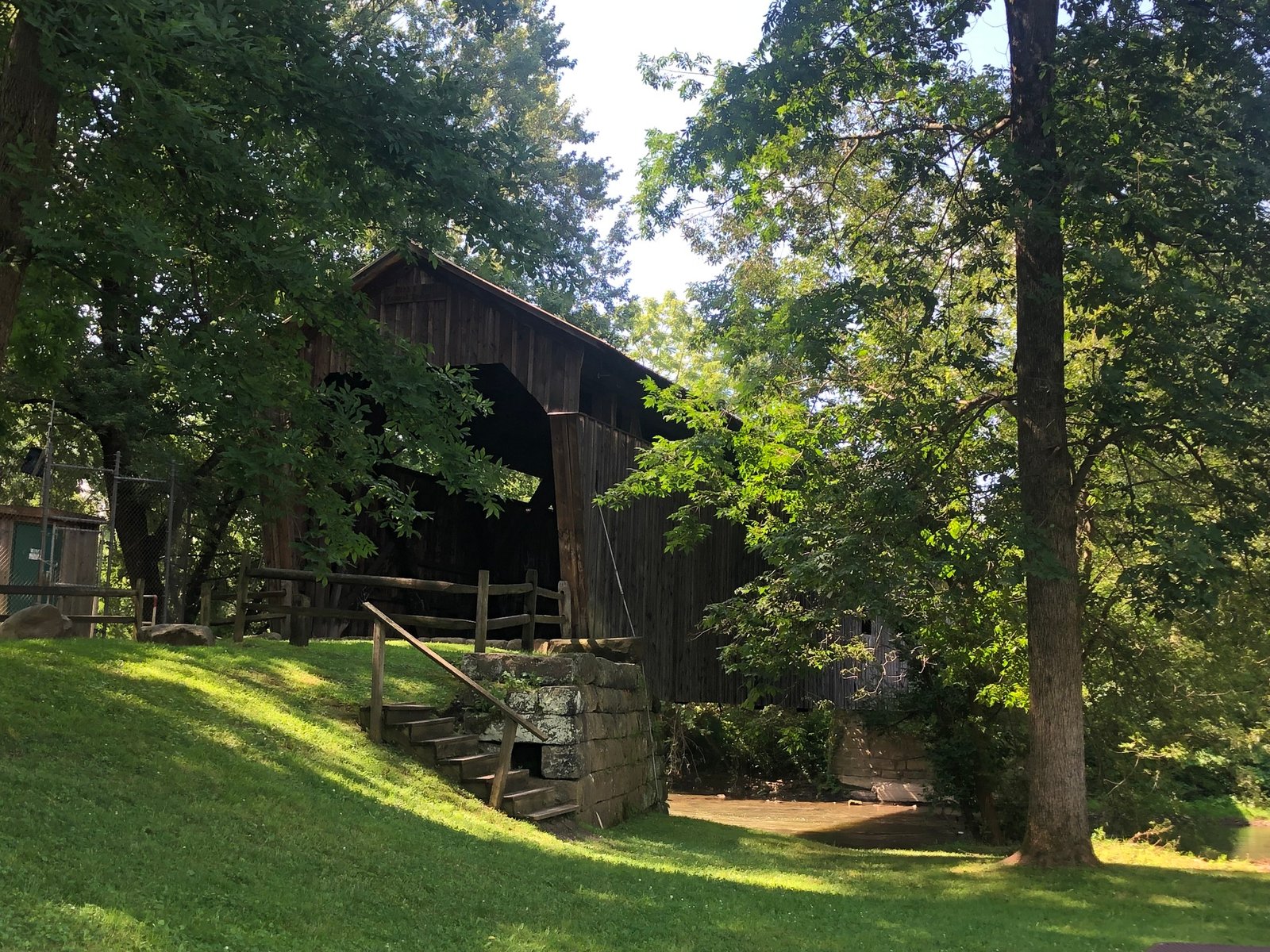
The bridge narrowly escaped demolition twice. In the early 1960s it was bypassed when a new span was built upstream to accommodate school bus routes for Reynolds Area High School, and it was slated for demolition by the Commonwealth. Mercer County stepped in and adopted a resolution to preserve it as a historic landmark. The bridge continued carrying light local traffic until 1979, when an overloaded vehicle fractured several truss members and forced its closure. A 1984 study warned the structure was approaching collapse.
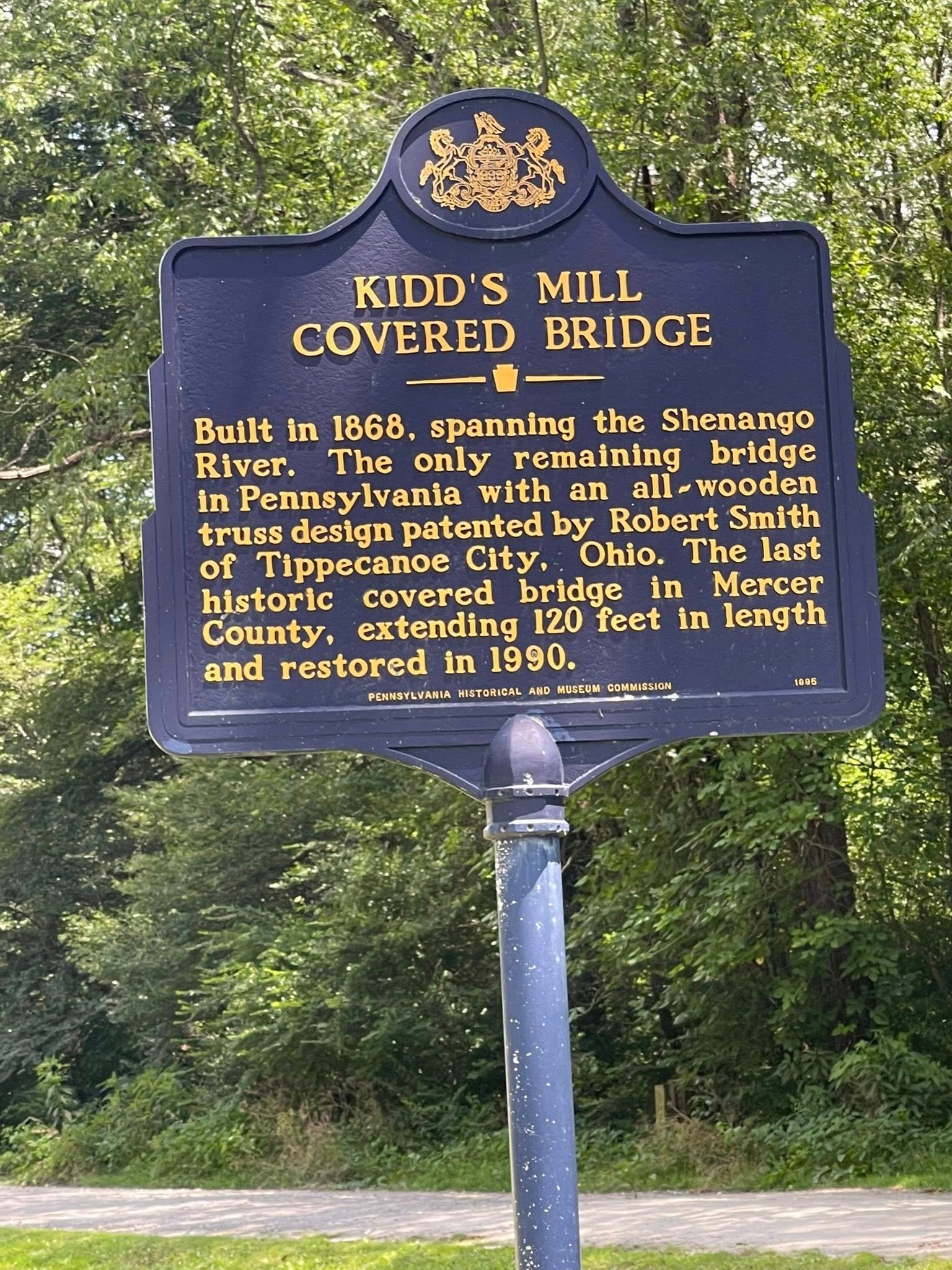
The rescue came through the Shenango Conservancy, a local nonprofit formed in 1986 specifically to save the bridge. In 1989 the county leased the bridge to the Conservancy for 99 years; by 1990 the rehabilitation was complete. Today the bridge is the centerpiece of a small riverside park, complete with picnic tables and a canoe launch on the Shenango River. It was added to the National Register of Historic Places in 1974 — the earliest of our three bridges to receive that recognition.