
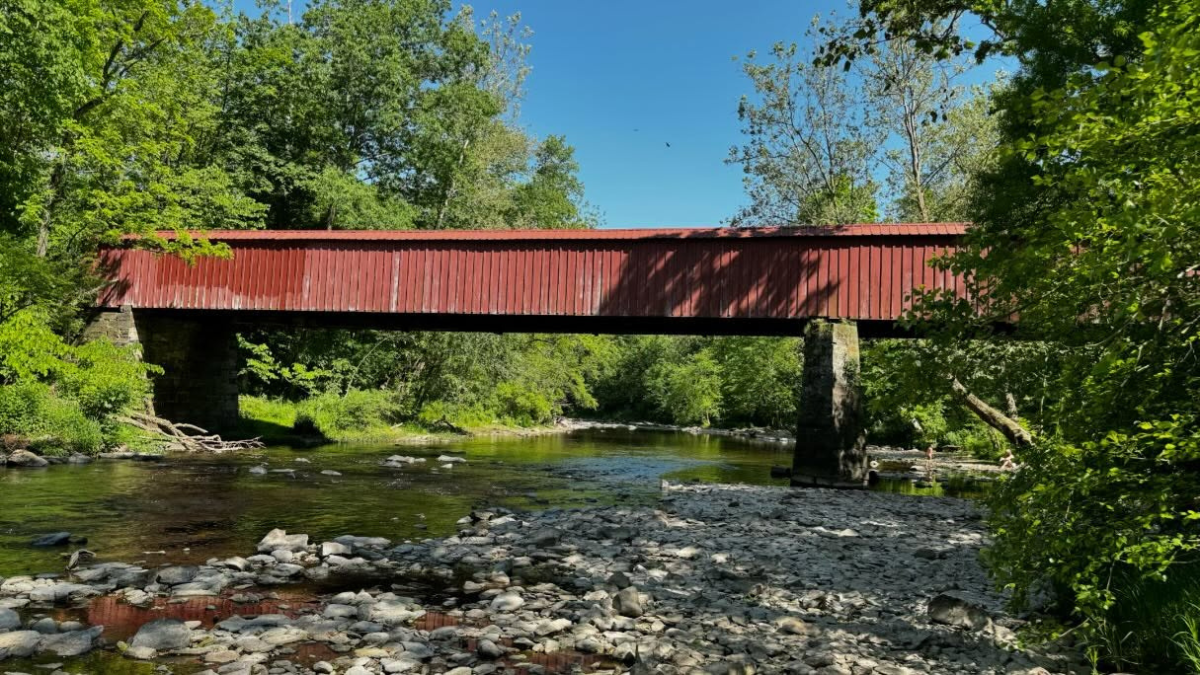
Discovering Pennsylvania's Hidden Wooden Treasures
There is something about a covered bridge that makes me want to pull over, grab my camera, and explore.
Maybe it’s the weathered wooden siding, the sound of water rushing beneath the floorboards, or the way a narrow country road suddenly disappears into a little wooden tunnel. Whatever it is, covered bridges have a way of making you feel as though you’ve traveled back in time.
And if you love exploring the backroads of Pennsylvania as much as I do, you’re in luck.
Pennsylvania has one of the largest collections of historic covered bridges in the United States, with more than 200 still standing across the state. Some are famous landmarks that attract visitors from around the country. Others are tucked away along quiet country roads, surrounded by farmland, forests, and streams.
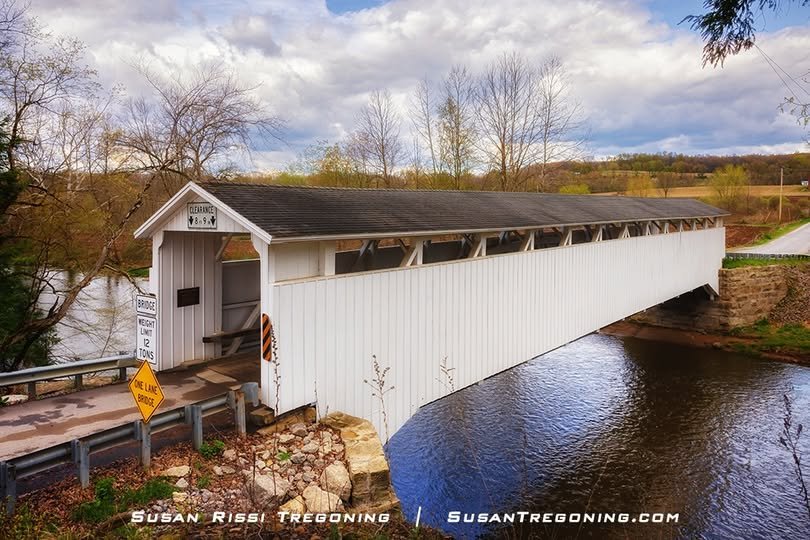
But these bridges are much more than picturesque places to take photographs.
They are reminders of a time when horses and wagons traveled the countryside, when small communities depended on local mills, and when skilled craftsmen built remarkable structures using timber, hand tools, and an impressive understanding of engineering.
Many of Pennsylvania’s covered bridges have survived floods, harsh winters, changing transportation needs, and more than a century of wear and tear.
Some have been carefully restored, while others have been moved or preserved as pedestrian crossings so future generations can enjoy them.
And every single one has a story.
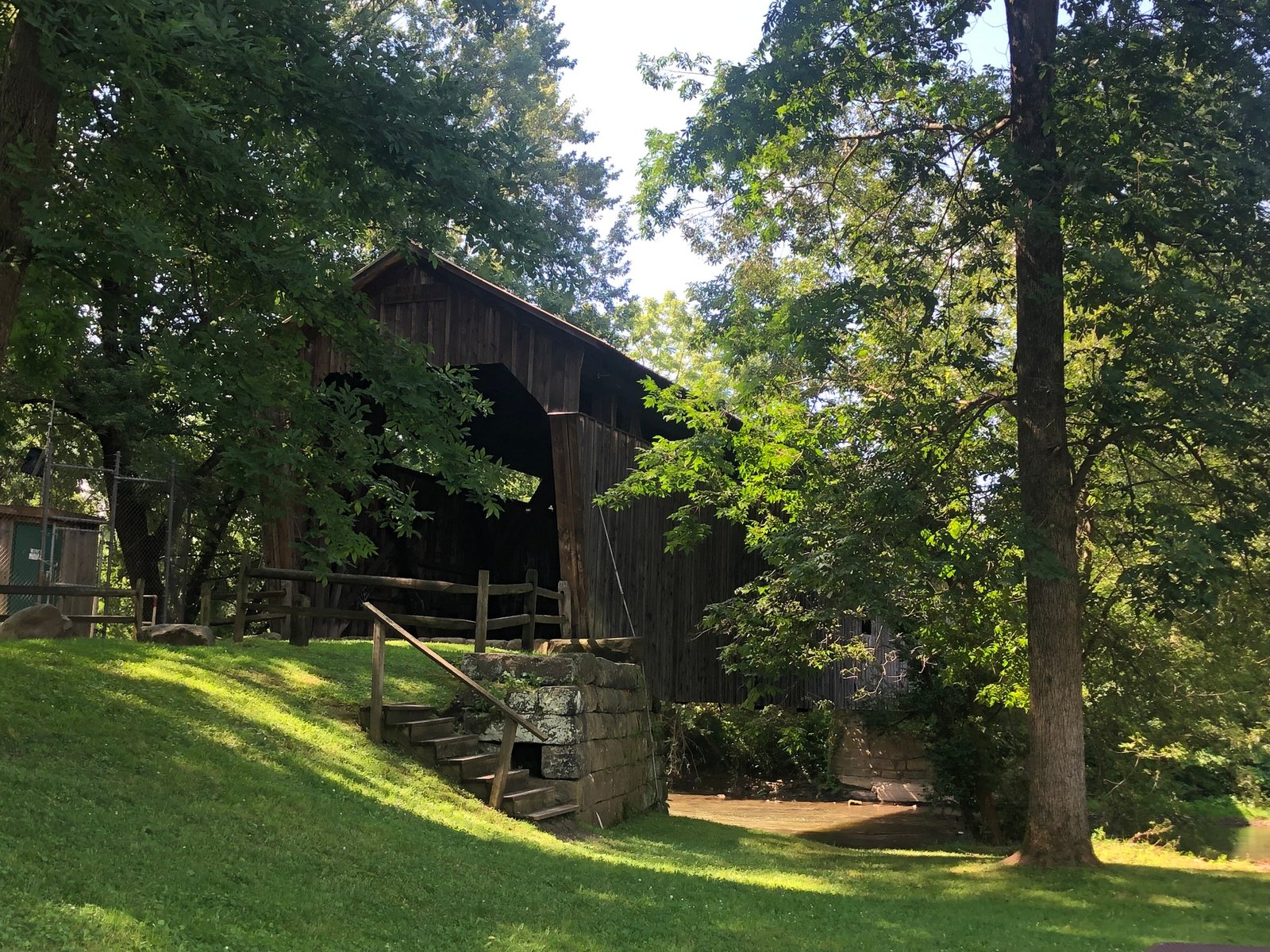
As part of my ongoing journey to explore Pennsylvania’s covered bridges, I’ve discovered that some of the most remarkable examples are also surrounded by beautiful parks, historic towns, waterfalls, and scenic countryside.
For this adventure, we’re visiting ten bridges that stand out for their history, architecture, unusual locations, or simply their breathtaking surroundings.
So grab your camera, pack a few snacks, and come along with me.
We’re heading off the interstate and onto the backroads to discover 10 must-see covered bridges in Pennsylvania you won’t believe exist!
1. Academia-Pomeroy Covered Bridge — Juniata County
Pennsylvania's Longest Covered Bridge
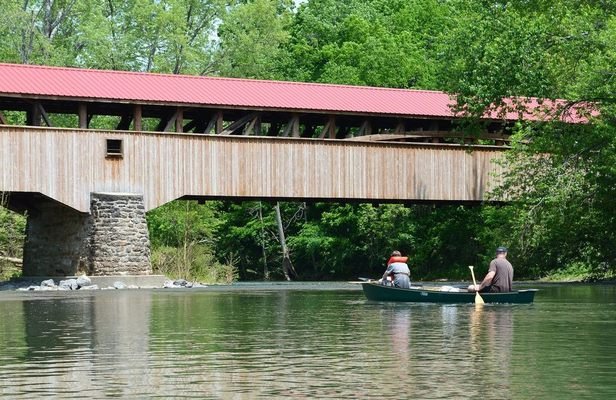
Location: Near Academia, Juniata County, Pennsylvania Built: 1902
Length: Approximately 278 feet Crosses: Tuscarora Creek
Known for: Being Pennsylvania’s longest surviving historic covered bridge
If you think covered bridges are always small wooden structures crossing narrow streams, the Academia-Pomeroy Covered Bridge might change your mind.
Stretching approximately 278 feet across Tuscarora Creek, this remarkable bridge is recognized as the longest surviving historic covered bridge in Pennsylvania.
And when you stand at one end and look through its long wooden interior, you begin to appreciate just how impressive that achievement really is.
Constructed in 1902, the bridge was built during a period when covered bridges were an essential part of Pennsylvania’s rural transportation network.
Farmers needed reliable crossings to transport crops and livestock. Local businesses depended on bridges to move goods between communities, and residents relied on them for everyday travel.
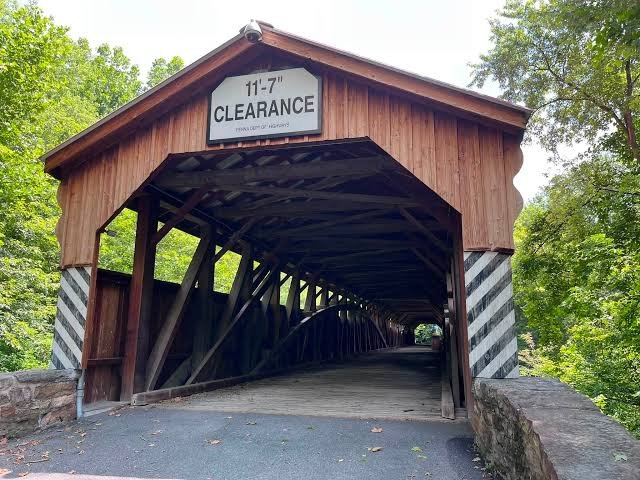
The Academia-Pomeroy Bridge served these needs for decades.
What makes this bridge particularly fascinating is its combination of engineering and craftsmanship. Its long timber structure uses the Burr arch truss system, an ingenious design that combines a wooden arch with a supporting truss framework.
This system helped distribute weight across the bridge and allowed builders to create longer spans than simpler wooden bridge designs could accommodate.
Over the years, the bridge experienced deterioration and required extensive preservation work. Today, it stands as a reminder of the importance of protecting Pennsylvania’s transportation history.
2. Packsaddle Covered Bridge — Somerset County
The Covered Bridge With a Waterfall Beneath It
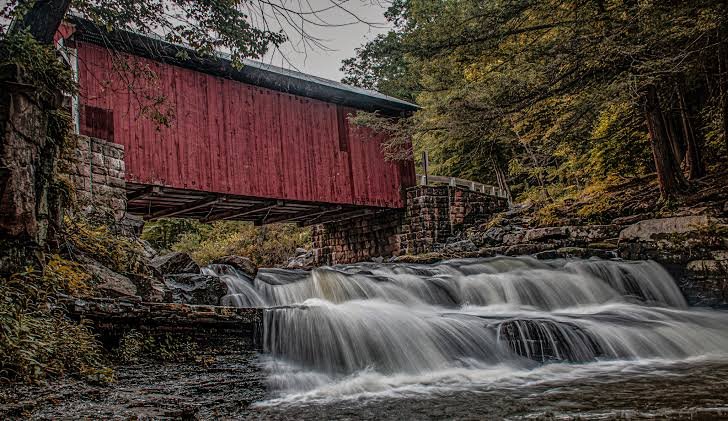
Location: Fairhope Township, Somerset County, Pennsylvania Built: 1870
Length: Approximately 48 feet Crosses: Brush Creek
Known for: Its picturesque waterfall directly beneath the bridge
Now this is a covered bridge that really does look like something out of a storybook.
Imagine driving along a quiet country road in the Laurel Highlands and discovering a small red covered bridge nestled among the trees.
Beautiful, right?
But the real surprise is underneath.
The Packsaddle Covered Bridge crosses Brush Creek at a location where water tumbles over a rocky ledge, creating one of Pennsylvania’s most recognizable covered bridge and waterfall combinations.
It’s the kind of scene that makes you stop and wonder how such a beautiful place can exist along an ordinary country road.
Built in 1870, the bridge is a relatively small structure compared with some of Pennsylvania’s larger covered bridges. But what it lacks in size, it more than makes up for in scenery.
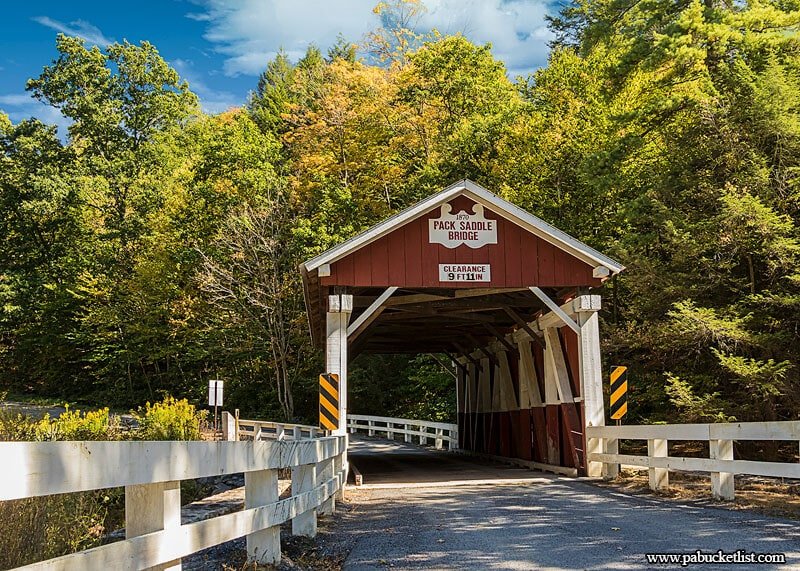
Its traditional red siding, wooden construction, and natural surroundings create an almost perfect picture of rural Pennsylvania.
The waterfall changes character with the seasons.
After periods of rain, water may rush over the rocks with impressive force. During drier weather, the cascade can become gentler, revealing more of the layered rock formations beneath the bridge.
In autumn, the surrounding trees add brilliant shades of orange, gold, and red.
And in winter, snow and ice can transform the entire setting into a peaceful frozen landscape.
3. Sachs Covered Bridge — Adams County
A Covered Bridge With a Civil War Connection
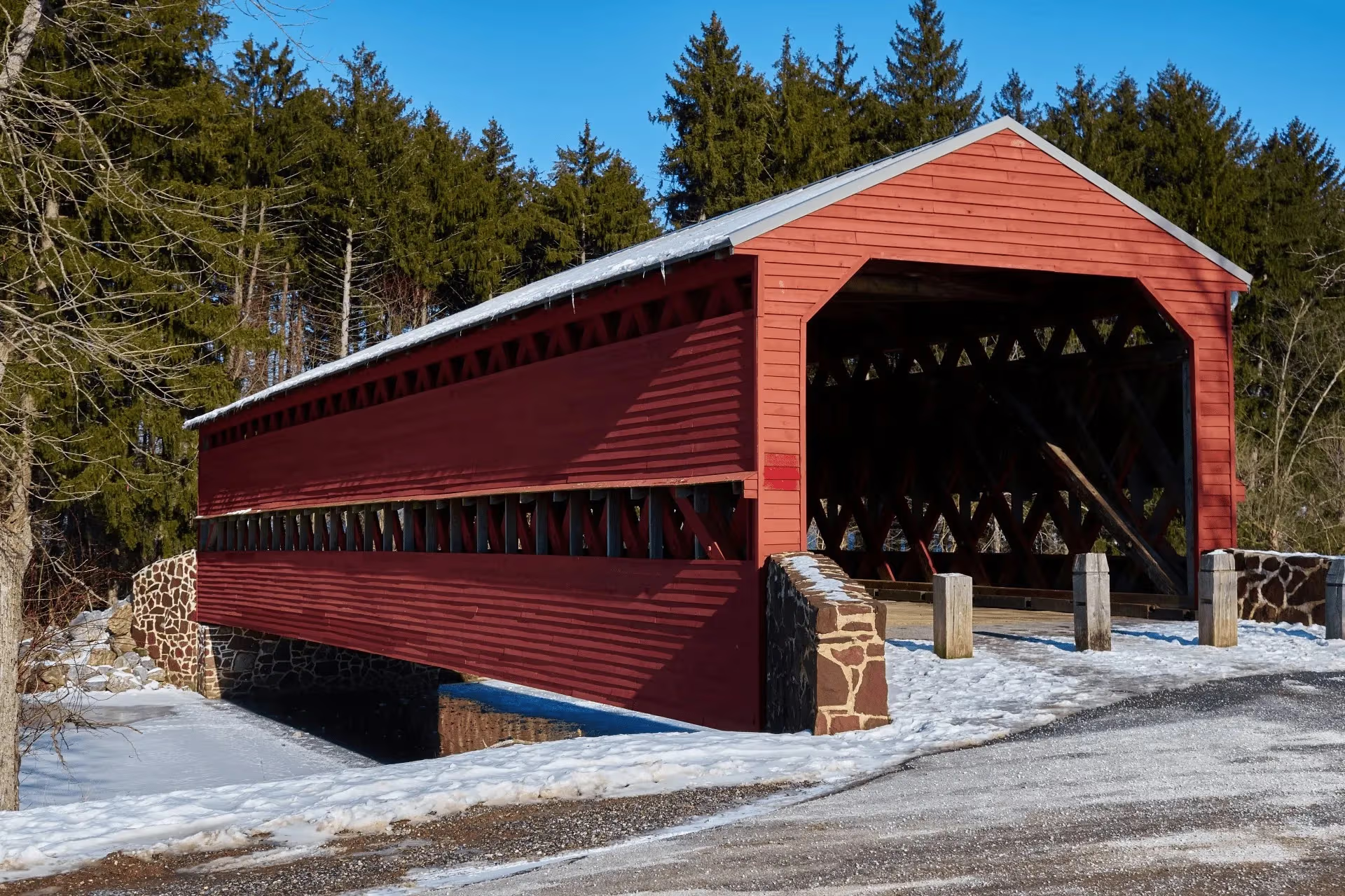
Location: Near Gettysburg, Adams County, Pennsylvania Built: 1854
Length: Approximately 100 feet Crosses: Marsh Creek
Known for: Its Civil War history and local ghost stories
Some covered bridges are famous for their beauty.
Others are famous for their history.
Sachs Covered Bridge has both.
Located just outside Gettysburg, this beautiful red covered bridge was standing when one of the most significant battles in American history took place in July 1863.
The Battle of Gettysburg lasted three days and became a turning point in the Civil War.
During the fighting and its aftermath, roads and bridges throughout the surrounding countryside were used by soldiers, wagons, horses, and supply trains.
Sachs Bridge is associated with troop movements during the Gettysburg Campaign, including the Confederate retreat following the battle.
Just imagine the scene more than 160 years ago.
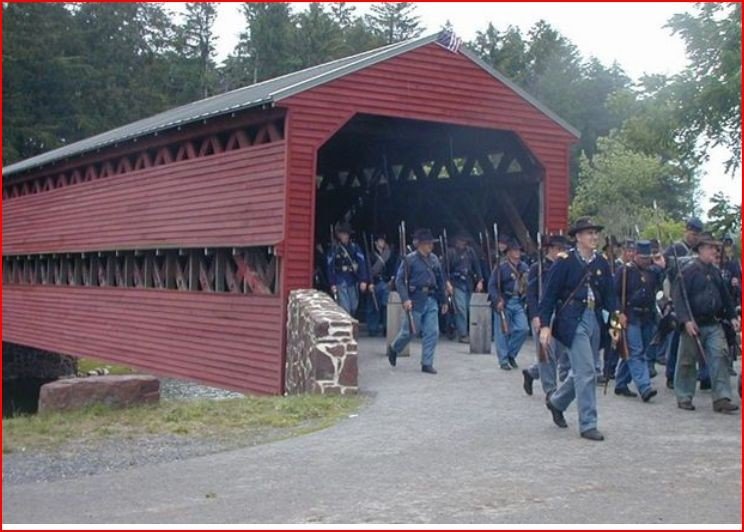
Instead of modern visitors carrying cameras, the surrounding roads would have been filled with military activity, uncertainty, and the sounds of horses and wagons.
Today, the bridge stands in a peaceful rural setting.
Its red wooden exterior and distinctive lattice-style truss make it a favorite among photographers and history enthusiasts.
But there is another reason people visit Sachs Bridge.
Is Sachs Covered Bridge Haunted?
Over the years, the bridge has developed a reputation as one of Pennsylvania’s supposedly haunted covered bridges.
Local legends tell of unexplained sounds, shadowy figures, and ghostly encounters.
Some stories connect these alleged experiences to Civil War soldiers, although the supernatural claims are folklore rather than documented historical fact.
Whether you believe in ghosts or simply enjoy a good historical mystery, the stories add another layer of intrigue to an already fascinating destination.
4. Forksville Covered Bridge — Sullivan County
A Historic Bridge at the Gateway to Worlds End State Park
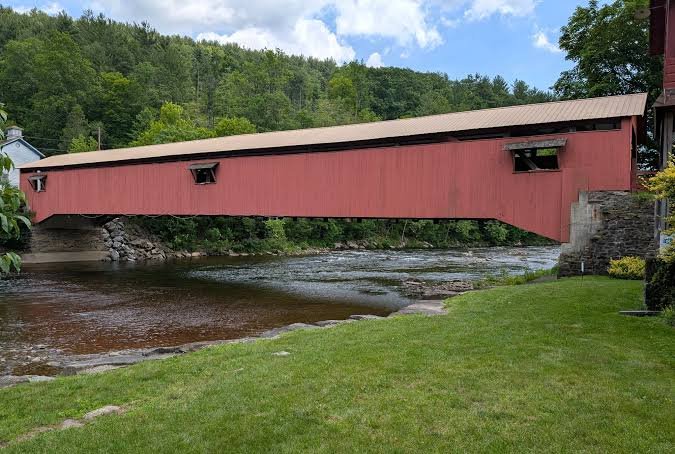
Location: Forksville, Sullivan County, Pennsylvania Built: 1850
Length: Approximately 100 feet Crosses: Loyalsock Creek
Known for: Its beautiful setting near Worlds End State Park
If your idea of a perfect Pennsylvania road trip includes mountains, forests, winding roads, and historic bridges, Sullivan County should be on your list.
And one of the area’s most recognizable landmarks is the Forksville Covered Bridge.
Built in 1850, this impressive wooden bridge crosses Loyalsock Creek near the entrance to Worlds End State Park.
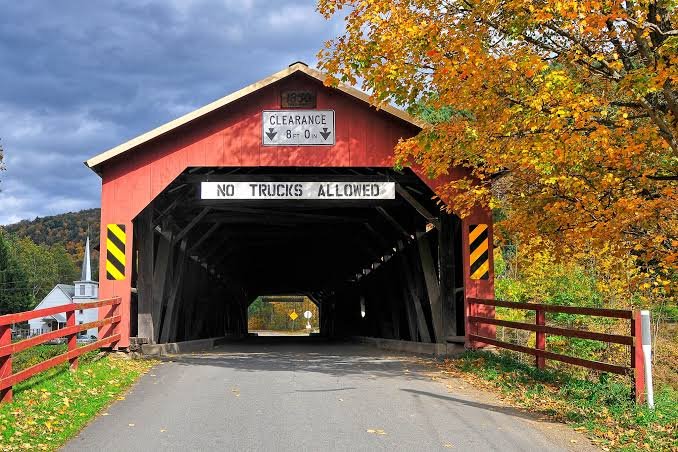
The bridge is a beautiful example of traditional Pennsylvania covered bridge construction, featuring a Burr arch truss design.
Its location makes it especially appealing.
Rather than standing alone in the countryside, the bridge is surrounded by some of the most scenic natural landscapes in north-central Pennsylvania.
The Loyalsock Creek winds through a region known for forested mountains, rocky streams, waterfalls, and outdoor recreation.
Just a short distance away, Worlds End State Park offers hiking trails, scenic overlooks, camping, and beautiful views of the Loyalsock Creek valley.
A Bridge That Connects History and Nature
One of the things I love most about covered bridges is how naturally they fit into the Pennsylvania landscape.
Forksville is a wonderful example.
The wooden bridge looks as though it belongs among the trees and mountains, almost becoming part of the scenery itself.
During autumn, the surrounding foliage creates a spectacular backdrop.
In summer, the lush green forest and flowing creek make this a peaceful place to visit.
And in winter, snow-covered trees can make the bridge look like a scene from an old-fashioned Christmas card.
5. Knapp's Covered Bridge — Bradford County
One of Pennsylvania's Most Dramatic Covered Bridge Crossings
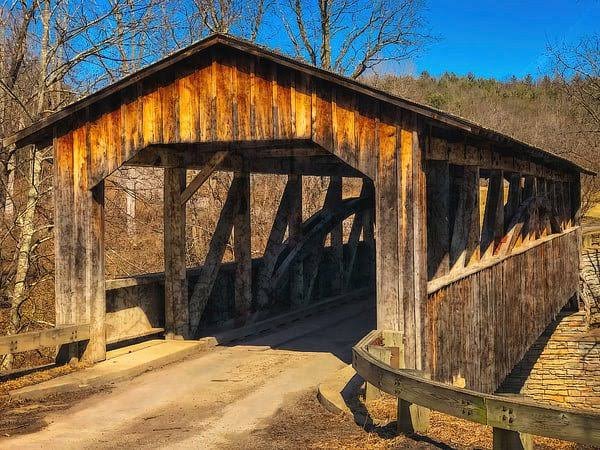
Location: Bradford County, Pennsylvania Built: 1850
Length: Approximately 95 feet Crosses: Brown’s Creek
Known for: Its unusually high position above the creek
Most covered bridges are built relatively close to the water.
But Knapp’s Covered Bridge is different.
This historic bridge stands approximately 30 feet above Brown’s Creek, creating a dramatic setting that makes it one of Pennsylvania’s most unusual wooden crossings.
The bridge is frequently described as the highest covered bridge in the state.
Built in 1853, it has survived for more than 170 years, a remarkable achievement for a structure originally designed for nineteenth-century transportation.
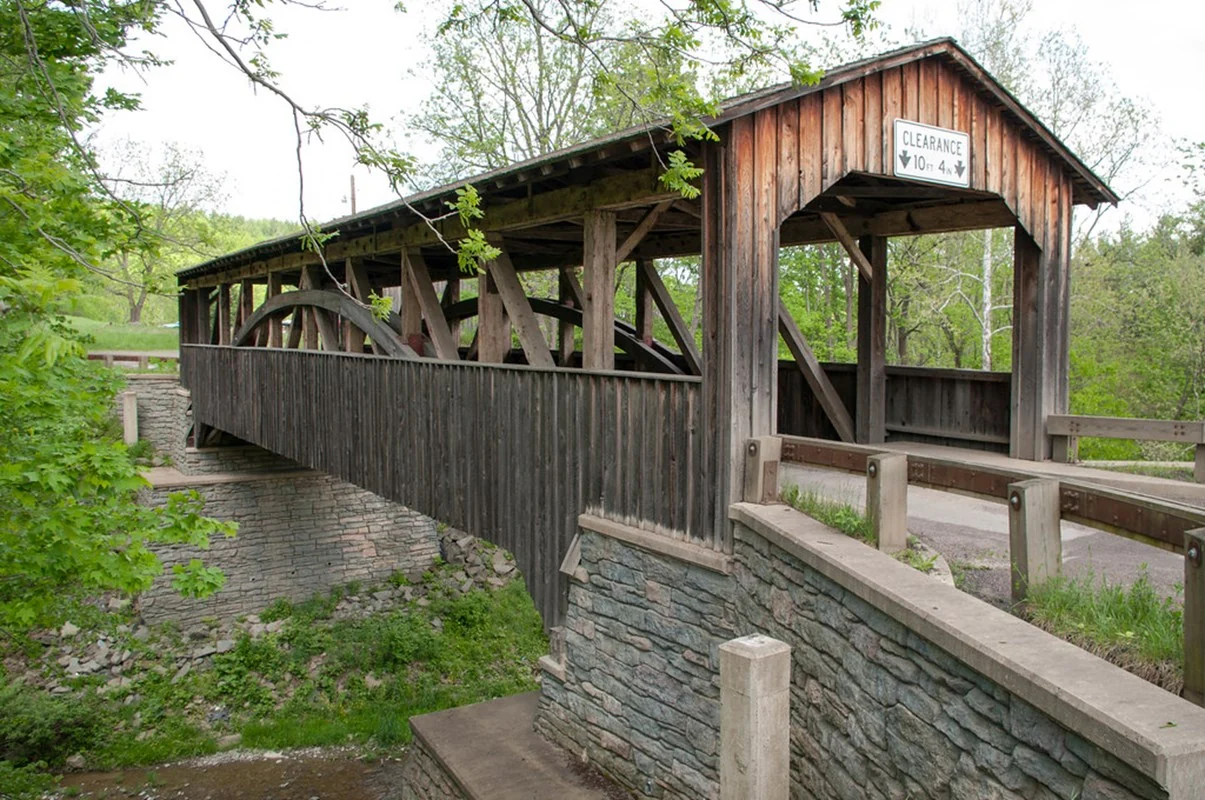
The bridge’s height is particularly interesting because it demonstrates how early bridge builders adapted their designs to Pennsylvania’s varied landscape.
Instead of crossing a shallow stream at water level, this bridge spans a deeper creek valley.
The result is a structure that feels quite different from the small, low bridges commonly seen in other parts of the state.
Why You Should Visit
Knapp’s Covered Bridge is an excellent destination for travelers who enjoy unusual historic structures.
The bridge’s elevated position provides a distinctive photographic subject, especially when viewed from safe areas along the approach.
Bradford County also offers beautiful rural scenery, making this an appealing stop for anyone exploring northeastern Pennsylvania.
6. Hassenplug Covered Bridge — Union County
One of America's Oldest Surviving Covered Bridges
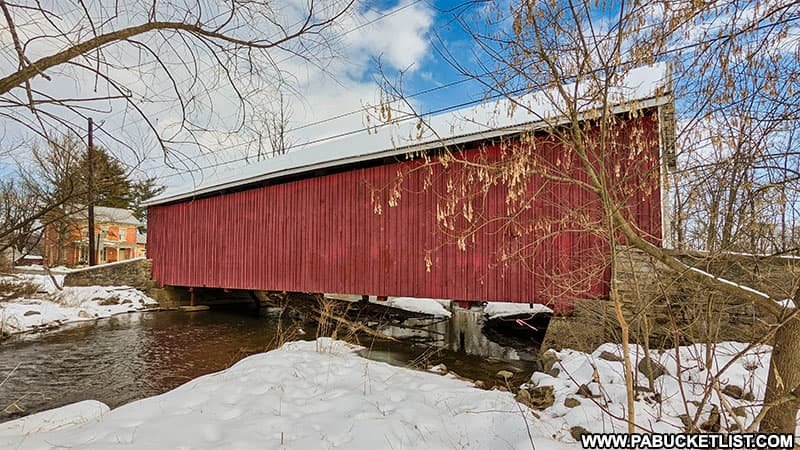
Location: Mifflinburg, Union County, Pennsylvania Built: 1825
Length: Approximately 95 feet Crosses: Buffalo Creek
Known for:Being among the oldest surviving covered bridges in the United States
Imagine standing in front of a wooden bridge that was built when John Quincy Adams became president.
That’s how far back the history of the Hassenplug Covered Bridge reaches.
Constructed in 1825, this remarkable bridge is recognized as one of the oldest surviving covered bridges in the United States.
For perspective, the bridge was already standing decades before the Civil War began.
During its early years, horse-drawn wagons, farmers, merchants, and local residents would have traveled through the crossing.
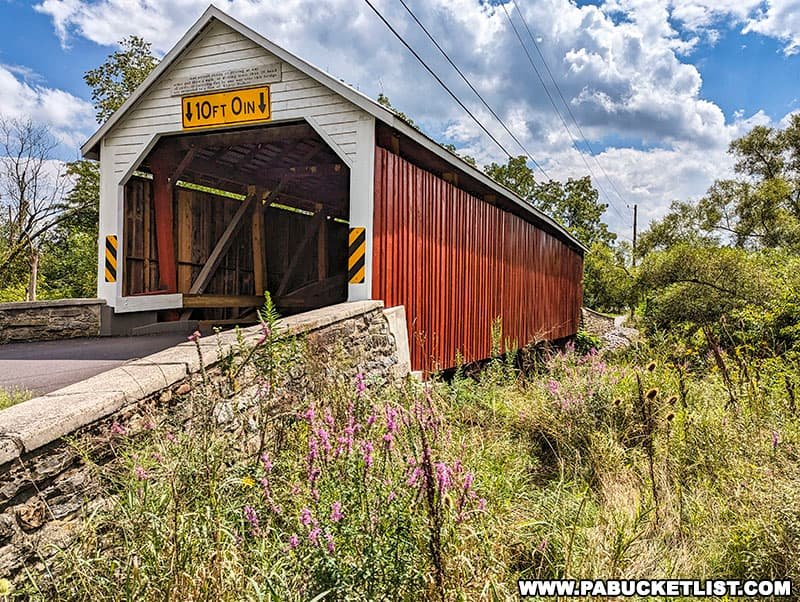
At that time, covered bridges were practical necessities.
The wooden roof and siding helped protect the structural timbers from rain, snow, and sunlight, extending the life of the bridge.
Without that protection, exposed wooden bridges could deteriorate much more quickly.
The Hassenplug Bridge has survived changing transportation systems, the arrival of automobiles, and nearly two centuries of Pennsylvania history.
Today, it remains an important reminder of the skill and craftsmanship of early American bridge builders.
Why You Should Visit
This bridge offers something that few historic attractions can match: a direct connection to the early nineteenth century.
Standing near the bridge, it’s fascinating to imagine how much the surrounding world has changed since 1825.
7. Pine Grove Covered Bridge — Lancaster and Chester Counties
A Covered Bridge Connecting Two Pennsylvania Counties
Location: Lancaster and Chester Counties, Pennsylvania Built: 1884
Length: Approximately 198 feet Crosses: Octoraro Creek
Known for: Its long span and location on the county line
Lancaster County is famous for its covered bridges, rolling farmland, and beautiful country roads.
But Pine Grove Covered Bridge has a feature that makes it especially interesting.
It connects two Pennsylvania counties.
Stretching across Octoraro Creek between Lancaster and Chester Counties, Pine Grove is one of the longest covered bridges in southeastern Pennsylvania.
Its impressive length and traditional red exterior make it a favorite destination for covered bridge enthusiasts.
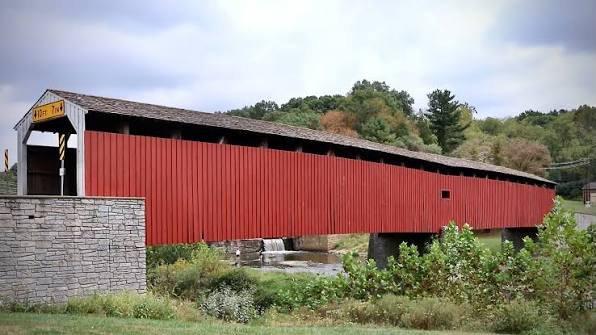
The bridge dates to 1884 and represents the era when covered bridges were still important parts of Pennsylvania’s rural road system.
Its design reflects the practical needs of the communities it served.
Farmers, merchants, and residents depended on reliable crossings to travel between farms, markets, and neighboring towns.
A Classic Pennsylvania Countryside Experience
One of the most enjoyable parts of visiting Pine Grove is the surrounding landscape.
This area of southeastern Pennsylvania is known for scenic farmland, historic communities, and quiet rural roads.
The bridge fits perfectly into that setting.
With its red siding, wooden interior, and long covered passageway, it looks exactly like the kind of bridge people imagine when they think of Pennsylvania Dutch Country.
8. Weaver's Mill Covered Bridge — Lancaster County
A Picture-Perfect Covered Bridge in Amish Country
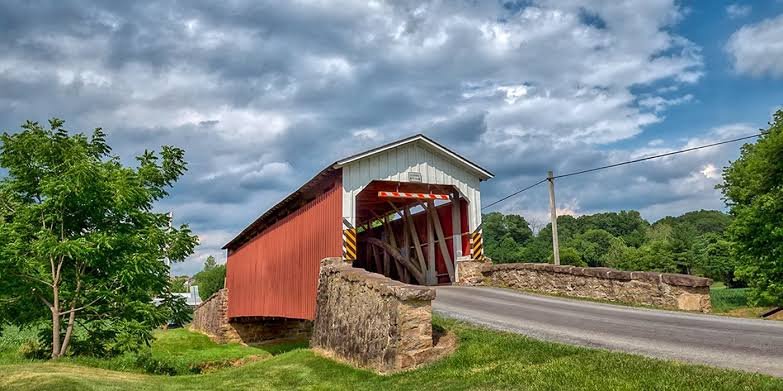
Location: Lancaster County, Pennsylvania Built: 1878
Length: Approximately 198 feet Crosses: Conestoga Creek
Known for: Its classic red exterior and peaceful countryside setting
If you’ve ever imagined driving through Lancaster County and discovering a beautiful red covered bridge surrounded by farmland, Weaver’s Mill Covered Bridge is exactly the kind of place you might picture.
Built in 1878, this charming bridge crosses the Conestoga River and is a wonderful example of Pennsylvania’s nineteenth-century covered bridge heritage.
The bridge features traditional wooden construction and a bright red exterior that makes it especially attractive in photographs.
But what really makes Weaver’s Mill special is the setting.
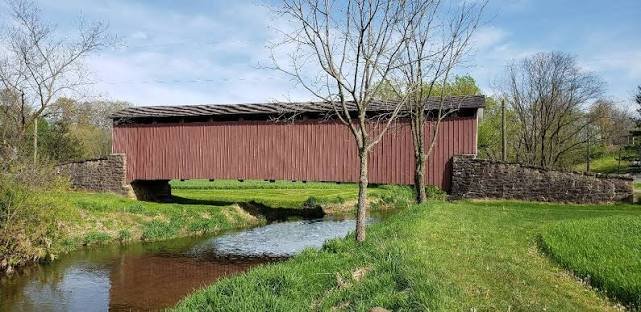
Lancaster County is a place where historic farms, winding roads, and traditional rural landscapes still shape much of the countryside.
Traveling through the region can feel like stepping into another era, especially when you encounter horse-drawn buggies sharing the road with modern vehicles.
The covered bridges are a natural part of that experience.
Why Were So Many Covered Bridges Painted Red?
One of the questions people often ask is why so many Pennsylvania covered bridges are red.
There isn’t one universal answer.
Historically, red pigments were widely used in exterior paints, and traditional red finishes became closely associated with barns and rural structures.
Over time, red also became an iconic color for covered bridges, although Pennsylvania has bridges painted white, natural wood tones, and other colors as well.
The bright red siding of Weaver’s Mill makes it a beautiful example of this familiar tradition.
9. Thomas Mill Covered Bridge — Philadelphia County
The Covered Bridge Hidden Inside Philadelphia
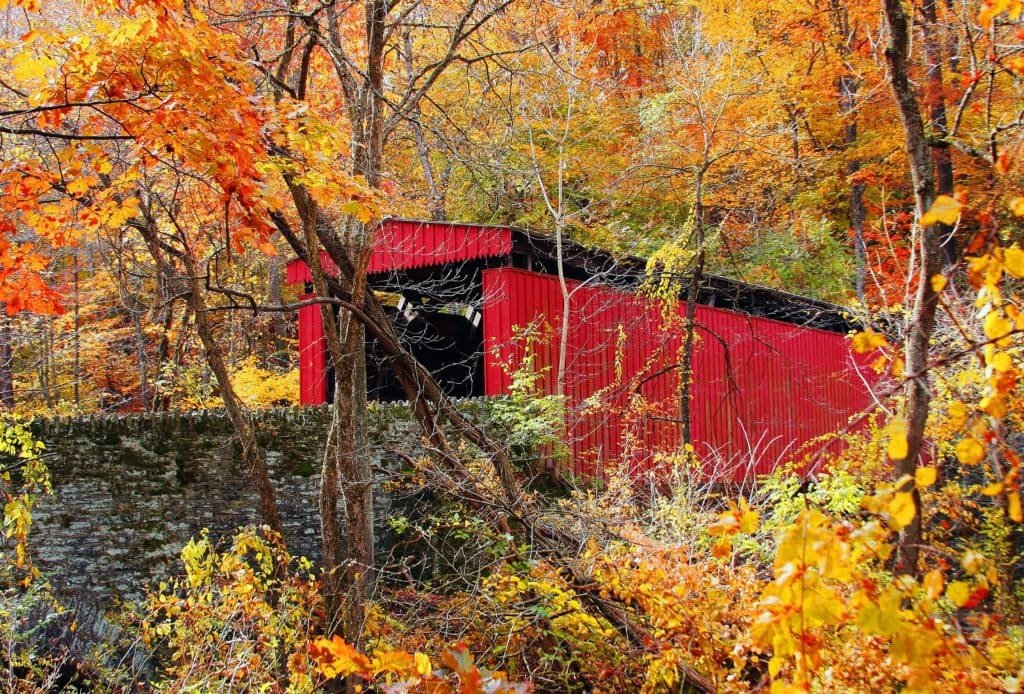
Location: Wissahickon Valley Park, Philadelphia, Pennsylvania Built 1855 Length: Approximately 97 feet Crosses: Wissahickon Creek
Known for: Being Philadelphia’s only remaining covered bridge
When most people think of Philadelphia, they picture Independence Hall, the Liberty Bell, historic neighborhoods, and busy city streets.
A covered bridge probably isn’t the first thing that comes to mind.
But hidden within Wissahickon Valley Park is one of the city’s most surprising historic treasures.
Thomas Mill Covered Bridge is the only surviving covered bridge in Philadelphia, at one time 5 covered bridges once crossed the Wissahickon Creek alone in Philadelphia.
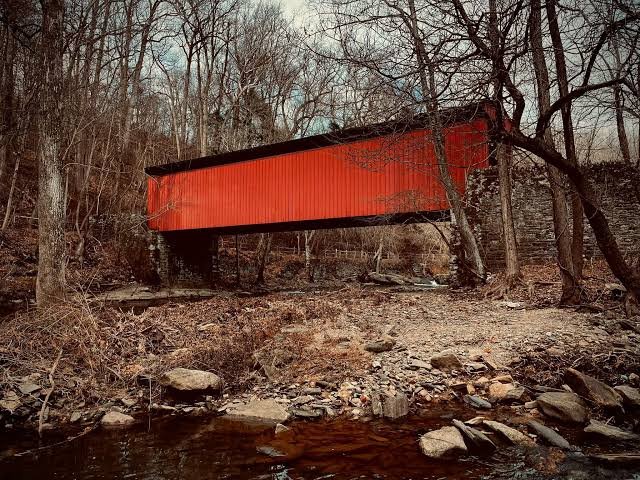
Built in 1855, the bridge crosses Wissahickon Creek in a beautiful wooded setting that feels far removed from the surrounding city.
It’s difficult to believe that such a peaceful, historic structure exists within the boundaries of one of America’s largest cities.
The bridge was built during a time when the Wissahickon Valley contained mills and industrial activity powered by the creek.
Today, the valley is protected as parkland, offering miles of trails, forest scenery, and opportunities to enjoy nature.
A Different Kind of Philadelphia Adventure
What makes Thomas Mill so special is the contrast between its location and its surroundings.
You can spend the morning exploring Philadelphia’s historic district and later find yourself walking through a wooded valley toward a nineteenth-century covered bridge.
It’s a wonderful reminder that Pennsylvania’s covered bridges aren’t always hidden along remote country roads.
Sometimes they’re hiding in places you would never expect.
10. McConnells Mill Covered Bridge — Lawrence County
Where a Historic Covered Bridge Meets a Beautiful Old Gristmill
Location: McConnells Mill State Park, Lawrence County, Pennsylvania Built 1874 Length: Approximately 96 feet Crosses: Slippery Rock Creek
Known for: Its historic mill, scenic gorge, and beautiful state park setting
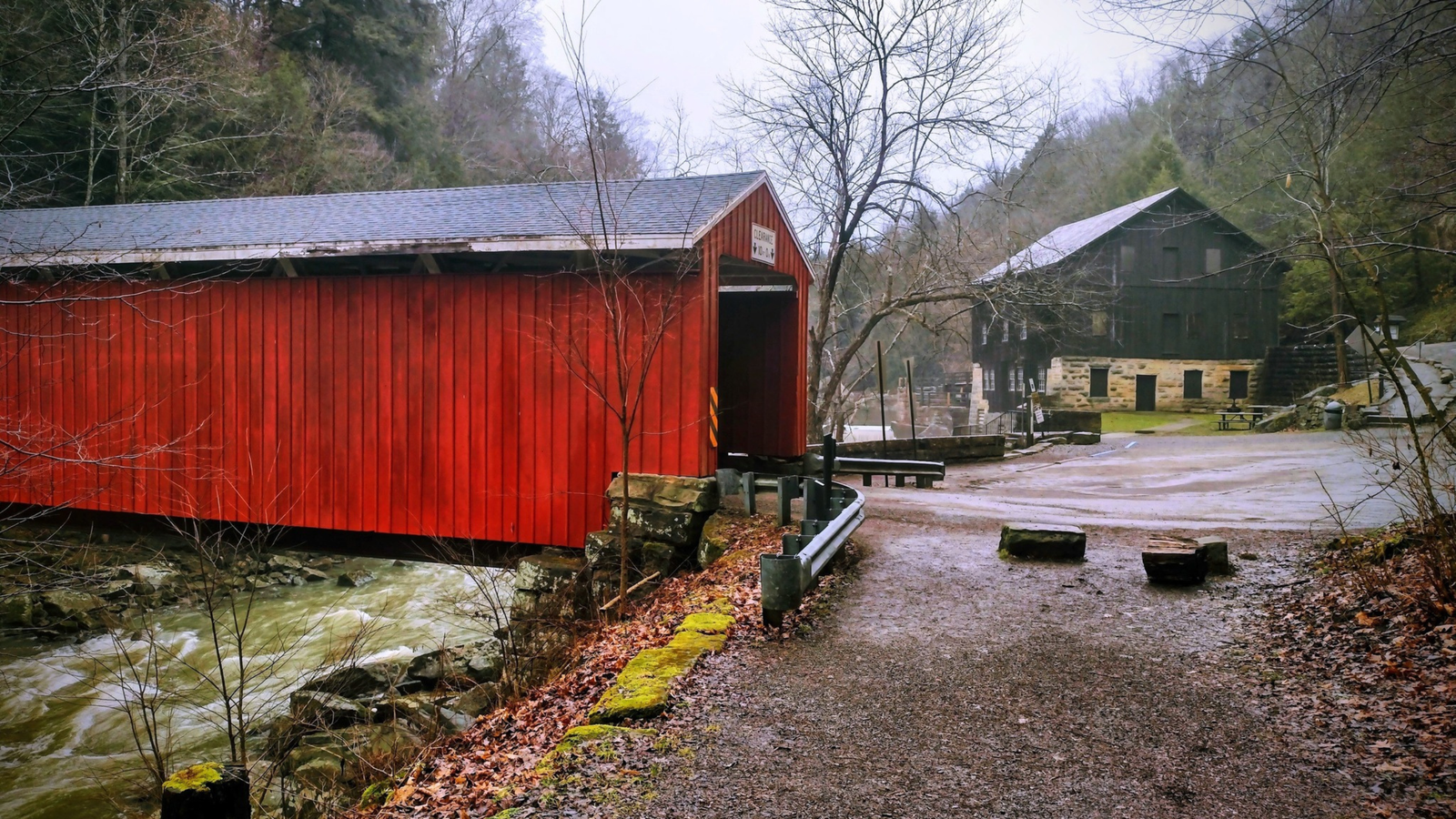
For our final stop, we’re heading to western Pennsylvania and one of my favorite places to explore.
McConnells Mill Covered Bridge is located inside McConnells Mill State Park, a beautiful destination known for its rocky gorge, rushing creek, waterfalls, hiking trails, and historic gristmill.
And the covered bridge is one of the park’s most recognizable landmarks.
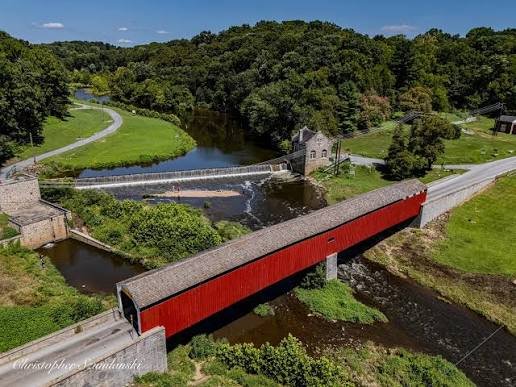
Built in 1874, the bridge crosses Slippery Rock Creek beside the historic McConnells Mill.
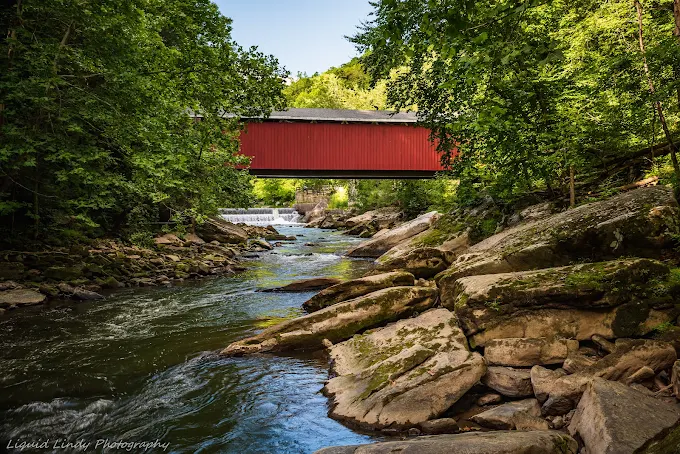
Together, the bridge and mill create one of the most picturesque historic scenes in western Pennsylvania.
The bridge uses a Howe truss design, which combines wooden structural members with iron tension rods.
This engineering system became popular during the nineteenth century because it provided a strong and practical method of bridge construction.
The Story Behind the Mill
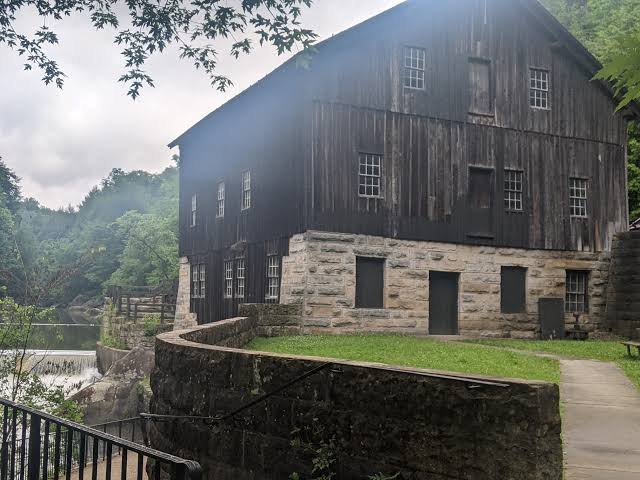
The historic gristmill is an important part of the area’s history.
Mills like this were once essential to rural communities because farmers depended on them to grind grain into flour and meal.
The creek provided the power needed to operate the machinery.
Today, the preserved mill offers visitors a glimpse into the industrial and agricultural history of western Pennsylvania.
When you visit, it’s easy to imagine a time when wagons loaded with grain traveled along these roads and crossed the covered bridge.
More Than Just a Covered Bridge
McConnells Mill State Park is one of western Pennsylvania’s most beautiful destinations, offering much more than its historic covered bridge and gristmill. The park is also home to five waterfalls, making it a wonderful place for anyone who loves chasing waterfalls, exploring scenic hiking trails, and discovering hidden natural treasures. Along with the rushing waters of Slippery Rock Creek, enormous boulders, and the dramatic wooded gorge, these waterfalls add even more reasons to spend a day exploring this remarkable park. Whether you’re visiting for the history, photography, or outdoor adventure, McConnells Mill State Park is a destination you’ll want to experience for yourself.
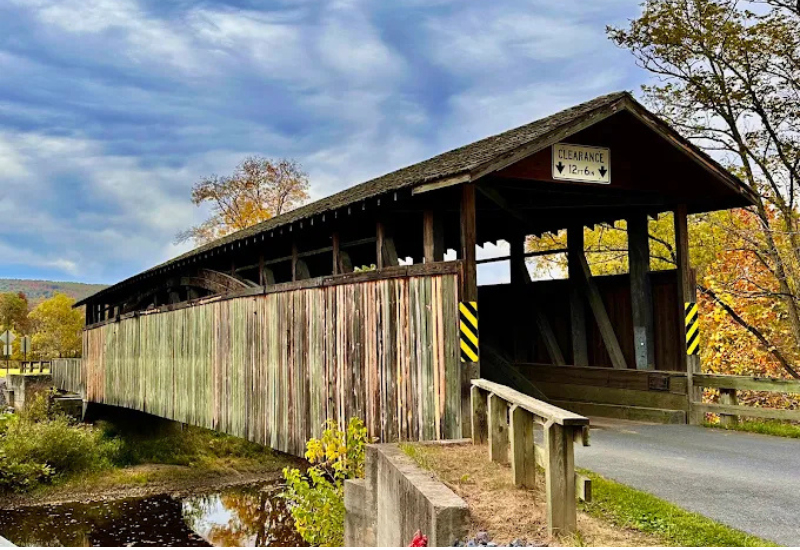
Why Did Pennsylvania Build So Many Covered Bridges?
Can you imagine traveling Pennsylvania’s backroads in the 1800s, when an estimated 1,500 covered bridges dotted the countryside? Today, only about 210 remain, making each surviving bridge a treasured piece of Pennsylvania’s history.
But why did Pennsylvania have so many covered bridges in the first place?
The answer is a fascinating combination of geography, transportation needs, abundant natural resources, and the ingenuity of early American bridge builders.
During the eighteenth and nineteenth centuries, Pennsylvania was growing rapidly. Small towns, farms, gristmills, sawmills, and businesses were springing up throughout the countryside. Communities were expanding, and people needed reliable ways to transport crops, livestock, lumber, and other goods to nearby markets.
There was just one problem.
Pennsylvania had an abundance of rivers, creeks, and streams, and crossing them wasn’t always easy.
Before modern highways and concrete bridges, traveling even a short distance could be challenging. A swollen creek after heavy rain could make a road impassable, and crossing a river without a bridge could be dangerous.
Communities needed dependable crossings that would allow farmers, merchants, and families to travel safely throughout the year.
Fortunately, Pennsylvania had another resource in abundance: timber.
The state’s vast forests provided a ready supply of wood, making timber bridges a practical and relatively economical solution. Skilled carpenters and bridge builders developed increasingly sophisticated designs capable of spanning waterways of different sizes.
However, wooden bridges had one major weakness.
Exposure to rain, snow, ice, and sunlight caused structural timbers to deteriorate. An uncovered wooden bridge might require frequent repairs or replacement after years of exposure to Pennsylvania’s changing seasons.
The solution was surprisingly simple.
Put a roof over the bridge!
By covering the wooden framework, builders could protect important structural components from the weather and significantly extend the bridge’s useful life.
The result was a transportation structure that was practical, durable, and, as it turns out, incredibly beautiful.
Pennsylvania became home to hundreds of covered bridges, many constructed during the nineteenth century.
Although modern steel and concrete bridges eventually replaced most wooden crossings, more than 200 covered bridges remain across the state today.
Some still carry vehicles, while others have been preserved for pedestrians or historical interpretation.
Each one represents a piece of Pennsylvania’s transportation heritage.
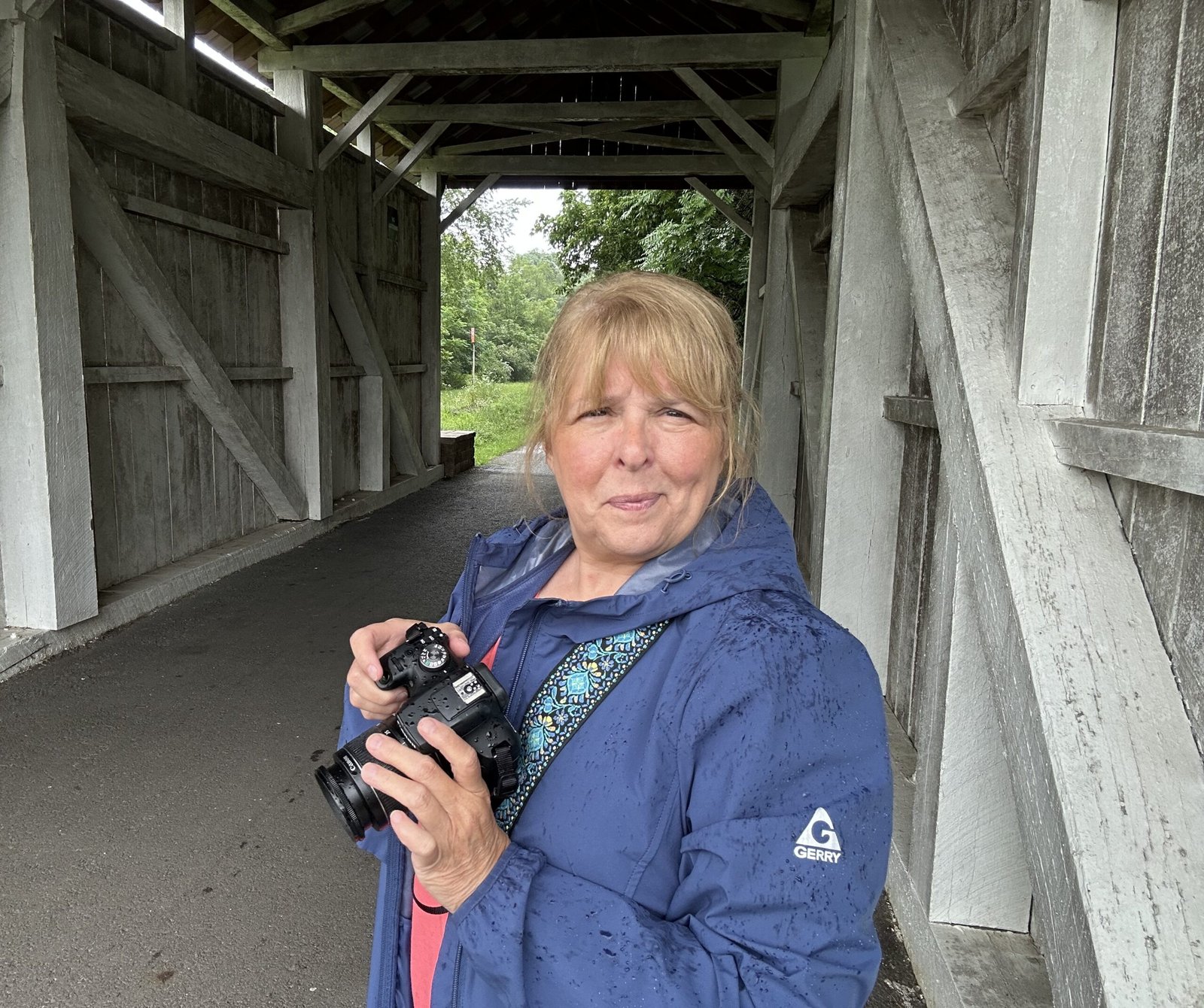
See ya on the road
Susan
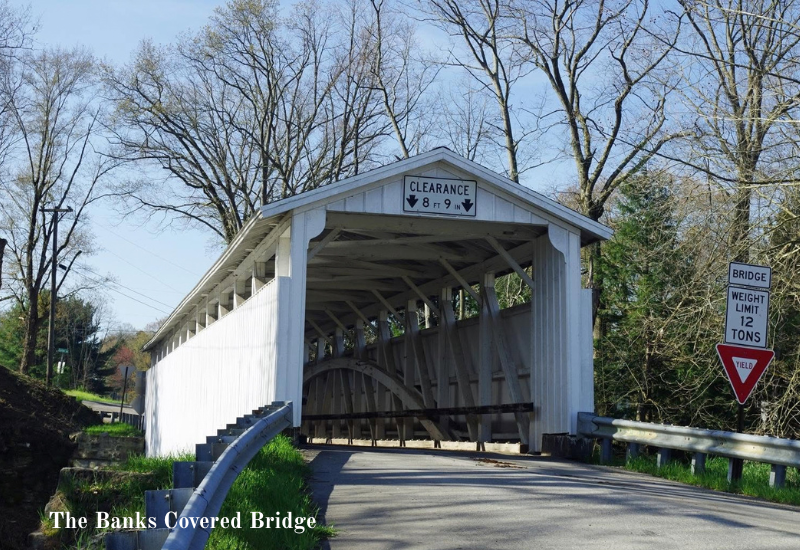
My Final Thoughts
The more I explore Pennsylvania’s covered bridges, the more I realize that no two are exactly alike.
Some are famous for their remarkable engineering. Others are surrounded by breathtaking scenery. A few have connections to major events in American history, while others have quietly served their communities for generations.
And then there are those wonderful surprises, like discovering a waterfall beneath a wooden bridge or finding a historic crossing hidden inside a major city.
That’s what makes these adventures so special to me.
I love getting off the interstate and following the smaller roads through Pennsylvania’s countryside. You never know what you might discover around the next bend.
Sometimes it’s a beautiful old barn, a historic mill, a little town you’ve never heard of, or a covered bridge that’s been standing for more than a century.
And every time I find another one, I feel like I’ve discovered another little piece of Pennsylvania’s past.
My covered bridge journey is far from finished. So I will keep exploring every county in the state. One Adventure at a time.