


Descends underground - and rewrites what a state park can be,
Pennsylvania has always worn its ridges and river valleys like a crown. But on April 6, 2026, the Commonwealth added something altogether different to its treasury of wild places — a state park that begins not with a trailhead, but with a descent.
Laurel Caverns State Park, nestled in the rolling hills above Farmington in Fayette County, was officially dedicated as Pennsylvania’s 125th state park this spring — and its first ever subterranean park. It is a designation that feels both long overdue and quietly momentous for anyone who has followed the Laurel Highlands with an attentive eye.
435
TOTAL ACRES
4
MILES OF CAVE PASSAGES
476ft
MAXIMUM, DEPTH
125th
PA STATE PARK
A Cave Older Than Its Name
The story of Laurel Caverns runs far deeper than its most recent chapter. The cave entrance on Chestnut Ridge above Fairchance was first discovered in the late eighteenth century, when a farmer named John Delaney — guided, as legend has it, by his hunting dogs — stumbled into the darkness beneath the hill and named what he found Delaney’s Cave. The property changed hands across the generations until, in 1933, it was purchased by Norman and Roy Cale, who began quietly acquiring surrounding land to ensure the cave and its delicate features remained on a single protected deed.

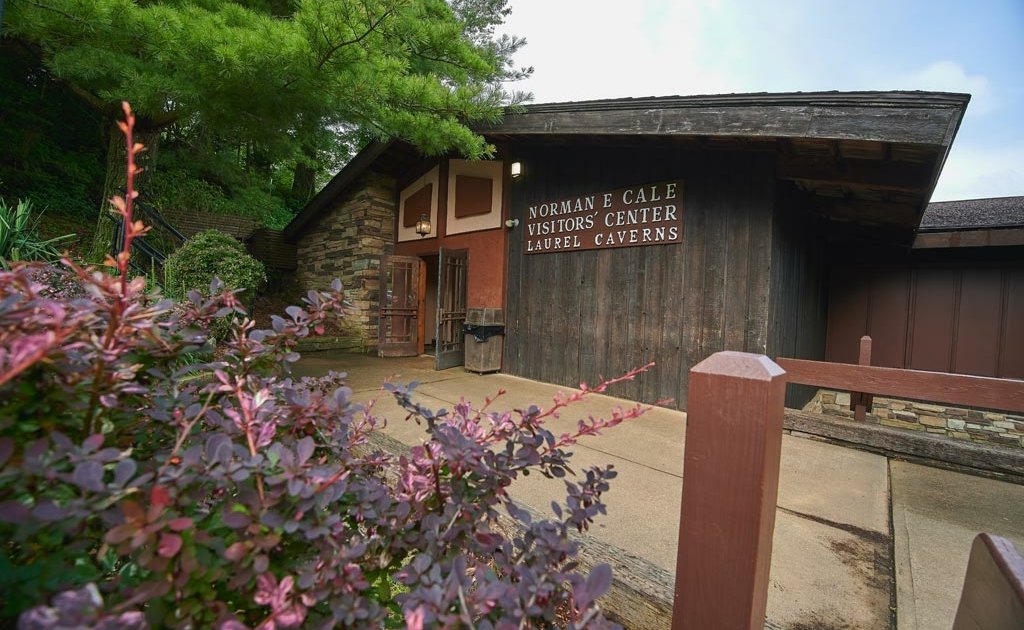
It was Norman’s grandson, David Cale, who gave the first guided public tour in 1964 and rechristened the site Laurel Caverns — a name that evokes the mountain laurel blanketing the hillsides above. David and his wife Lillian bought out the property entirely in 1986 and devoted the decades that followed to stewarding it with remarkable care, eventually founding the Laurel Caverns Conservancy to formalize that commitment.

The Cales donated the property to the state last year, and the deed transferred to the Pennsylvania Department of Conservation and Natural Resources, which now oversees the land. The Laurel Caverns Conservancy will continue to operate the tours through the 2026 season while DCNR undertakes a series of surface improvements. Governor Josh Shapiro, who descended fifty feet underground for the dedication ceremony, thanked David Cale as the self-styled “mayor of the caves” and praised the family for sharing something irreplaceable with the public.

What Lies Beneath
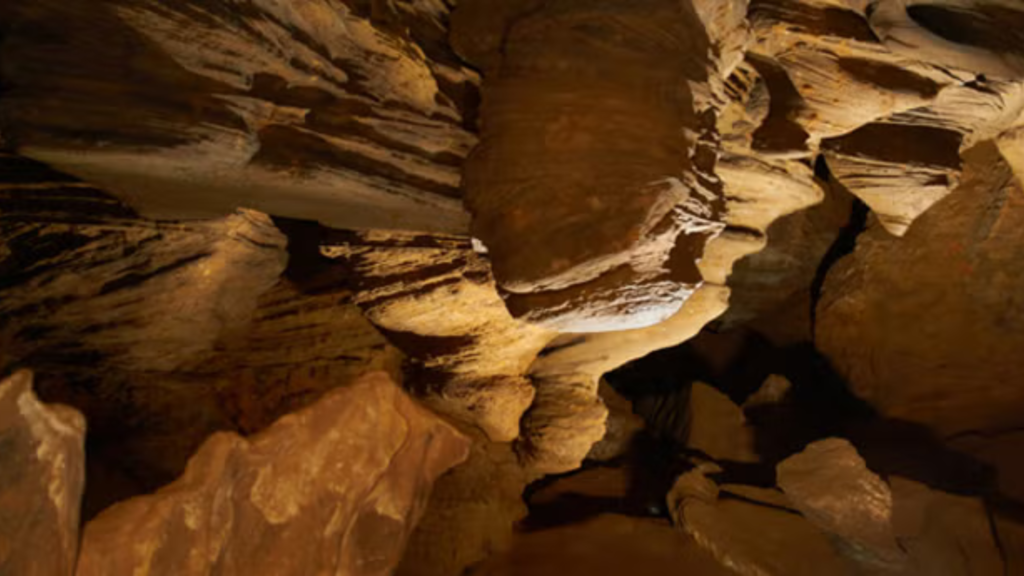
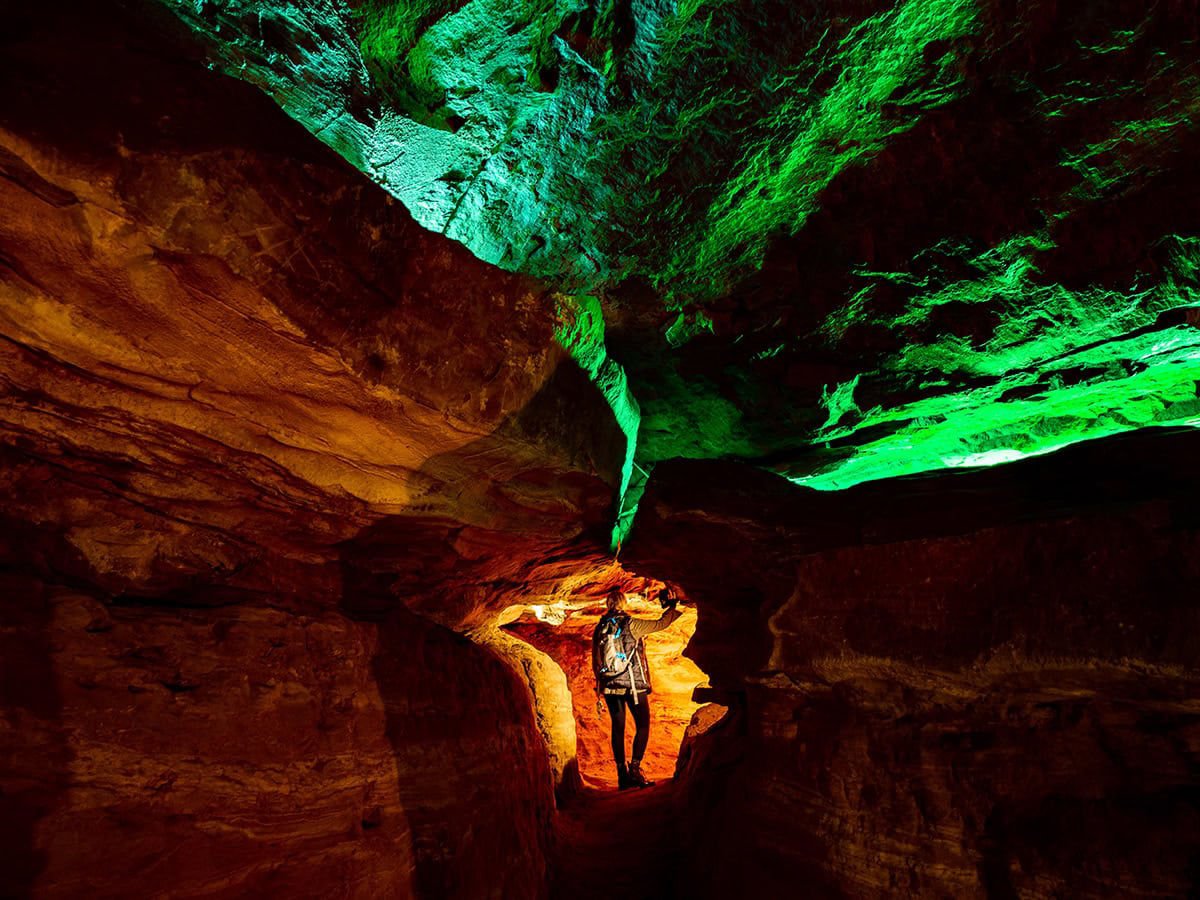
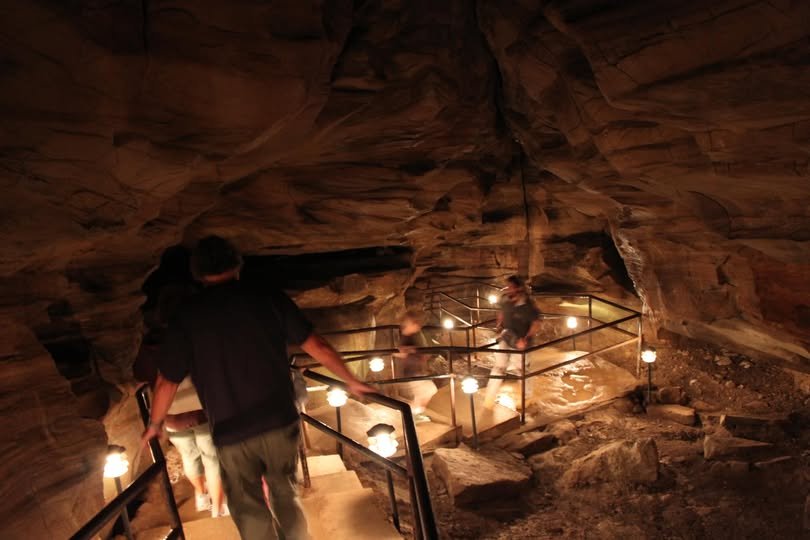
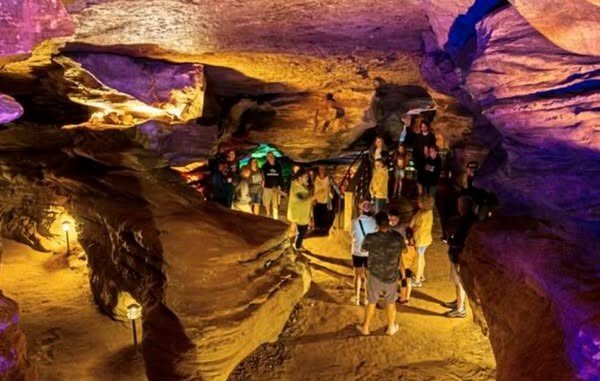
To call Laurel Caverns merely large is an understatement. It is the deepest and largest limestone cave in Pennsylvania — four miles of wide passages that slope steadily downward following the natural grade of Chestnut Ridge, cut over millennia by springs channeling toward the valley below. At its greatest extent, the cave descends to 476 feet. The walls shift from tawny limestone to streaks of color, and formations bear names that have accumulated over generations of visitors: the Pillar of Hercules, a freestanding cave column that has become the park’s unofficial emblem, and Calico Falls, a subterranean cascade that catches a flashlight beam with uncanny beauty.

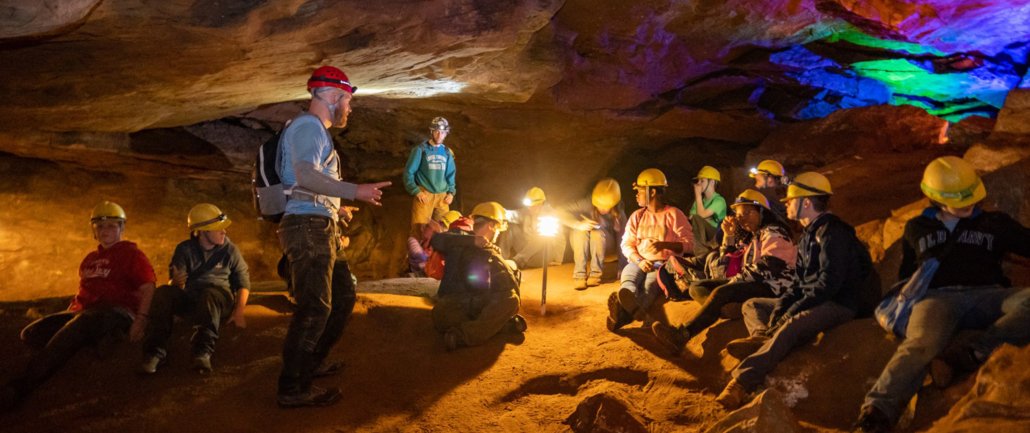
The caverns are also the site of a purpose-built wonder: the Grottoes of Learning, a 10,000-square-foot simulated cave — the largest of its kind anywhere in the world — designed to give students hands-on exposure to archaeology, paleontology, and geology without disturbing the natural passages.

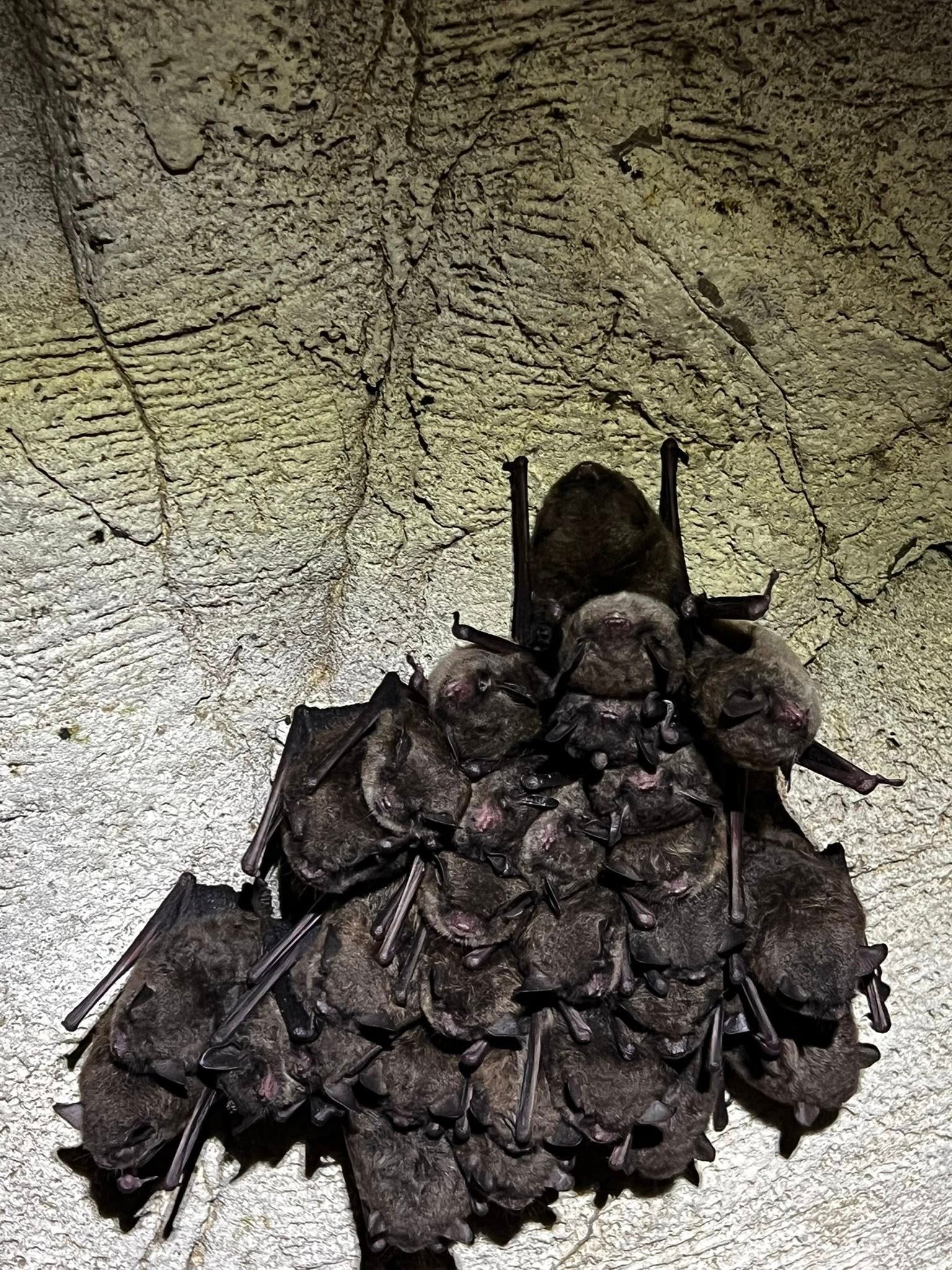
Perhaps no feature of Laurel Caverns is more ecologically significant than what happens here in winter. Each year from October through mid-April, the cave closes entirely — not for maintenance, but for the bats. The caverns serve as the largest bat hibernaculum in the entire northeastern United States, sheltering vast colonies of bats that depend on the cave’s stable temperatures to survive the cold months. With white-nose syndrome continuing its grim advance through Pennsylvania’s bat populations, the annual closure is not merely a courtesy. It is a lifeline.

Planning Your Visit
The cave itself will reopen to the public on April 22, 2026 — Earth Day — and remain accessible through October. Access to the aboveground trails is free, as is true of all Pennsylvania state parks. Cave access comes through one of five guided or self-guided tour options, with fees remaining in place through the 2026 season as management transitions to DCNR.
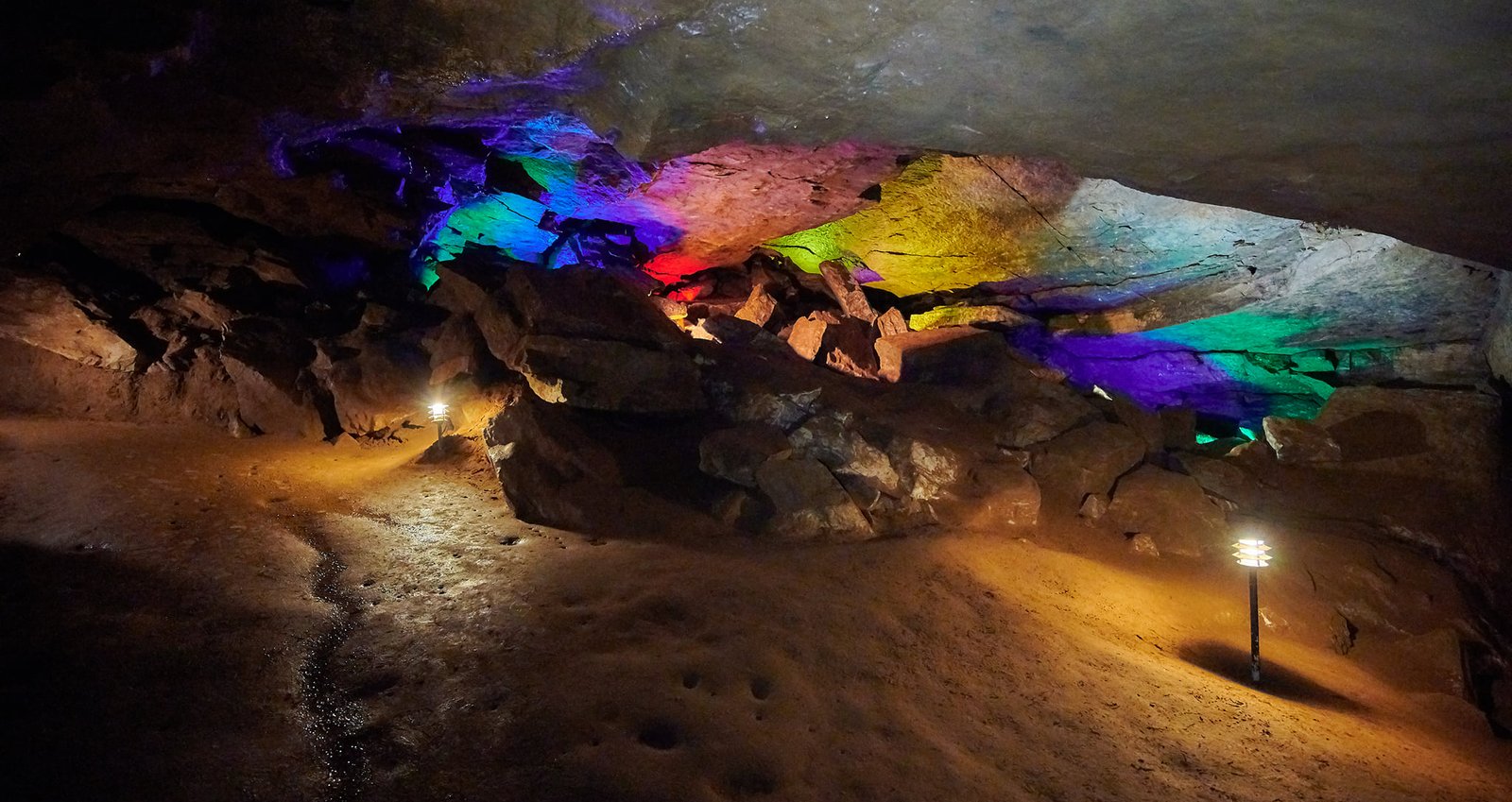
The standard guided tour follows the route David Cale mapped for that first public trip in 1964, covering roughly 600 feet and culminating in a music-and-light show designed specifically for the cavern space. For those seeking a deeper immersion, the self-guided option extends the journey by another thirty minutes — descending and ascending the equivalent of fifteen stories through steeper, more demanding terrain. Bring a map, bring a companion, and bring comfortable shoes.

Visitor Essentials
- Location:Farmington, Fayette County — approximately 50 miles southeast of Pittsburgh, off US-40
- Cave opens:April 22, 2026 (Earth Day); closes October for bat hibernation
- Aboveground trails:Free and accessible year-round
- Cave tours:Guided and self-guided options; fees apply in 2026 season
- Nearby:Ohiopyle State Park, Forbes State Forest, Nemacolin, Fallingwater
- More info:pa.gov/agencies/dcnr | laurelcaverns.com

A Region Made Richer
The Laurel Highlands has long been one of Pennsylvania’s most rewarding corners — a landscape where Ohiopyle’s whitewater gorges meet Frank Lloyd Wright’s Fallingwater, where the Laurel Highlands Hiking Trail threads seventy miles of ridge-top forest, and where the sheer verticality of Chestnut Ridge still surprises visitors who arrive expecting flatlands. Laurel Caverns State Park brings the region’s ninth state park to a landscape already blessed with wild abundance.
For Fayette County, the park’s designation carries economic as well as cultural weight. Fayette County Chamber of Commerce Executive Director Muriel Nuttall noted that the park “adds something to our region that is truly one of a kind” — a landmark capable of anchoring regional itineraries and drawing visitors who might not otherwise explore the county’s towns and trails.
DCNR Secretary Cindy Adams Dunn has spoken of weaving the site into a broader geo-heritage corridor — a place where the rock itself becomes the curriculum, where young people encounter geology not as abstraction but as something to touch, smell, and stand inside. The possibility of overnight stays within the cave, currently under discussion as part of the upcoming master site plan, would push that ambition further still.


Want the Full Story ?
Laurel Caverns is the newest chapter in a story that stretches back to 1893 — when Pennsylvania purchased its very first state park to protect the hallowed ground at Valley Forge. That story winds through the Civilian Conservation Corps, a century of conservation champions, and the slow, deliberate expansion of one of the largest state park systems in the nation.


Discovering the Beauty of Pennsylvania’s State Parks .
From Valley Forge to the Laurel Highlands – a complete guide into the history, stucture and soul of Pennsylvania’s 125-park system. Learn the difference between state parks, state forests and national forests amd find out what makes each region worth exploring.
My Final Thoughts
There is something quietly extraordinary about a state park that asks you to go down rather than up. The Laurel Highlands has always rewarded those willing to look closely — at the mosses, the millraces, the iron-stained streams, the ridge-line silhouettes at dusk. Laurel Caverns State Park extends that invitation into the earth itself, where the mountain holds its most patient and particular secrets.
The Cale family kept those secrets safe for a century. Now they belong, in the best sense, to all of us.
If you want to find out more about the Laurel Caverns State Park Click this link Time to Explore The Laurel caverns

See ya on the road